
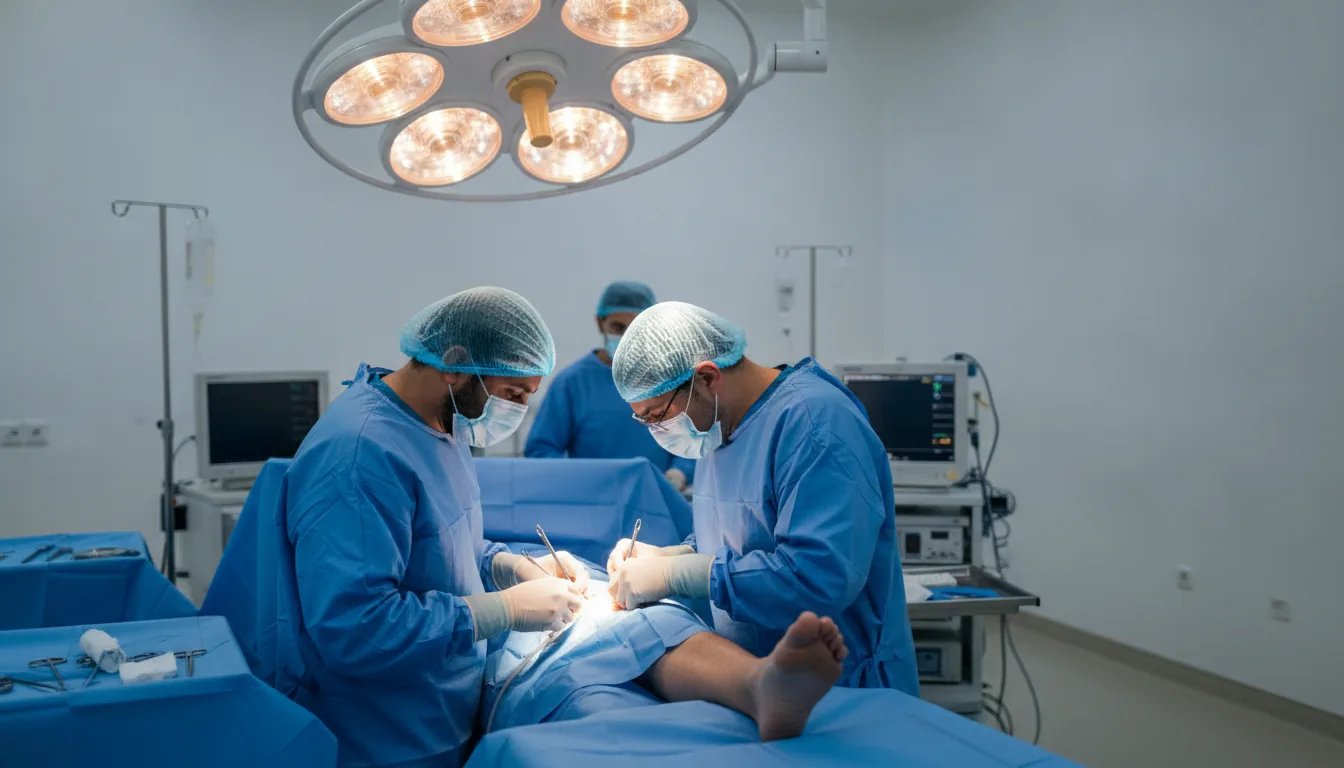
Lower limb arterial bypass
Leg bypass in Tunis, Tunisia · Centre Urbain Nord
Creation of a detour, using one of the patient's veins or a synthetic graft, to bypass a blocked leg artery and restore blood flow.
What is it?
When is it indicated?
When the foot hurts even when lying down, often at night, it means not enough blood is getting through. Restoring flow relieves pain and protects the leg.
A wound that will not heal lacks blood. A bypass brings the blood supply needed for healing and helps avoid amputation.
If walking distance remains very short despite medication and walking exercise, revascularisation may be considered.
Some blockages are too extensive to be treated from inside the artery; a bypass goes around them.
A swelling of the artery behind the knee can block suddenly; a bypass allows it to be excluded.
Preparation
Procedure
General or spinal anaesthesia
Incisions above and below the blocked segment
Harvesting of the saphenous vein or preparation of the graft
Connection of the bypass to the artery above, then below
Checking that it works with Doppler or imaging
Closure of the incisions and monitoring of the foot in the recovery room
Duration
2 to 4 hours depending on the type of bypass
Aftercare & Recovery
The hospital stay is usually 5 to 10 days. Walking resumes gradually from the first days. Leg swelling is common for a few weeks. The patient keeps lifelong antiplatelet and statin treatment; stopping smoking for good and regular duplex scans are essential to keep the bypass open.
Risks and side effects
These risks remain rare. Your surgeon will inform you in detail before the procedure.
Request a Quote
Contact us to schedule a consultation or receive a personalized quote.
Request a Quote +216 36 402 000At a glance
Related searches
- Leg bypass Tunis
- Leg bypass Tunisia
- Leg bypass in Tunisia