
Embolectomy and treatment of acute arterial thrombosis
Surgeries/Vascular/Embolectomy (acute ischaemia)

Embolectomy and treatment of acute arterial thrombosis

Embolectomy (acute ischaemia) in Tunis, Tunisia · Centre Urbain Nord

Emergency surgery to remove a clot that suddenly blocks a limb artery and restore its circulation.

What is it?

Acute limb ischaemia is the sudden interruption of blood flow in an artery, usually in the leg, sometimes in the arm. It is caused either by a clot travelling from elsewhere (embolism, often from the heart when the rhythm is irregular), or by thrombosis of an already diseased artery or a bypass. The limb becomes cold, pale and painful, then loses sensation and strength: this is an emergency. Embolectomy involves reaching the artery through a small incision, usually in the groin or at the elbow crease, then removing the clot with a catheter fitted with a small balloon (Fogarty catheter). Depending on the cause, the surgeon may complete the procedure with balloon angioplasty, a stent, a bypass, or thrombolysis (medication that dissolves the clot). If the muscles have swollen, opening their sheath (fasciotomy) relieves the pressure. The faster the procedure, the better the chances of saving the limb without after-effects: ideally within the first few hours. Anticoagulation is started as soon as the diagnosis is made. After surgery, the cause is investigated (heart, arteries) to prevent recurrence. At Clinique Pasteur Tunis, these patients are managed from the emergency department, with access to the operating theatre, to the catheterisation laboratory for imaging and endovascular procedures, and to intensive care when needed.
Embolectomy and treatment of acute arterial thrombosis

When is it indicated?

Limb suddenly cold, pale and painful

These signs, appearing suddenly, point to a blocked artery. Seek emergency care: every hour counts.

Arterial embolism from the heart

A clot formed in the heart, often because of an irregular rhythm, can travel into a limb artery and block it.

Thrombosis of a diseased artery or a bypass

An already narrowed artery or an old bypass can block suddenly; it must be cleared and the cause corrected.

Loss of sensation or strength in the limb

These signs show that the ischaemia is progressing and require surgery without delay.

Preparation

1Immediate care in the emergency department, with anticoagulant treatment
2Clinical examination and duplex ultrasound; CT angiogram if time allows
3Emergency ECG and blood tests
4Rapid anaesthetic assessment before theatre
5Report current medication, allergies and the time of the last meal

Procedure

1

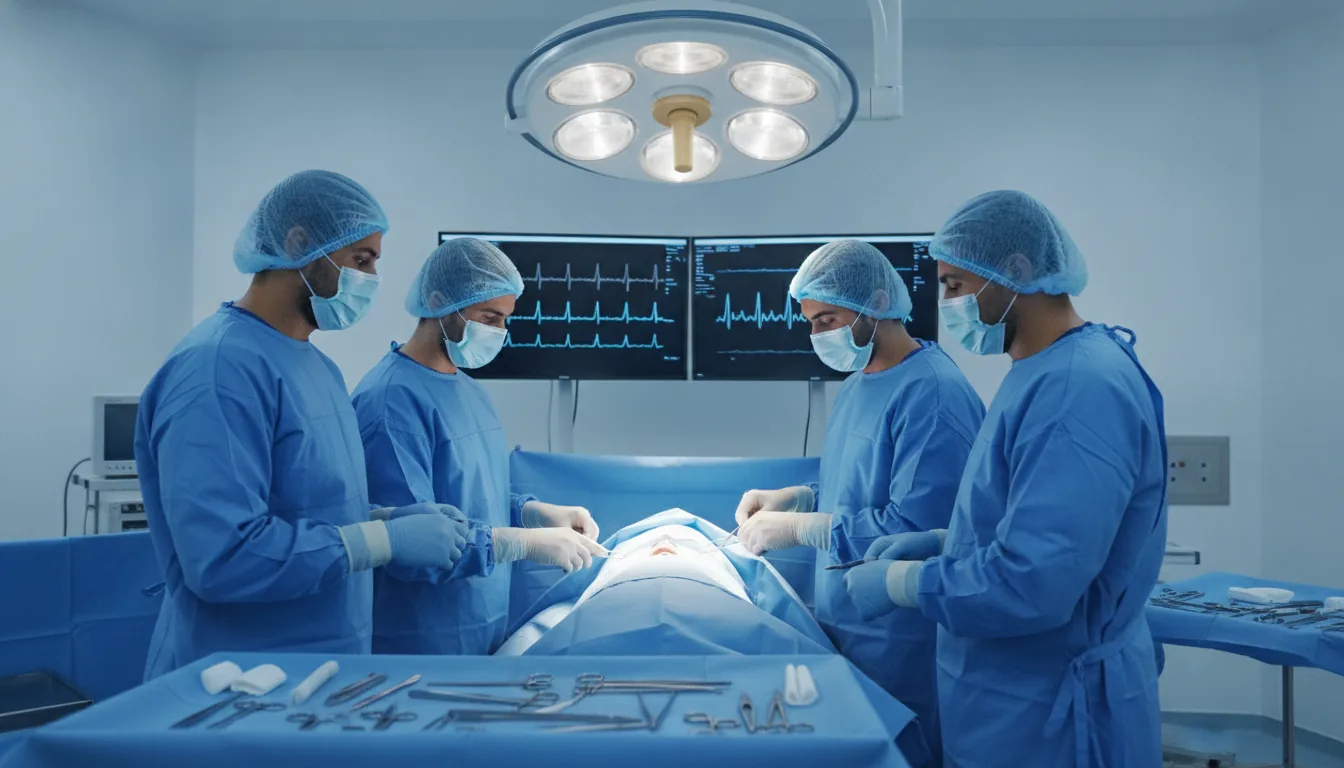
Transfer to theatre, with local, regional or general anaesthesia as appropriate

2

Incision in the groin or elbow crease to reach the artery

3

Removal of the clot with a balloon catheter

4

Checking blood flow with imaging or Doppler

5

Additional procedure if needed: balloon, stent, bypass or thrombolysis

6

Relief of muscle pressure if the limb is very swollen

7

Close monitoring of the limb and of kidney function

Duration

1 to 2 hours, longer if an additional procedure is needed

Aftercare & Recovery

The hospital stay usually lasts several days, to monitor the limb and look for the source of the clot. Anticoagulant or antiplatelet treatment is continued, sometimes long term. Recovery depends mainly on how quickly treatment was given; rehabilitation may help. Vascular and cardiology follow-up is arranged.

Risks and side effects

Re-occlusion of the artery, hence the search for the cause and anticoagulant treatment
Swelling of the limb once blood flow returns, closely monitored
Effects on the kidneys, prevented by good hydration and blood test monitoring
Bleeding or bruising related to anticoagulants
Incomplete recovery of the limb when the ischaemia has lasted a long time

These risks remain rare. Your surgeon will inform you in detail before the procedure.

Request a Quote

Contact us to schedule a consultation or receive a personalized quote.

Request a Quote +216 36 402 000

At a glance

Duration: 1 to 2 hours, longer if an additional procedure is needed
Preparation: Required
Dedicated specialist team

Related searches

  • Embolectomy (acute ischaemia) Tunis
  • Embolectomy (acute ischaemia) Tunisia
  • Embolectomy (acute ischaemia) in Tunisia
Request a quote