
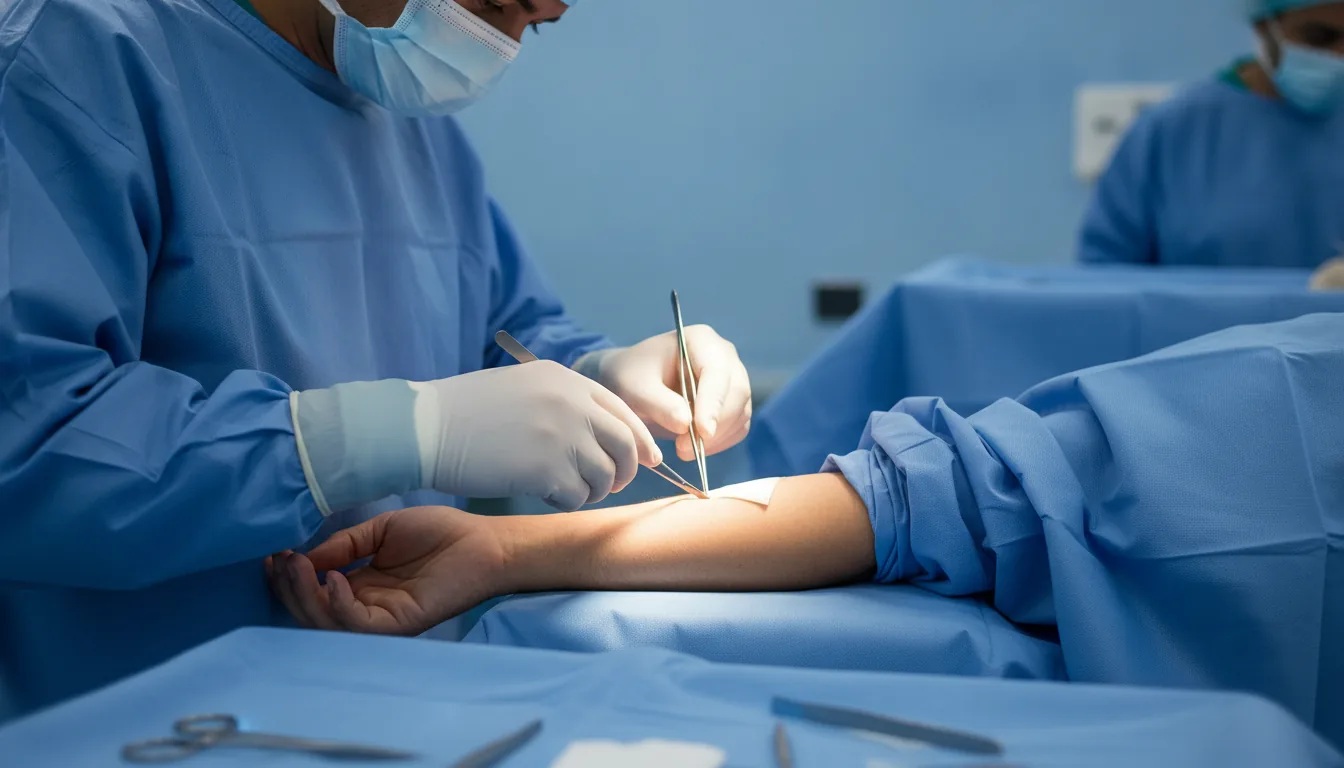
Creation of an arteriovenous fistula for haemodialysis
Arteriovenous fistula in Tunis, Tunisia · Centre Urbain Nord
Connecting an artery to a vein in the arm to create a strong, long-lasting access for haemodialysis sessions.
What is it?
When is it indicated?
When the kidneys are approaching the stage where dialysis will be needed, the nephrologist requests the fistula in advance so it is ready in time.
A fistula is a better alternative to a catheter, with a lower risk of infection and better dialysis quality.
A new fistula can be created on the same arm, higher up, or on the other arm.
If the patient's veins are too thin, a synthetic graft can act as a bridge between the artery and a larger vein.
Preparation
Procedure
Settling in theatre with the arm on an arm table
Local anaesthesia or arm block (brachial plexus block)
Small incision at the wrist or elbow crease
Connection of the vein to the artery with a fine suture
Checking for the "thrill" that confirms blood is flowing
Skin closure and dressing
Duration
1 to 2 hours
Aftercare & Recovery
Patients usually go home the same day. Hand exercises (squeezing a ball) help the fistula develop. The fistula is generally ready for use within 4 to 8 weeks, after clinical or ultrasound assessment. The patient learns to feel the thrill every day and to protect the arm: no tight watch, no heavy lifting, no blood pressure readings on that side.
Risks and side effects
These risks remain rare. Your surgeon will inform you in detail before the procedure.
Request a Quote
Contact us to schedule a consultation or receive a personalized quote.
Request a Quote +216 36 402 000At a glance
Related searches
- Arteriovenous fistula Tunis
- Arteriovenous fistula Tunisia
- Arteriovenous fistula in Tunisia