
Liver chemoembolisation
Surgeries/Vascular/Liver chemoembolisation

Liver chemoembolisation

Liver chemoembolisation in Tunis, Tunisia · Centre Urbain Nord

Local treatment of a liver tumour combining chemotherapy injected into its artery and blocking of that artery.

What is it?

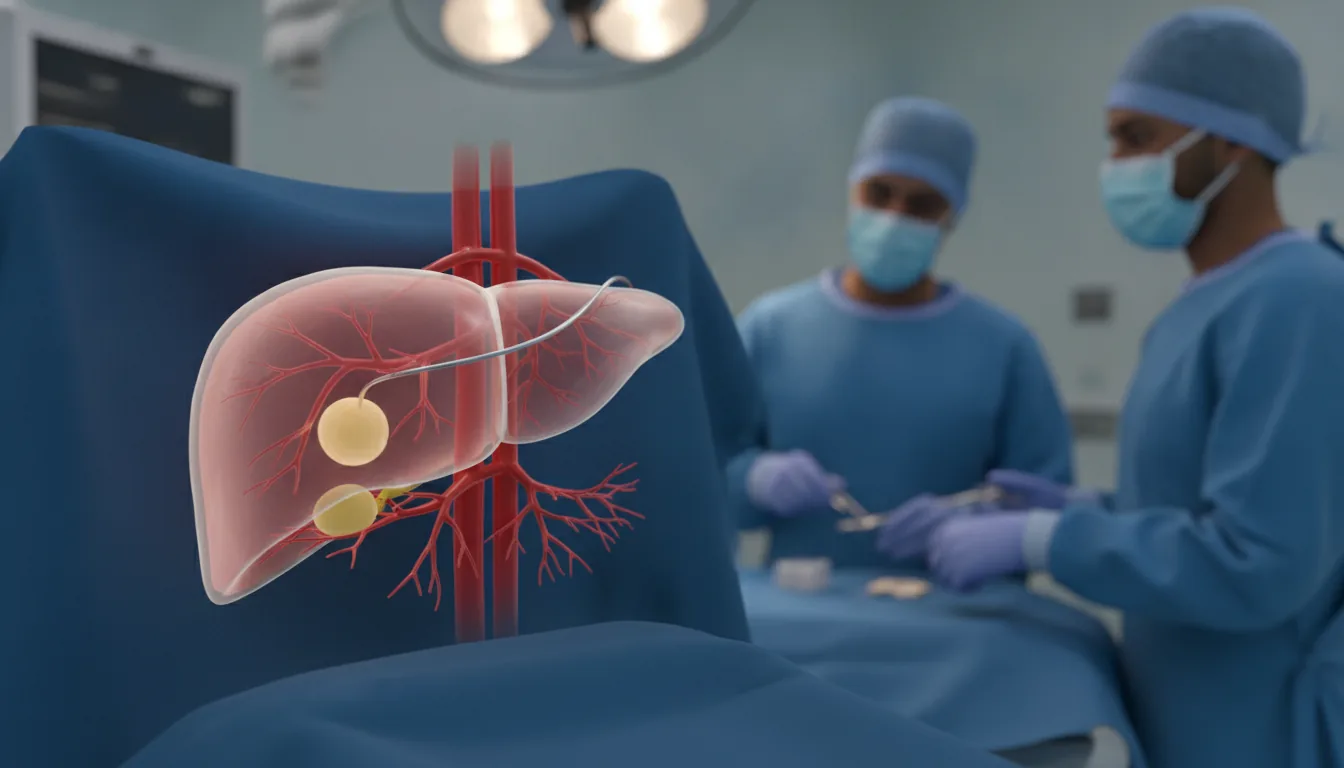
Chemoembolisation is a local treatment for liver tumours, in particular hepatocellular carcinoma, the cancer that arises from liver cells. These tumours receive their blood mainly from the hepatic artery. The principle is to inject a chemotherapy drug directly into the branches feeding the tumour, together with particles that close these arteries. The procedure is performed in the catheterisation laboratory under local anaesthesia with pain relief, sometimes with sedation. A catheter is introduced through the groin or wrist up to the liver arteries, and the doctor then gets as close as possible to the tumour to spare the healthy liver. The chemotherapy stays concentrated in the tumour, with fewer effects on the rest of the body. Chemoembolisation is offered when the tumour cannot be surgically removed or destroyed locally, or while waiting for a transplant. It can be repeated depending on the response. It is sometimes used for certain liver metastases. The decision is always taken at a multidisciplinary team meeting. At Clinique Pasteur Tunis, the procedure is performed in a latest-generation catheterisation laboratory, in coordination with the hepato-gastroenterologists and oncologists.
Liver chemoembolisation

When is it indicated?

Inoperable hepatocellular carcinoma

When the tumour can be neither removed nor ablated, chemoembolisation helps control it locally.

Waiting for a liver transplant

The treatment helps slow the tumour during the waiting period.

Multiple tumours confined to the liver

When the disease affects several areas of the liver without spreading elsewhere, this targeted treatment is appropriate.

Certain liver metastases

For some cancers that have reached the liver, it can complement other treatments, by joint decision.

Preparation

1Decision at a multidisciplinary team meeting
2Recent CT or MRI of the liver
3Full blood tests, including liver function, kidney function and clotting
4Consultation with the interventional physician, and with the anaesthetist if sedation is planned
5Fast for 6 hours before the procedure

Procedure

1

Positioning in the catheterisation laboratory, infusion and preventive treatment for nausea and pain

2

Local anaesthesia and puncture of the artery in the groin or at the wrist

3

Mapping of the liver arteries

4

Placement of a microcatheter as close as possible to the tumour

5

Injection of the chemotherapy combined with embolisation particles

6

Check of the images, removal of the equipment and monitoring in your room

Duration

About 1.5 to 2 hours

Aftercare & Recovery

The hospital stay is generally 2 to 3 days. A "post-embolisation syndrome" (fever, right-sided pain, nausea, tiredness) is common for a few days and responds well to treatment. A CT or MRI is performed a few weeks later to assess the response and decide on any further sessions.

Risks and side effects

Post-embolisation syndrome (fever, pain, nausea), expected and temporary
Temporary worsening of liver function, monitored with blood tests
Liver abscess or gallbladder injury, rare
Bruising at the puncture site

These risks remain rare. Your surgeon will inform you in detail before the procedure.

Request a Quote

Contact us to schedule a consultation or receive a personalized quote.

Request a Quote +216 36 402 000

At a glance

Duration: About 1.5 to 2 hours
Preparation: Required
Dedicated specialist team

Related searches

  • Liver chemoembolisation Tunis
  • Liver chemoembolisation Tunisia
  • Liver chemoembolisation in Tunisia
Request a quote