
Dialysis fistula angioplasty
Surgeries/Vascular/Dialysis fistula

Dialysis fistula angioplasty

Dialysis fistula in Tunis, Tunisia · Centre Urbain Nord

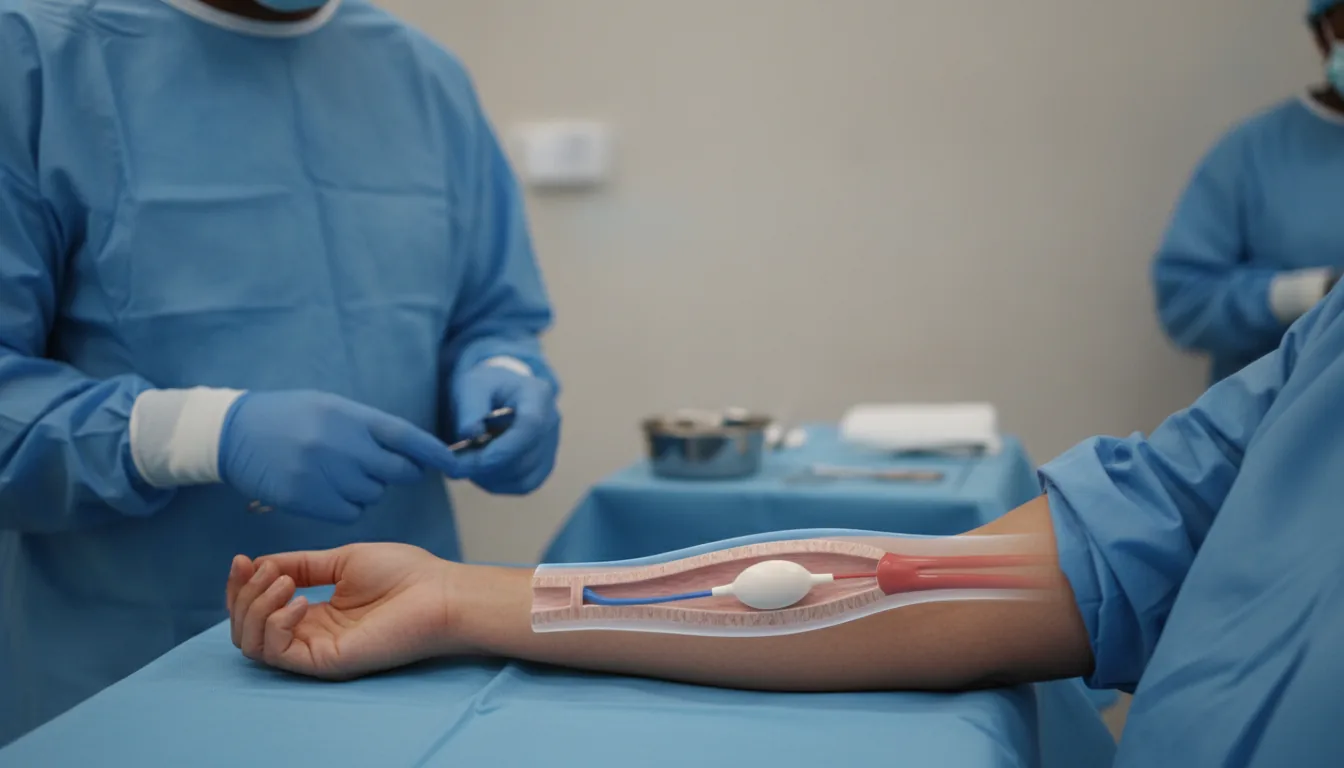
Balloon widening of a narrowing in an arteriovenous fistula to keep dialysis access working well.

What is it?

An arteriovenous fistula is a surgically created connection between an artery and a vein in the arm, used for haemodialysis. Over time, the vein can narrow (stenosis): flow drops, dialysis becomes less effective and the fistula may block. Angioplasty widens the narrowing with a balloon introduced into the fistula. The procedure is performed in the catheterisation laboratory under local anaesthesia, through a direct puncture of the fistula or the arm artery. The doctor visualises the fistula with an injection of contrast dye, then inflates a balloon at the narrowing. A stent or drug-coated balloon may be used in some cases. If the fistula is blocked, the clot can often be removed in the same session. Angioplasty allows the same fistula to be used for longer and avoids a dialysis catheter or further surgery. It is often requested by the dialysis team when they notice a change in the fistula. At Clinique Pasteur Tunis, the procedure is performed in a latest-generation catheterisation laboratory and scheduled so as not to disrupt dialysis sessions.
Dialysis fistula angioplasty

When is it indicated?

Reduced fistula flow during dialysis

Less effective dialysis or pressure alarms on the machine often signal a narrowing.

Difficult needling or prolonged bleeding after dialysis

These signs may indicate a stenosis that hinders flow in the fistula.

Swollen arm

A swelling arm may reveal a narrowing of a vein further up, towards the shoulder or chest.

Blocked fistula (thrombosis)

A fistula that no longer has a thrill must be treated quickly: the clot can often be removed and the cause widened in the same session.

Preparation

1Doppler ultrasound or fistulography to locate the narrowing
2Coordination with the dialysis centre for the date of the procedure
3Blood tests including potassium and clotting
4Fast for a few hours before the procedure

Procedure

1

Positioning in the catheterisation laboratory with the arm on a support

2

Local anaesthesia and puncture of the fistula

3

Contrast injection to visualise the fistula and veins

4

Crossing the narrowing with a fine guidewire

5

Balloon inflation, possibly with a stent or clot removal

6

Check of the result and compression of the puncture site

Duration

About 45 minutes to 1.5 hours

Aftercare & Recovery

The procedure is usually done as a day case. The fistula can generally be used for the next dialysis session. Flow is monitored during dialysis sessions, and further dilatations may be needed over time.

Risks and side effects

Bruising at the puncture site
Re-narrowing over time, which can be widened again
Rupture of the vein during dilatation, generally treated on the spot
Thrombosis of the fistula, rare after the procedure

These risks remain rare. Your surgeon will inform you in detail before the procedure.

Request a Quote

Contact us to schedule a consultation or receive a personalized quote.

Request a Quote +216 36 402 000

At a glance

Duration: About 45 minutes to 1.5 hours
Preparation: Required
Dedicated specialist team

Related searches

  • Dialysis fistula Tunis
  • Dialysis fistula Tunisia
  • Dialysis fistula in Tunisia
Request a quote