
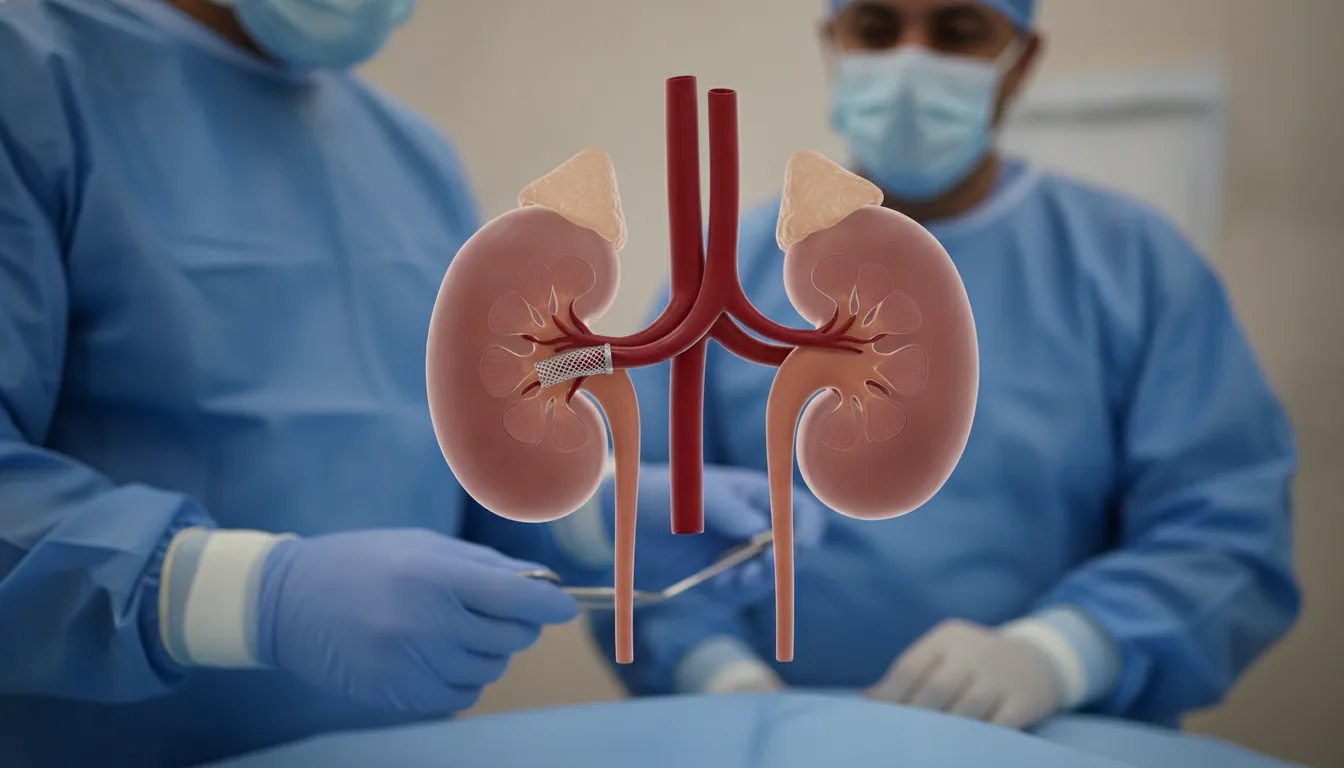
Renal artery angioplasty and stenting
Surgeries/Vascular/Renal angioplasty

Renal artery angioplasty and stenting

Renal angioplasty in Tunis, Tunisia · Centre Urbain Nord

Widening of a narrowed kidney artery, with a stent if needed, to protect the kidney or improve blood pressure control.

What is it?

The renal arteries carry blood to the kidneys. When they narrow, the kidney receives less blood: this can cause high blood pressure that is hard to control or a gradual decline in kidney function. Renal angioplasty widens the narrowing from the inside with a balloon, often followed by a stent. The procedure is performed in the catheterisation laboratory under local anaesthesia, through a puncture in the groin or at the wrist. The amount of contrast dye is kept to the strict minimum to protect the kidneys. For many patients, medical treatment (blood pressure and cholesterol medicines, antiplatelets) is enough. Angioplasty is reserved for carefully selected situations: narrowing caused by fibromuscular dysplasia, often in young women, high blood pressure that resists several medicines, rapidly worsening kidney function, or episodes of sudden pulmonary oedema. At Clinique Pasteur Tunis, the decision is made together with the nephrologist and cardiologist, and the procedure is performed in a latest-generation catheterisation laboratory.
Renal artery angioplasty and stenting

When is it indicated?

Fibromuscular dysplasia of the renal artery

This disease of the artery wall mainly affects young women. A simple balloon dilatation often brings blood pressure back to normal.

Blood pressure resistant to medication

When blood pressure stays high despite several medicines and a renal narrowing is the likely cause, widening it can help control it.

Rapidly worsening kidney function

If the kidney is short of blood, restoring flow may help protect it.

Sudden pulmonary oedema with no other cause

Some episodes of sudden breathlessness are linked to a tight narrowing of the renal arteries; treating it may prevent them.

Preparation

1Consultation and review of imaging (Doppler, CT or MRI of the renal arteries)
2Blood tests including kidney function, and appropriate hydration before the procedure
3Antiplatelet treatment as prescribed
4Adjust certain medicines (anticoagulants, metformin, some blood pressure drugs) as instructed
5Fast for a few hours before the procedure

Procedure

1

Positioning in the catheterisation laboratory and local anaesthesia

2

Puncture of the artery in the groin or at the wrist

3

Imaging of the aorta and renal arteries with a small amount of contrast dye

4

Crossing the narrowing with a fine guidewire

5

Balloon dilatation, then stent placement if needed

6

Check of the result and closure of the puncture site

Duration

About 1 hour

Aftercare & Recovery

The hospital stay is generally 1 to 2 days, with monitoring of blood pressure and kidney function. Blood pressure treatment is often adjusted in the following weeks. A follow-up Doppler scan and blood tests are scheduled.

Risks and side effects

Bruising at the puncture site
Temporary effect on kidney function due to the contrast dye
Injury to the renal artery (dissection, rupture), rare and treated during the procedure
Re-narrowing over time, monitored by Doppler

These risks remain rare. Your surgeon will inform you in detail before the procedure.

Request a Quote

Contact us to schedule a consultation or receive a personalized quote.

Request a Quote +216 36 402 000

At a glance

Duration: About 1 hour
Preparation: Required
Dedicated specialist team

Related searches

  • Renal angioplasty Tunis
  • Renal angioplasty Tunisia
  • Renal angioplasty in Tunisia
Request a quote