
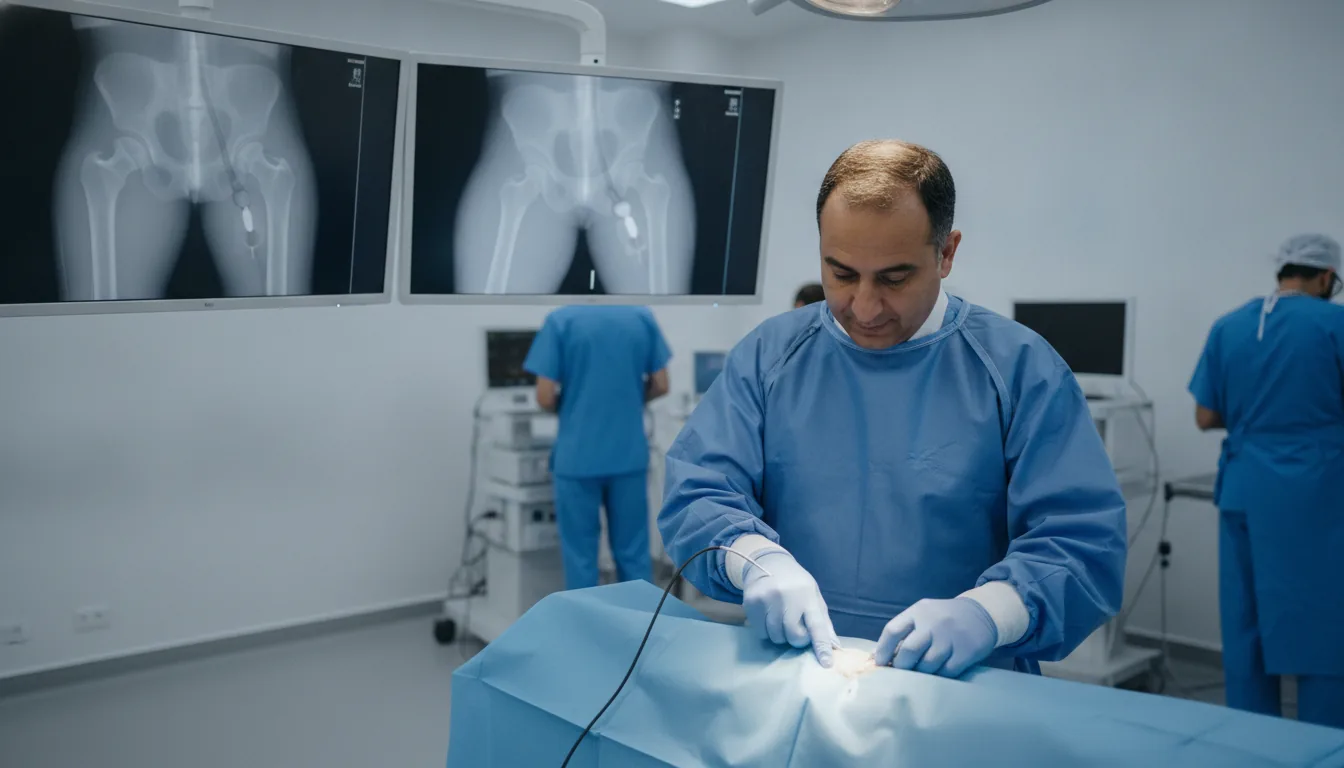
Angioplasty and stenting of the limb arteries
Surgeries/Vascular/Limb angioplasty

Angioplasty and stenting of the limb arteries

Limb angioplasty in Tunis, Tunisia · Centre Urbain Nord

Balloon widening of a narrowed or blocked artery in the leg or arm, with a stent if needed, without any incision.

What is it?

Angioplasty reopens a narrowed or blocked artery from the inside. A small balloon is guided to the narrowing and inflated to press the atheroma plaque against the artery wall and restore a normal diameter. A stent, a small metal mesh tube, may then be deployed to keep the artery open. The procedure is performed in the catheterisation laboratory, usually under local anaesthesia, through a puncture in the groin. It mainly concerns the leg arteries (iliac, femoral, popliteal and below-the-knee arteries), and less often those of the arm. Drug-coated balloons or stents may be used to reduce the risk of the artery narrowing again. Angioplasty is offered when arterial disease limits walking despite medical treatment and regular walking exercise, or when the foot is short of blood. It often avoids open surgery and allows a quick recovery. Depending on the length and position of the lesions, a bypass may remain the better option: the choice is discussed with the patient. At Clinique Pasteur Tunis, angioplasty is performed in a latest-generation catheterisation laboratory, working closely with the vascular surgeons so that endovascular and surgical techniques can be combined when needed.
Angioplasty and stenting of the limb arteries

When is it indicated?

Claudication that limits daily life

When leg pain on walking remains troublesome despite medication and walking exercise, reopening the artery helps you walk further.

Critical limb ischaemia

Night pain, a wound or gangrene on the foot signal a serious lack of blood. Restoring flow helps healing and helps avoid amputation.

Short or medium-length, accessible narrowing

These are the lesions that respond best to balloon and stent treatment, with good long-lasting results.

Patient at high risk for open surgery

Angioplasty is usually done under local anaesthesia, which suits elderly patients or those with heart or lung problems.

Preparation

1Consultation with the vascular specialist and review of imaging (Doppler, CT)
2Blood tests including kidney function and clotting
3Antiplatelet treatment (aspirin, sometimes a second drug) as prescribed
4Report any iodine allergy and adjust certain medicines (anticoagulants, metformin)
5Fast for a few hours before the procedure

Procedure

1

Positioning in the catheterisation laboratory and local anaesthesia

2

Puncture of the artery, usually in the groin

3

Arteriography to show the narrowing precisely

4

Crossing the lesion with a very fine guidewire

5

Balloon inflation, then stent placement if needed

6

X-ray check of the result and closure of the puncture site

Duration

1 to 2 hours depending on the lesions

Aftercare & Recovery

The hospital stay is short, often 1 to 2 days. Walking resumes quickly and normal activities within a few days. Antiplatelet treatment is continued long term. A follow-up Doppler scan is scheduled, and stopping smoking is essential to keep the artery open.

Risks and side effects

Bruising at the puncture site, generally minor
Re-narrowing of the artery over time, which can be treated again
Sudden occlusion or a small fragment travelling downstream, treated during the procedure
Reaction to the contrast dye or temporary effect on kidney function

These risks remain rare. Your surgeon will inform you in detail before the procedure.

Request a Quote

Contact us to schedule a consultation or receive a personalized quote.

Request a Quote +216 36 402 000

At a glance

Duration: 1 to 2 hours depending on the lesions
Preparation: Required
Dedicated specialist team

Related searches

  • Limb angioplasty Tunis
  • Limb angioplasty Tunisia
  • Limb angioplasty in Tunisia
Request a quote