
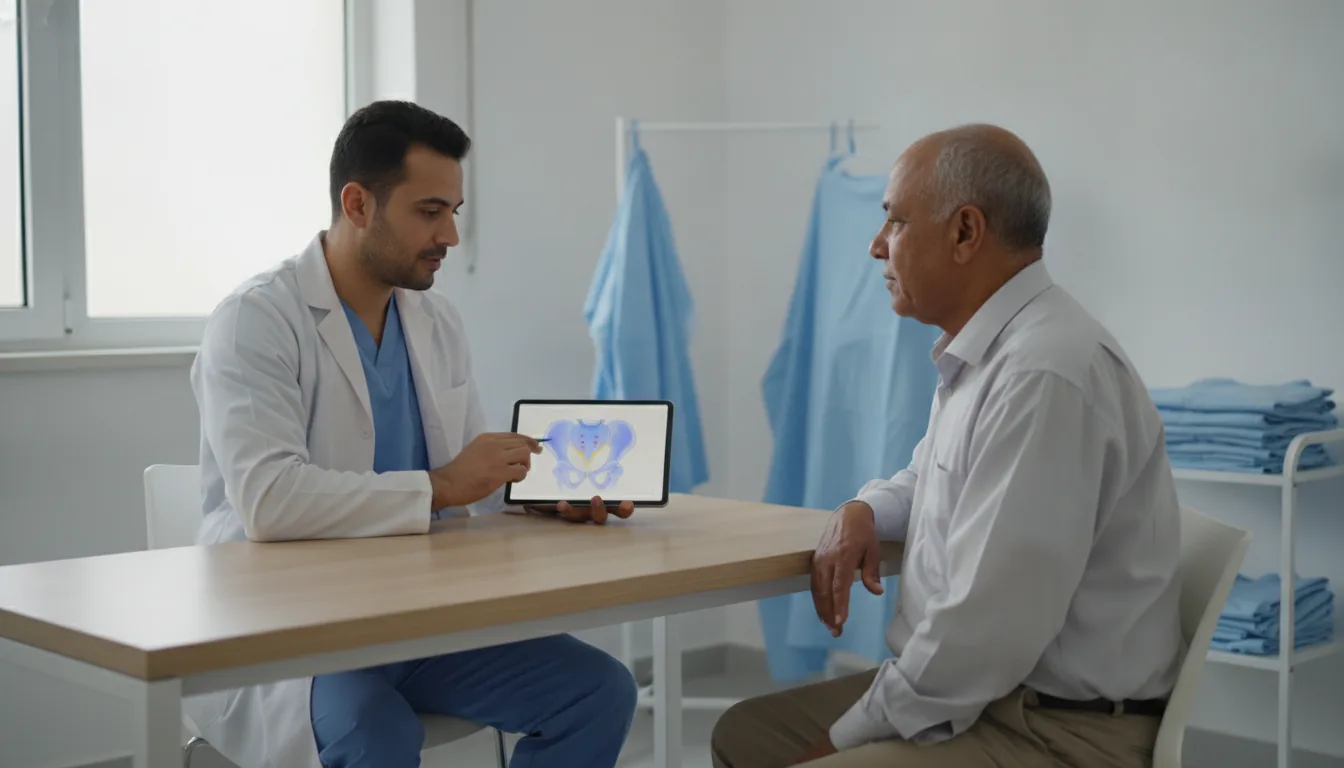
Prostate artery embolisation (enlarged prostate)
Surgeries/Vascular/Prostate embolisation

Prostate artery embolisation (enlarged prostate)

Prostate embolisation in Tunis, Tunisia · Centre Urbain Nord

Treatment of an enlarged prostate by reducing its blood supply via a catheter, without going through the urethra or general anaesthesia.

What is it?

With age, the prostate often enlarges (benign prostatic hyperplasia) and obstructs the flow of urine. Prostate artery embolisation partially blocks the small arteries of the prostate with fine particles: with less blood supply, the gland shrinks and softens, which improves urinary symptoms. The procedure is performed in the catheterisation laboratory under local anaesthesia, through a puncture in the groin or at the wrist. The prostate arteries are small and vary from one patient to another: a CT scan beforehand helps to locate them. No instrument is passed through the urethra. Embolisation is an alternative to endoscopic resection or other surgical techniques, decided together with the urologist. It is useful for large prostates, frail patients, or those who wish to limit the risk of ejaculation problems. Improvement is generally gradual and sometimes less marked than after surgery. At Clinique Pasteur Tunis, the procedure is performed in a latest-generation catheterisation laboratory, in close collaboration with the urology team.
Prostate artery embolisation (enlarged prostate)

When is it indicated?

Troublesome urinary symptoms from an enlarged prostate

Weak stream, getting up at night, urgency: when medication is no longer enough, embolisation can reduce these symptoms.

Large prostate

Large prostates are well suited to embolisation, which avoids more extensive surgery.

Patient at risk from surgery or anaesthesia

The procedure is done under local anaesthesia, which suits elderly patients or those with other health conditions.

Bleeding in the urine from the prostate

Recurrent bleeding from the prostate can be stopped by blocking its arteries.

Preparation

1Consultation with the urologist: examination, PSA, ultrasound and urine flow test
2CT scan of the pelvic arteries to plan the procedure
3Blood tests including kidney function and clotting
4Adjust certain medicines as instructed (anticoagulants, metformin)
5Fast for a few hours before the procedure

Procedure

1

Positioning in the catheterisation laboratory, sometimes with a urinary catheter

2

Local anaesthesia and puncture of the artery in the groin or at the wrist

3

Locating the prostate arteries on each side

4

Injection of microparticles into these arteries

5

Check of the images and removal of the equipment

6

Monitoring for a few hours in your room

Duration

About 1 to 2 hours

Aftercare & Recovery

The procedure is usually done as a day case or with one night in hospital. Burning on passing urine and frequent urges may last a few days. Improvement occurs over a few weeks. Follow-up is arranged with the urologist, including a urinary check-up.

Risks and side effects

Temporary burning on urination and frequent urges
A little blood in the urine or semen, short-lived
Urinary infection, treated with antibiotics
Unintended embolisation of a nearby organ (bladder, rectum), rare
Insufficient improvement that may lead to another treatment

These risks remain rare. Your surgeon will inform you in detail before the procedure.

Request a Quote

Contact us to schedule a consultation or receive a personalized quote.

Request a Quote +216 36 402 000

At a glance

Duration: About 1 to 2 hours
Preparation: Required
Dedicated specialist team

Related searches

  • Prostate embolisation Tunis
  • Prostate embolisation Tunisia
  • Prostate embolisation in Tunisia
Request a quote