
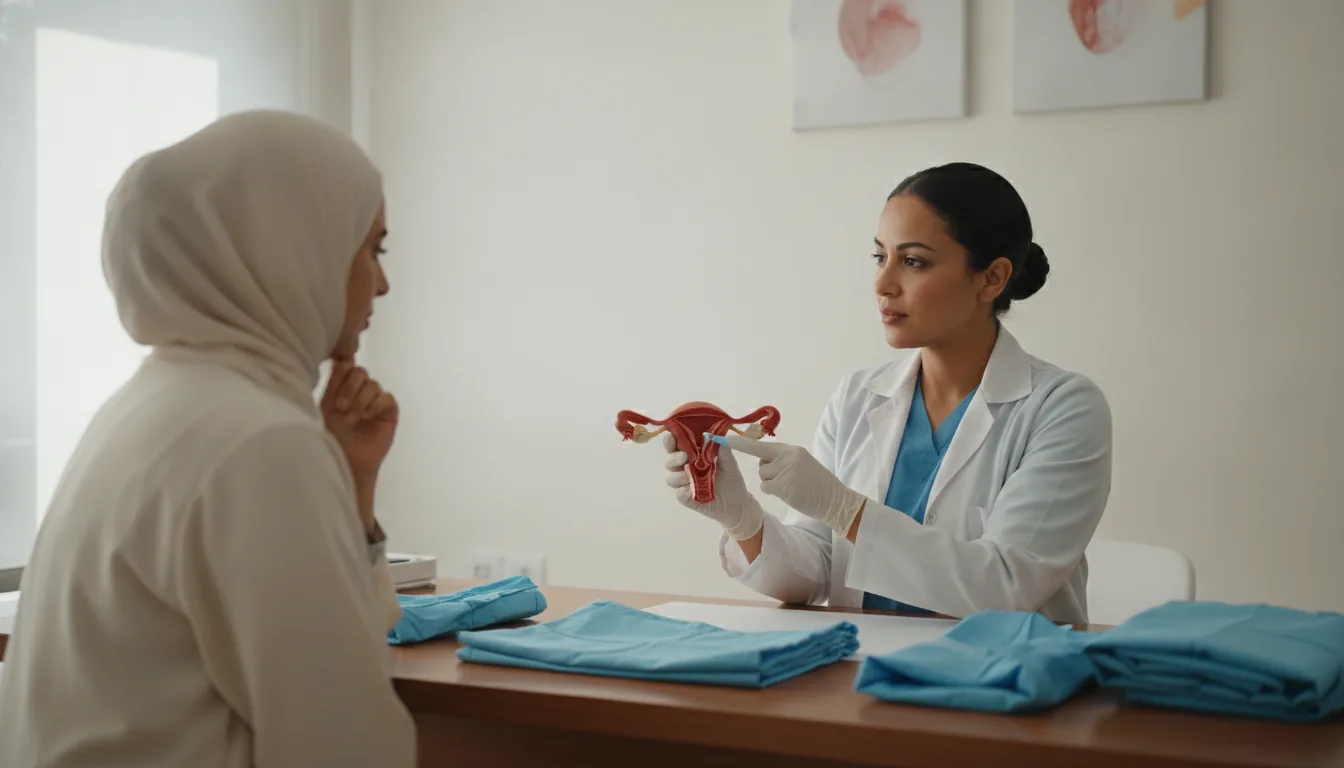
Uterine fibroid embolisation
Fibroid embolisation in Tunis, Tunisia · Centre Urbain Nord
Treatment of uterine fibroids by blocking their arteries from the inside, without surgery and keeping the uterus.
What is it?
When is it indicated?
Heavy bleeding leads to tiredness and anaemia. Shrinking the fibroids often brings periods back to normal.
An enlarged uterus can press on the bladder or bowel; shrinking the fibroids relieves this discomfort.
Embolisation treats fibroids without removing the uterus and without an operation.
For patients at surgical risk or who do not wish to have an operation, it is an effective alternative.
Preparation
Procedure
Positioning in the catheterisation laboratory and an infusion for pain relief
Local anaesthesia in the groin or at the wrist and puncture of the artery
Selective catheterisation of the right then left uterine artery
Slow injection of microparticles until flow to the fibroids stops
Check of the images and removal of the equipment
Monitoring in your room with pain relief
Duration
About 1 to 1.5 hours
Aftercare & Recovery
The hospital stay is generally 1 to 2 nights, mainly to relieve pelvic pain in the first hours. Tiredness and a mild fever are common during the first week. Activities resume within one to two weeks. Periods improve from the first cycles and the fibroids shrink over several months; a follow-up MRI is scheduled.
Risks and side effects
These risks remain rare. Your surgeon will inform you in detail before the procedure.
Request a Quote
Contact us to schedule a consultation or receive a personalized quote.
Request a Quote +216 36 402 000At a glance
Related searches
- Fibroid embolisation Tunis
- Fibroid embolisation Tunisia
- Fibroid embolisation in Tunisia