
Hepatectomy (liver resection)
Surgeries/General/Hepatectomy

Hepatectomy (liver resection)

Hepatectomy in Tunis, Tunisia · Centre Urbain Nord

Removal of part of the liver for a tumour or metastases, relying on the liver's ability to regenerate.

What is it?

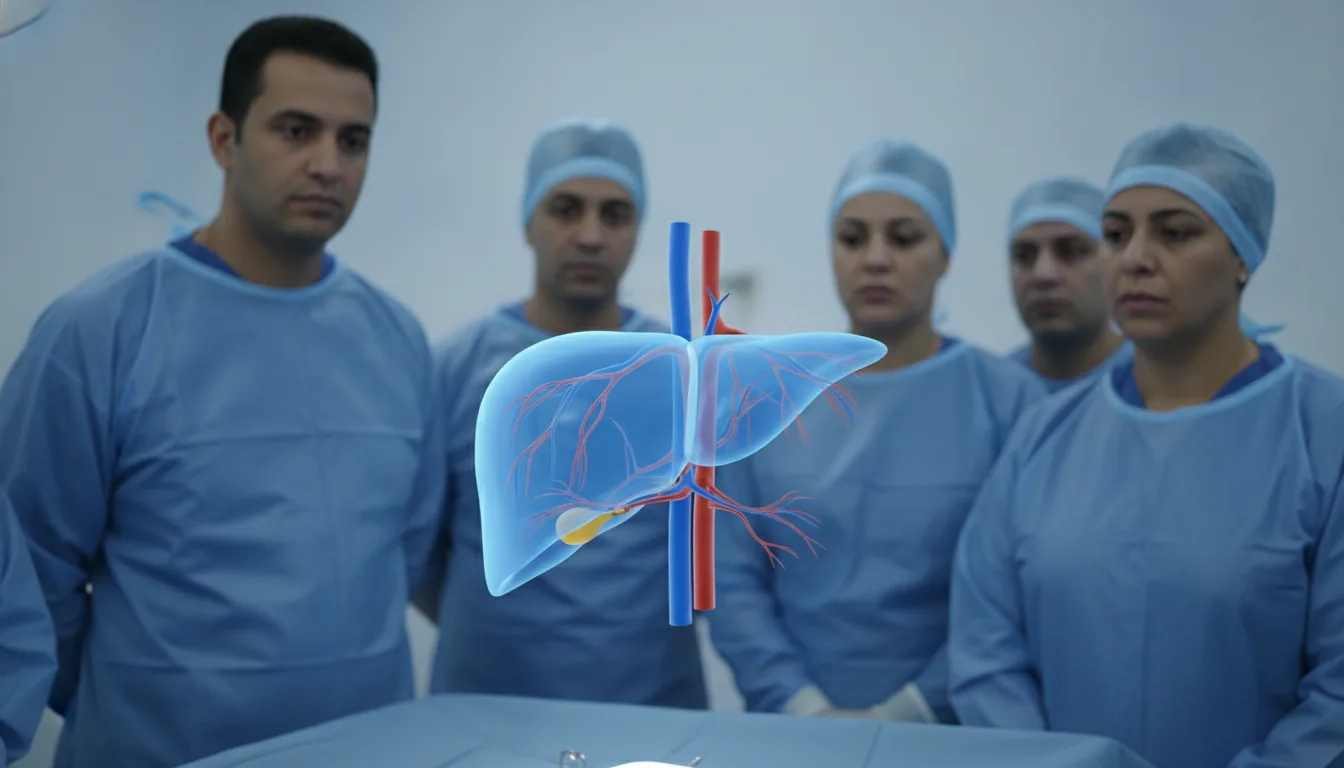
Hepatectomy is the removal of part of the liver. It ranges from a limited resection (a few centimetres) to removal of a whole lobe (right or left hepatectomy). It is possible because the remaining liver, if healthy, regenerates and recovers much of its volume within a few weeks. The operation is performed through an open incision under the ribs, or laparoscopically for well-placed resections. The surgeon may use ultrasound during surgery to locate the lesions and blood vessels precisely. The liver is divided while carefully controlling the blood vessels and bile ducts, to limit bleeding and bile leakage. The main indications are liver metastases (especially from colorectal cancer), hepatocellular carcinoma (primary liver cancer), some large or high-risk benign tumours, and certain forms of hydatid cyst. The volume and quality of the remaining liver are assessed before surgery; for a major resection, preparation (portal vein embolisation) may be offered. At Clinique Pasteur Tunis, the decision is made at a multidisciplinary team meeting, with CT and MRI available on site. The operation is performed with an anaesthesia team experienced in this surgery and intensive care available for monitoring during the first days.
Hepatectomy (liver resection)

When is it indicated?

Liver metastases

When a cancer, especially of the colon or rectum, has spread to the liver, removing these lesions can be part of a treatment aimed at cure.

Primary liver cancer (hepatocellular carcinoma)

If the tumour is localised and the remaining liver works well, resection is one of the best treatments.

Large or high-risk benign tumour

Some benign tumours (adenoma, for example) are removed when they grow, bleed or risk becoming malignant.

Complex hydatid cyst

A deep or extensive cyst may require removal of the portion of liver that contains it.

Bile duct tumour within the liver

Some bile duct tumours require removal of part of the liver along with the affected ducts.

Preparation

1CT scan and MRI of the liver, with calculation of the remaining liver volume
2Liver blood tests and assessment of liver quality
3Discussion at a multidisciplinary team meeting
4Prior portal vein embolisation for some major resections
5Heart and lung assessment, anaesthetic consultation
6Stopping alcohol and smoking

Procedure

1

General anaesthesia with enhanced monitoring

2

Incision under the ribs or laparoscopy

3

Exploration and ultrasound of the liver during surgery

4

Control of the blood vessels of the part to be removed

5

Division of the liver with careful control of vessels and bile ducts

6

Checking for bleeding and bile leakage

7

Drainage if needed and closure

Duration

3 to 6 hours

Aftercare & Recovery

Monitoring in intensive care is common for the first hours. The hospital stay usually lasts 5 to 10 days. The liver regenerates within a few weeks; tiredness may last one to two months. Follow-up involves the surgeon and the oncologist, with regular imaging.

Risks and side effects

Bleeding during or after surgery
Bile leak, usually resolved by drainage
Temporary liver insufficiency after a major resection, monitored with blood tests
Fluid collection or infection around the liver or the right lung
General complications of major surgery, managed in intensive care

These risks remain rare. Your surgeon will inform you in detail before the procedure.

Request a Quote

Contact us to schedule a consultation or receive a personalized quote.

Request a Quote +216 36 402 000

At a glance

Duration: 3 to 6 hours
Preparation: Required
Dedicated specialist team

Related searches

  • Hepatectomy Tunis
  • Hepatectomy Tunisia
  • Hepatectomy in Tunisia
Request a quote