
Hiatus hernia and reflux: laparoscopic fundoplication
Surgeries/General/Hiatus hernia and reflux

Hiatus hernia and reflux: laparoscopic fundoplication

Hiatus hernia and reflux in Tunis, Tunisia · Centre Urbain Nord

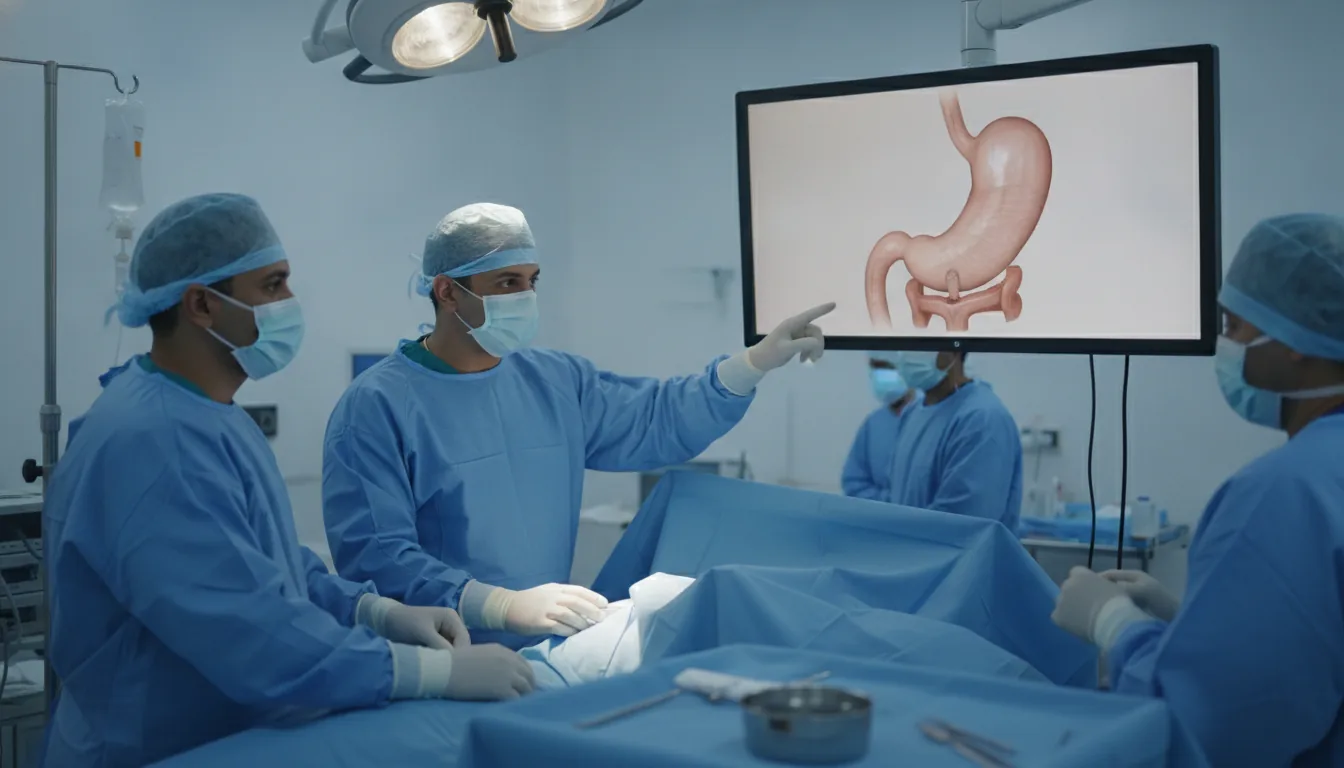
Laparoscopic anti-reflux surgery: the stomach is returned below the diaphragm and a valve is created.

What is it?

Gastro-oesophageal reflux is the backflow of acidic stomach contents into the oesophagus. It causes burning behind the breastbone, regurgitation and sometimes cough or hoarseness. It is often associated with a hiatus hernia: part of the stomach slides up into the chest through the opening in the diaphragm through which the oesophagus passes (the hiatus). The operation is performed laparoscopically through five small incisions. The surgeon brings the stomach back down into the abdomen, narrows the opening in the diaphragm with a few stitches (sometimes reinforced with a mesh), then wraps the upper part of the stomach around the lower oesophagus to create an anti-reflux valve: this is fundoplication (Nissen or Toupet type, depending on the case). It is offered when reflux remains troublesome despite well-followed treatment, when the person does not wish to take medication for life, in case of complications (severe oesophagitis, significant regurgitation) or for a large hiatus hernia. Tests beforehand confirm that surgery is appropriate. At Clinique Pasteur Tunis, the assessment includes gastroscopy at the endoscopy centre and radiology on site; manometry and pH monitoring are prescribed as needed. The operation is performed laparoscopically, with a short hospital stay and dietary advice for the first weeks.
Hiatus hernia and reflux: laparoscopic fundoplication

When is it indicated?

Troublesome reflux despite medical treatment

When heartburn and acid regurgitation persist despite properly taken medication, surgery corrects the reflux mechanism.

Wish to stop depending on medication

In a young person with clearly proven reflux, surgery can replace treatment that would otherwise be lifelong.

Large hiatus hernia

When a large part of the stomach has moved into the chest, it can interfere with breathing or eating; surgery puts it back in place.

Complications of reflux

Severe oesophagitis, significant regurgitation or a chronic cough caused by reflux may lead to surgery being offered.

Preparation

1Upper gastrointestinal endoscopy (gastroscopy)
2Oesophageal manometry and pH monitoring as needed
3Barium swallow or CT scan for large hernias
4Blood tests and anaesthetic consultation
5Fast for 6 hours before surgery

Procedure

1

General anaesthesia

2

Five small incisions for laparoscopy

3

Release of the hernia and return of the stomach to the abdomen

4

Narrowing of the diaphragm opening with a few stitches

5

Creation of the anti-reflux valve around the lower oesophagus

6

Final checks and closure of the incisions

Duration

1 hour 30 minutes to 2 hours 30 minutes

Aftercare & Recovery

The hospital stay usually lasts 1 to 3 days. Eating resumes with soft textures for two to four weeks, in small meals. Some difficulty swallowing is common at first and eases over a few weeks. Daily activities resume within one to two weeks. Follow-up allows the diet to be adjusted and reflux medication to be stopped.

Risks and side effects

Difficulty swallowing at first, usually temporary
Bloating and difficulty burping or vomiting
Shoulder pain in the first days, related to laparoscopy
Possible long-term recurrence of reflux or hernia
Rarely, injury to the oesophagus or stomach, recognised and repaired

These risks remain rare. Your surgeon will inform you in detail before the procedure.

Request a Quote

Contact us to schedule a consultation or receive a personalized quote.

Request a Quote +216 36 402 000

At a glance

Duration: 1 hour 30 minutes to 2 hours 30 minutes
Preparation: Required
Dedicated specialist team

Related searches

  • Hiatus hernia and reflux Tunis
  • Hiatus hernia and reflux Tunisia
  • Hiatus hernia and reflux in Tunisia
Request a quote