
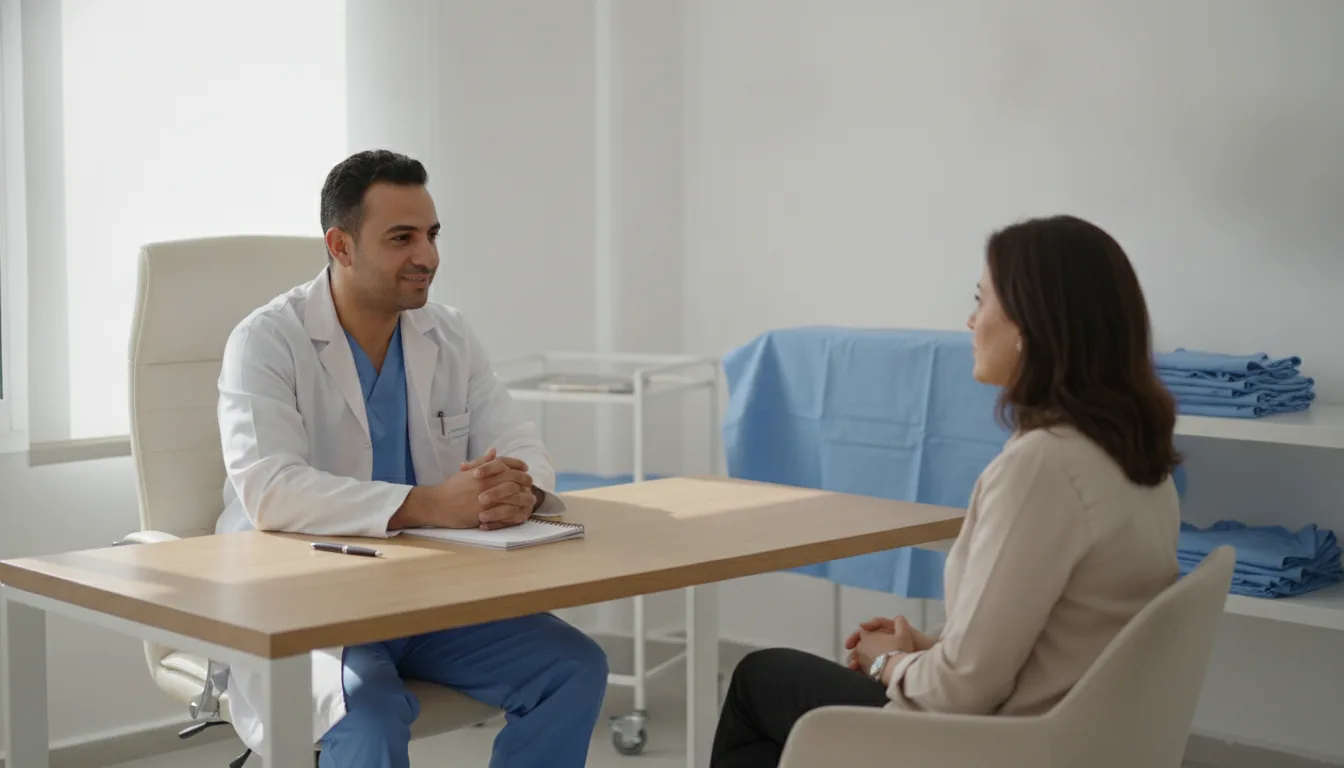
Anal fissure surgery
Surgeries/General/Anal fissure

Anal fissure surgery

Anal fissure in Tunis, Tunisia · Centre Urbain Nord

Surgical treatment of a painful chronic anal fissure when medical treatment has not allowed it to heal.

What is it?

An anal fissure is a small elongated tear in the skin of the anal canal, often caused by passing a hard stool. It causes sharp pain during and after bowel movements, sometimes lasting several hours, and occasionally slight bleeding. The pain triggers a reflex tightening of the anal muscle (sphincter), which prevents healing. Most recent fissures heal with medical treatment: regular bowel habits, gentle laxatives, and creams that relax the sphincter and relieve pain. When the fissure persists beyond a few weeks and becomes chronic, surgery may be offered. There are two main surgical approaches. Fissurectomy removes the fissure and its scarred edges, together with any associated skin tag or papilla, to create a healthy wound that can heal. Lateral internal sphincterotomy involves a limited, controlled division of part of the internal sphincter to reduce its tightness; it is offered case by case, after discussing its advantages and drawbacks. At Clinique Pasteur Tunis, the procedure is performed in the operating theatre, usually as day surgery or with one night in hospital, with clear advice on wound care and bowel habits.
Anal fissure surgery

When is it indicated?

Chronic anal fissure that does not heal

When the fissure persists after several weeks of properly followed medical treatment, surgery helps it to heal.

Severe pain affecting daily life

Intense pain with every bowel movement can lead people to hold back stools, which worsens constipation and keeps the fissure open.

Frequent recurrence of the fissure

A fissure that heals and then keeps coming back may justify a more lasting surgical treatment.

Complicated fissure (skin tag, papilla, minor infection)

When the fissure comes with skin folds or an early infection, the surgeon treats them at the same time.

Preparation

1Surgical consultation with a proctological examination
2Pre-operative blood tests and anaesthetic consultation
3Continue bowel treatment (fibre, gentle laxatives) before surgery
4Small rectal enema on the morning of surgery as instructed
5Nothing to eat or drink for 6 hours before surgery

Procedure

1

Short general anaesthesia or spinal anaesthesia

2

Examination of the anal area under anaesthesia

3

Fissurectomy: removal of the fissure and its scarred edges

4

Treatment of an associated skin tag or papilla if needed

5

Lateral internal sphincterotomy when it has been agreed with the patient

6

Simple dressing and monitoring in the recovery room

Duration

20 to 30 minutes

Aftercare & Recovery

Patients go home the same day or the next day. Fissure pain often eases quickly after the procedure. Sitz baths, local care and gentle laxatives are prescribed. Complete healing usually takes 4 to 8 weeks, with a follow-up appointment. A return to work is often possible after a few days to two weeks.

Risks and side effects

Pain and slight bleeding in the first few days
Delayed healing, monitored at follow-up
Mild difficulty controlling wind, possible mainly after sphincterotomy, usually temporary
Recurrence of the fissure, which is uncommon

These risks remain rare. Your surgeon will inform you in detail before the procedure.

Request a Quote

Contact us to schedule a consultation or receive a personalized quote.

Request a Quote +216 36 402 000

At a glance

Duration: 20 to 30 minutes
Preparation: Required
Dedicated specialist team

Related searches

  • Anal fissure Tunis
  • Anal fissure Tunisia
  • Anal fissure in Tunisia
Request a quote