
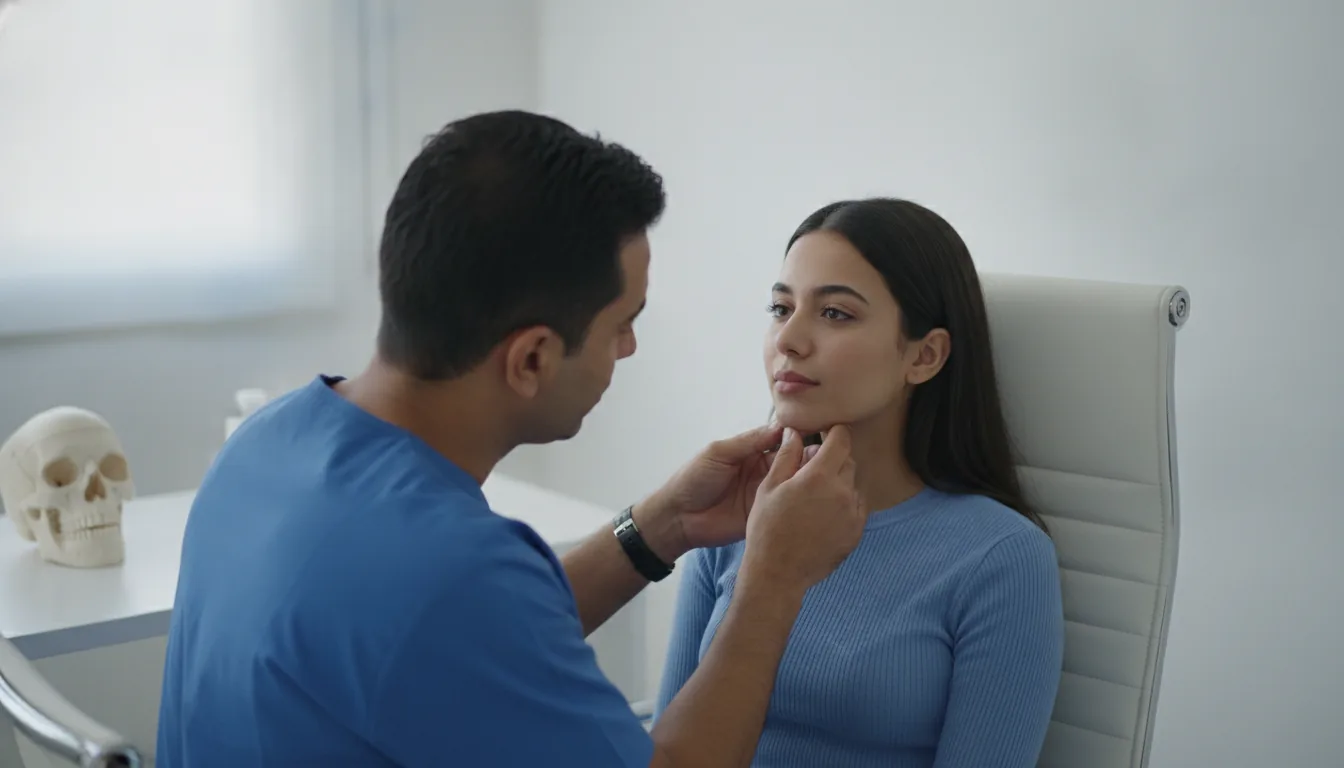
Orthognathic surgery (jaw advancement)
Surgeries/Cosmetic/Jaw advancement

Orthognathic surgery (jaw advancement)

Jaw advancement in Tunis, Tunisia · Centre Urbain Nord

Maxillofacial surgery that repositions the lower or upper jaw (advancement osteotomy) to correct a jaw discrepancy, restore a proper dental bite and harmonise the profile.

What is it?

Orthognathic surgery is the maxillofacial procedure that corrects a discrepancy between the jaws. When the lower jaw is set back (mandibular retrognathia, known as "class II"), a mandibular advancement osteotomy is performed, most often by bilateral sagittal split osteotomy of the mandibular rami: this is what is commonly called "jaw advancement". If it is the upper jaw that is set back, the advancement is done by Le Fort I osteotomy; both jaws can be moved in the same operation (bimaxillary osteotomy), and a genioplasty can complete the procedure to reposition the chin. A jaw discrepancy is not only a matter of appearance: it causes a poor bite (the teeth do not fit together), difficulty chewing, premature tooth wear, and sometimes pain in the jaw joint or snoring with sleep apnoea. By advancing the jaw, the operation restores a proper fit of the teeth, opens the airway and gives the profile a harmonious chin and lower face. The operation is part of a pathway coordinated with the orthodontist: several months of orthodontic preparation first align the teeth on each arch, then the surgery repositions the jaws according to precise planning carried out on CT scan and cephalometric analysis, often in three dimensions. The bones are fixed in their new position with small titanium plates and screws, which remain in place without discomfort. All incisions are made inside the mouth: no scar is visible. At Clinique Pasteur Tunis, orthognathic surgery is performed by experienced maxillofacial surgeons, under general anaesthesia, in an operating theatre meeting international standards, with a short hospital stay and attentive follow-up until bone healing and the end of orthodontic treatment.
Orthognathic surgery (jaw advancement)

When is it indicated?

Receding lower jaw (mandibular retrognathia, class II)

When the chin looks receding and the lower teeth sit well behind the upper ones, advancing the mandible restores the balance of the profile and the fit of the teeth.

Receding upper jaw (maxillary retrusion)

When it is the maxilla that lacks projection, its advancement restores support to the upper lip and cheekbones and corrects the bite.

Poor bite that cannot be corrected by orthodontics alone

When the discrepancy between the bony bases is too large to be compensated by braces, only surgery can achieve a stable bite.

Difficulty chewing, tooth wear or jaw joint pain

A jaw discrepancy strains the joint and wears the teeth abnormally; repositioning relieves these functional problems.

Sleep apnoea linked to a set-back jaw

In some patients, advancing the jaws durably widens the airway and is a recognised treatment for sleep apnoea syndrome.

Wish to harmonise the profile and lower face

Beyond function, the operation turns a receding profile into a balanced one, with a natural result that respects the features of the face.

Preparation

1Consultation with the maxillofacial surgeon and the orthodontist, in coordination
2Prior orthodontic preparation (usually 12 to 18 months) to align the teeth
3Imaging work-up: facial CT scan, cephalometric X-ray and analysis, 3D planning
4Photographs and casts or digital impressions of the dental arches
5Pre-operative anaesthesia consultation and blood tests
6Stopping smoking is recommended to promote bone healing
7Fast for 6 hours before the operation

Procedure

1

General anaesthesia

2

Incisions made exclusively inside the mouth, with no visible scar

3

Osteotomy (controlled cut of the bone) of the lower and/or upper jaw

4

Advancement and repositioning of the jaws according to the pre-operative plan, guided by a splint

5

Fixation with titanium mini-plates and screws

6

Associated genioplasty if needed to reposition the chin

7

Monitoring in the recovery room, then a hospital stay of 2 to 3 nights

Duration

2 to 4 hours depending on whether one or both jaws are involved

Aftercare & Recovery

Facial swelling, marked in the first days, subsides within two to three weeks. The diet is liquid then blended for four to six weeks while the bone heals, and tooth brushing is adapted. Work and social life usually resume after two to three weeks. The new profile can be appreciated as soon as the swelling goes down and stabilises within a few months; a few months of finishing orthodontics then perfect the bite. The result, both functional and aesthetic, is long-lasting.

Risks and side effects

Temporary facial swelling and bruising
Reduced sensation of the lower lip and chin, most often temporary
Bleeding or infection, rare and treated promptly
Limited mouth opening in the first weeks, recovered with exercises
Orthodontic adjustment or, exceptionally, revision surgery if the discrepancy recurs

These risks remain rare. Your surgeon will inform you in detail before the procedure.

Request a Quote

Contact us to schedule a consultation or receive a personalized quote.

Request a Quote +216 36 402 000

At a glance

Duration: 2 to 4 hours depending on whether one or both jaws are involved
Preparation: Required
Dedicated specialist team

Related searches

  • orthognathic surgery Tunisia
  • jaw surgery Tunisia
  • jaw advancement Tunis