
Upper jaw osteotomy (Le Fort I)
Surgeries/Maxillofacial/Maxillary osteotomy

Upper jaw osteotomy (Le Fort I)

Maxillary osteotomy in Tunis, Tunisia · Centre Urbain Nord

Surgical repositioning of the upper jaw to correct a mismatch between the jaws and restore a proper bite.

What is it?

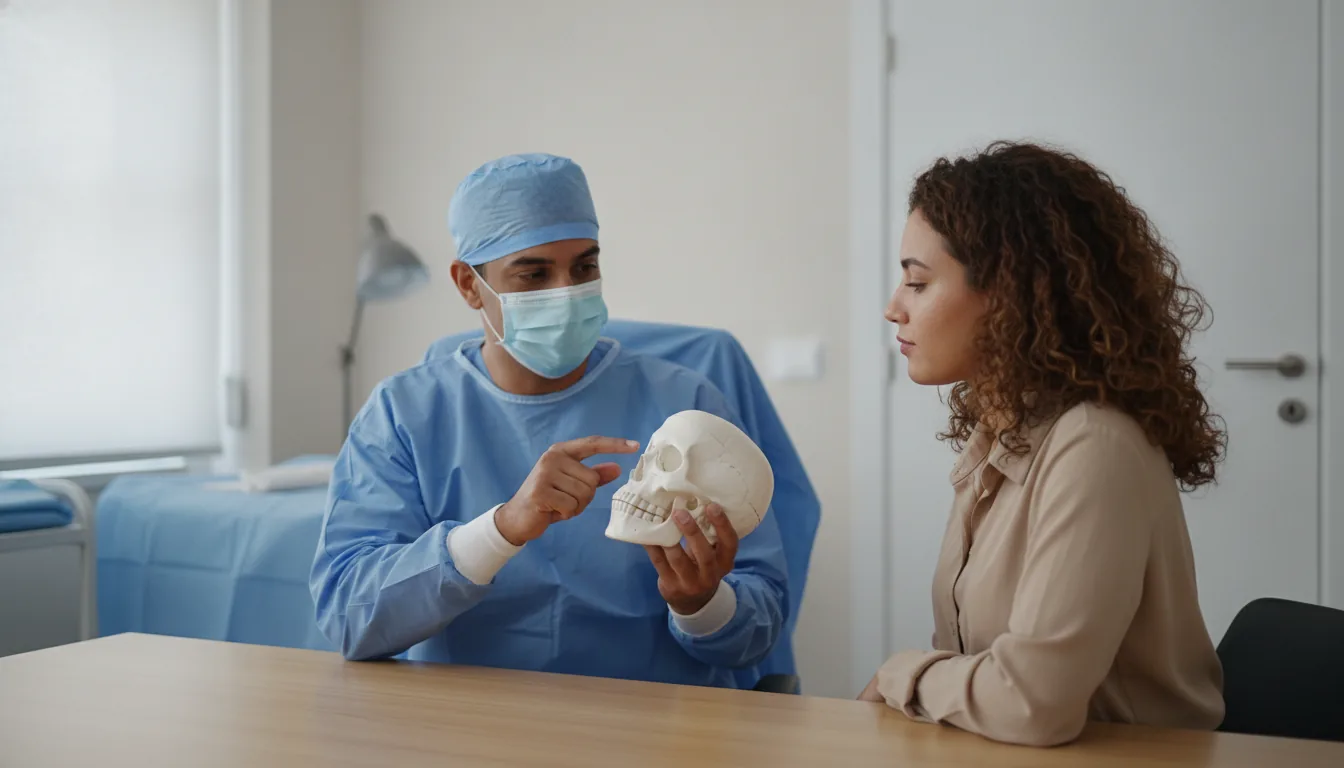
When the upper jaw (the maxilla) sits too far back, too far forward, too high, too low or is tilted, the teeth do not fit together properly and the balance of the face is altered. A Le Fort I osteotomy moves the upper jaw into the correct position. The operation is performed under general anaesthesia, through an incision inside the mouth, above the upper teeth: no scar is visible on the face. The surgeon makes precise cuts in the bone, moves the jaw according to a plan prepared in advance (models, surgical splints, sometimes computer simulation), then secures it with small titanium plates and screws that stay in place. It is usually part of a treatment combining an orthodontist and a maxillofacial surgeon: braces are worn before and after the operation. It may be combined with a lower jaw osteotomy when both jaws need to be moved. At Clinique Pasteur Tunis, this surgery is performed by maxillofacial surgeons in the operating theatre, with post-operative monitoring suited to facial surgery and coordination with the patient's orthodontist.
Upper jaw osteotomy (Le Fort I)

When is it indicated?

Upper jaw set too far back

When the upper teeth sit behind the lower teeth, moving the upper jaw forward restores a normal bite.

Vertical excess of the maxilla (gummy smile)

An upper jaw that sits too low shows a lot of gum when smiling; moving it up balances the smile and the face.

Open bite: the front teeth do not meet

When the front teeth stay apart with the mouth closed, biting and speaking can be difficult; repositioning the jaw closes this gap.

Asymmetry of the upper jaw

A tilted or sideways-shifted jaw can be brought back in line with the face.

Difficulty chewing or breathing

A significant mismatch can make chewing difficult; surgery improves function as well as appearance.

Preparation

1Preparatory orthodontic treatment, often lasting several months
2Imaging: lateral skull X-ray, dental panoramic X-ray, CT scan if needed
3Surgical planning and fabrication of surgical splints
4Anaesthesia consultation and blood tests
5Stopping smoking is strongly recommended for good bone healing
6Fasting for 6 hours before the operation

Procedure

1

General anaesthesia

2

Incision inside the mouth, above the upper teeth

3

Precise cut through the bone of the upper jaw

4

Movement of the jaw into the planned position using the splint

5

Fixation with small titanium plates and screws

6

Closure with dissolvable stitches and monitored recovery

Duration

About 2 to 3 hours

Aftercare & Recovery

The hospital stay usually lasts 2 to 3 days. The face is swollen for 1 to 2 weeks and the swelling gradually settles over a few weeks. A liquid then blended diet is needed for several weeks, with careful oral hygiene. Return to office work is possible after 2 to 3 weeks. Orthodontic treatment then continues to finalise the bite.

Risks and side effects

Temporary swelling and bruising of the face
Reduced sensation of the upper lip or gums, usually temporary
Blocked nose and minor nosebleeds in the first few days
Infection or discomfort related to the plates, sometimes requiring their removal
Slight relapse of the mismatch, monitored and corrected with orthodontics

These risks remain rare. Your surgeon will inform you in detail before the procedure.

Request a Quote

Contact us to schedule a consultation or receive a personalized quote.

Request a Quote +216 36 402 000

At a glance

Duration: About 2 to 3 hours
Preparation: Required
Dedicated specialist team

Related searches

  • Maxillary osteotomy Tunis
  • Maxillary osteotomy Tunisia
  • Maxillary osteotomy in Tunisia
Request a quote