
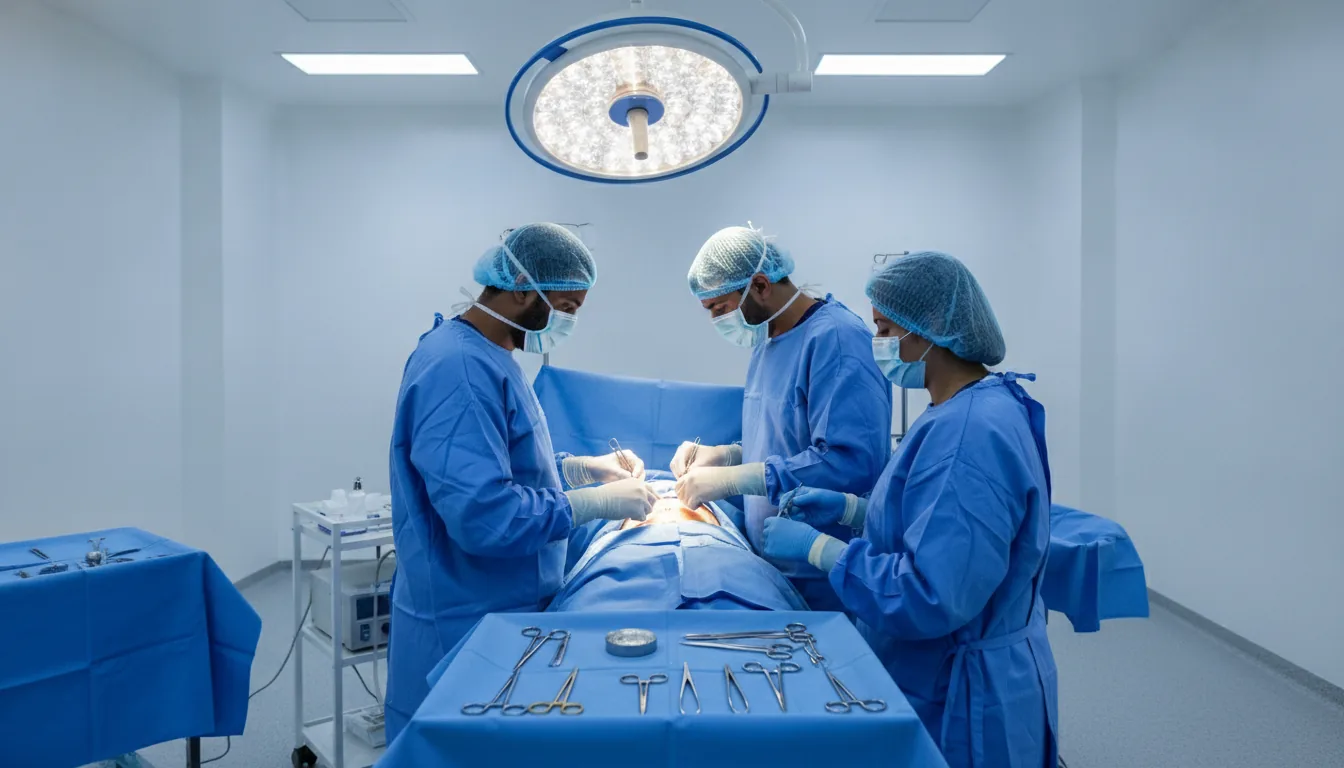
Abdominoplasty
Abdominoplasty in Tunis, Tunisia · Centre Urbain Nord
Tummy reshaping surgery: removal of excess skin, muscle tightening and redefinition of the waist for a flat, toned abdomen.
What is it?
When is it indicated?
When the skin of the abdomen remains stretched after pregnancies or weight loss, the procedure removes it to restore a flat tummy.
When the abdominal muscles have separated, particularly after pregnancy, they are brought back together to tighten the wall and improve comfort.
The damaged, stretch-marked skin below the navel is precisely the skin removed during the procedure, which markedly improves the appearance of the abdomen.
When a fold of skin hangs over the lower abdomen and interferes with dressing, hygiene or walking, its removal brings real relief.
When neither exercise nor diet can overcome a loose abdomen, surgery corrects what effort alone can no longer change.
Preparation
Procedure
General anaesthesia
Precise pre-operative markings
Combined liposuction of the flanks if planned
Removal of excess skin and fat below the navel
Tightening of the muscular wall
Natural repositioning of the navel
Layered closure and fitting of the compression garment
Duration
2 to 3 hours
Aftercare & Recovery
The abdomen is immediately flatter and the waist redefined. The compression garment is worn for a few weeks and activities resume gradually. The final result is appreciated after a few months, once the swelling has subsided and the scar has faded.
Risks and side effects
These risks remain rare. Your surgeon will inform you in detail before the procedure.
Coming from abroad?
The clinic supports international patients: personalised quote, stay planning, help with accommodation and transfers, communication in French, English and Arabic.
Frequently asked questions
Tummy tuck in Tunisia: what does the procedure involve?
Abdominoplasty is a surgery that reshapes the abdomen. It removes the excess skin and fat below the navel, tightens the abdominal muscles and redefines the waist, with the navel repositioned naturally. It is generally intended for people whose abdominal skin remains stretched after pregnancies or significant weight loss; the indication is confirmed during the consultation with the plastic surgeon.
Liposuction or tummy tuck: what is the difference?
Liposuction removes localised fat deposits, but it does not treat excess skin. Abdominoplasty removes the stretched skin below the navel and tightens slack muscles, including in cases of diastasis; liposuction of the flanks is often combined with it. The choice depends on the quality of the skin and abdominal wall, assessed during the consultation.
Tummy tuck after pregnancy or weight loss: when should you consider it?
The procedure is considered once your weight has stabilised. After pregnancies, it removes the stretched skin below the navel and, if needed, corrects the separation of the rectus abdominis muscles (diastasis). As a new pregnancy can stretch the skin and muscles again, tell the surgeon about any plans for pregnancy: they take this into account when choosing the right time. After obesity surgery, abdominoplasty is part of post-weight-loss reconstructive surgery.
How do you prepare for a tummy tuck?
Preparation begins with a consultation with the plastic surgeon, who defines the plan with you, followed by a pre-operative anaesthesia consultation. You will be asked to have a stable weight, to stop smoking (strongly recommended, as it can delay healing), to report all your medications, to follow the fasting instructions given by the anaesthesia team and to obtain the prescribed compression garment.
How long does a tummy tuck take, and is a hospital stay needed?
The procedure generally takes 2 to 3 hours and is performed under general anaesthesia, after a pre-operative anaesthesia consultation. It requires a hospital stay, with careful pain management. The surgeon will tell you during the consultation how long your stay should be in your situation.
Scar and recovery after a tummy tuck: what to expect?
The scar is placed very low on the abdomen so that it stays hidden by underwear and swimwear, and it fades over time. Swelling and a feeling of tightness in the abdomen are temporary. The compression garment is worn for a few weeks, activities resume gradually and the final result can be assessed after a few months.
Can I have a tummy tuck in Tunisia if I live abroad?
Yes. Clinique Pasteur Tunis supports international patients: you can request a personalised quote online, then the team helps you plan your consultation and surgery dates and arrange accommodation and transfers. All communication can take place in French, English or Arabic.
Request a Quote
Contact us to schedule a consultation or receive a personalized quote.
Request a Quote +216 36 402 000At a glance
Read also
Plastic Surgery in Tunisia from Abroad: Step-by-Step Guide
Do you live outside Tunisia and are you considering cosmetic surgery in Tunis? Here are the steps, from the online quote request to follow-up after you return home.
Read the article
Liposuction in Tunisia: procedure, recovery and results
Considering liposuction? Here is how the procedure is prepared and carried out, and what to expect in the following weeks: compression garment, bruising, getting back to activities and how the result develops.
Read the articleTummy tuck in Tunisia: procedure and recovery
Considering a tummy tuck? Here is, step by step, how the procedure is prepared and carried out, and what to expect during recovery: compression garment, scar and return to activities.
Read the articleRelated searches
- tummy tuck Tunisia
- abdominoplasty Tunisia
- abdominoplasty Tunis