
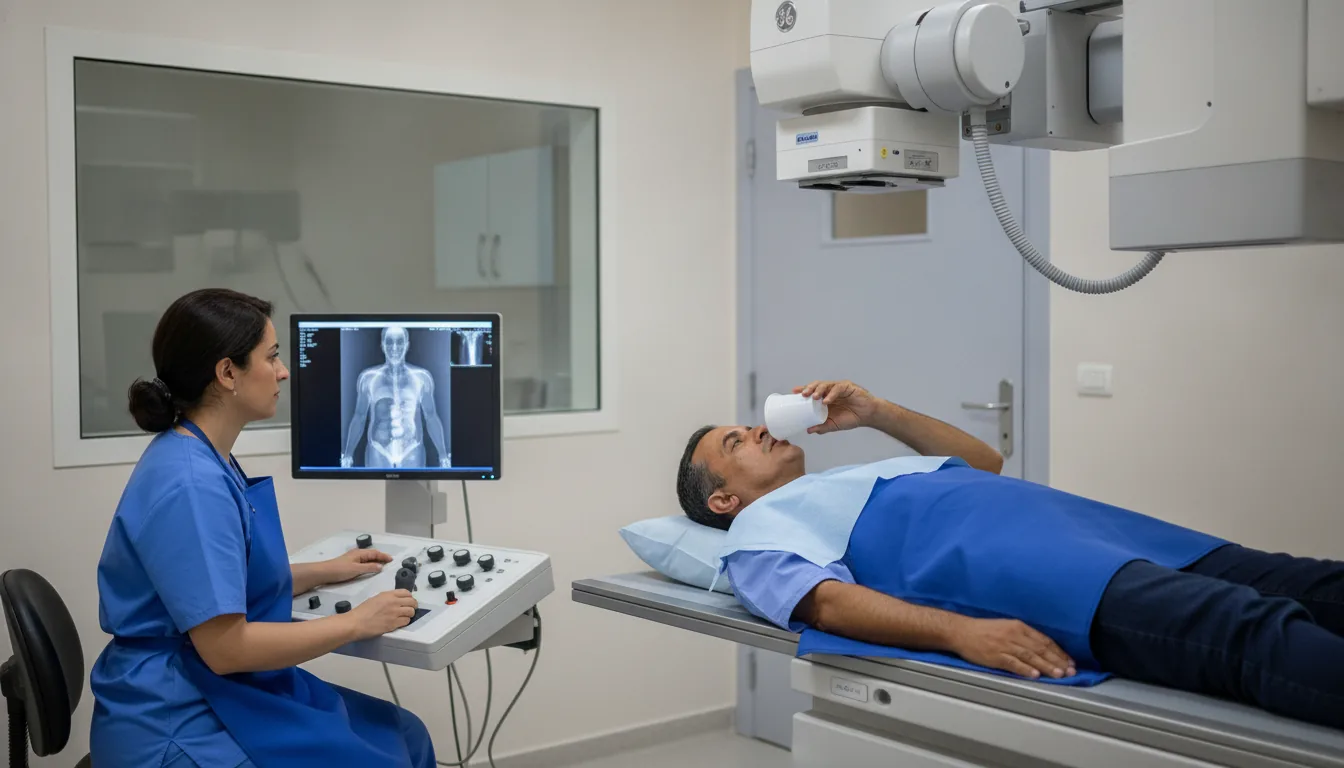
Intravenous urography (IVU) and retrograde urethrocystography (voiding cystourethrogram)
Centres/Radiology/Conventional radiology/IVU and cystourethrogram

Intravenous urography (IVU) and retrograde urethrocystography (voiding cystourethrogram)

IVU and cystourethrogram in Tunis, Tunisia · Centre Urbain Nord

Intravenous urography (IVU) and voiding cystourethrogram in Tunis: X-rays of the kidneys, bladder and urethra with iodinated contrast.

What is it?

These two examinations study the urinary tract with an iodinated contrast agent, but in different ways. Intravenous urography (IVU) involves injecting the contrast agent into an arm vein: it is filtered by the kidneys, then successive images show the kidneys, ureters and bladder. It is now often replaced by CT urography. Retrograde urethrocystography (voiding cystourethrogram) involves filling the bladder with contrast through a thin catheter, then taking images while you pass urine (voiding). It looks in particular for urine flowing back from the bladder to the kidneys (vesicoureteral reflux) in children, or a narrowing of the urethra in adults. A recent urine test (urine culture) is often requested to make sure there is no urinary infection before the examination.

When is it indicated?

Recurrent urinary infections in children

The cystourethrogram looks for urine flowing back from the bladder to the kidneys.

Urethral narrowing

The cystourethrogram shows the narrowed area and its length before treatment.

Study of the urinary tract

The IVU shows the shape of the kidney cavities and ureters, if CT urography is not chosen.

Check after urological surgery

These examinations check for leaks or proper drainage after some procedures.

Preparation

1Tell us before the examination if you are pregnant or think you might be
2Tell us about any allergy or past reaction to an iodinated contrast agent, kidney disease, diabetes or thyroid problem; a blood test (creatinine) may be requested
3If you take metformin (for diabetes), ask your doctor's advice: it may be stopped temporarily around an iodinated contrast injection
4For the cystourethrogram, bring a recent urine culture if requested: the examination is postponed in case of urinary infection
5Fasting or not, as instructed when you book
6Bring your referral and any previous X-rays or reports of the same area

Procedure

1

You remove clothing and metal objects from the area being examined, in a changing cubicle

2

IVU: an image without contrast is taken, then the agent is injected into the arm and images are taken at regular intervals

3

Cystourethrogram: after disinfection, a thin catheter is placed in the bladder through the urethra, then the bladder is gently filled

4

For the cystourethrogram, images are taken while you pass urine on the table: this is normal and planned

5

The radiologist follows the contrast agent live on a screen (fluoroscopy) and takes images at the right moments

6

After the examination, drink plenty of fluids to flush out the contrast agent

Duration

About 30 to 60 minutes for the IVU; about 20 to 30 minutes for the cystourethrogram

Results

The images are analysed by a radiologist, who writes a report. It is given to you with the images and sent to your doctor, who will explain the results and the next steps. You will be told on the day of the examination when the results will be ready.

Precautions and contraindications

Higher X-ray dose than a plain X-ray, because images are taken over several minutes, but kept as low as possible
Allergic reaction to iodinated contrast: rare and usually mild (redness, itching); severe reactions are exceptional and the team is prepared to manage them
In case of kidney failure, the iodinated contrast injection is avoided or adjusted by the doctor
Not performed during pregnancy, except in specific medical circumstances
Cystourethrogram: urinary infection possible after catheter placement; see a doctor in case of fever or persistent burning
Cystourethrogram: mild discomfort or burning when passing urine for a few hours

Your doctor and the radiology team will inform you in detail before the examination. Feel free to ask them your questions.

This information is general and does not replace the advice of your doctor, who chooses the examination suited to your situation.

Related searches

  • IVU and cystourethrogram Tunis
  • IVU and cystourethrogram Tunisia
  • IVU and cystourethrogram in Tunisia
Request a quoteBook an appointment