
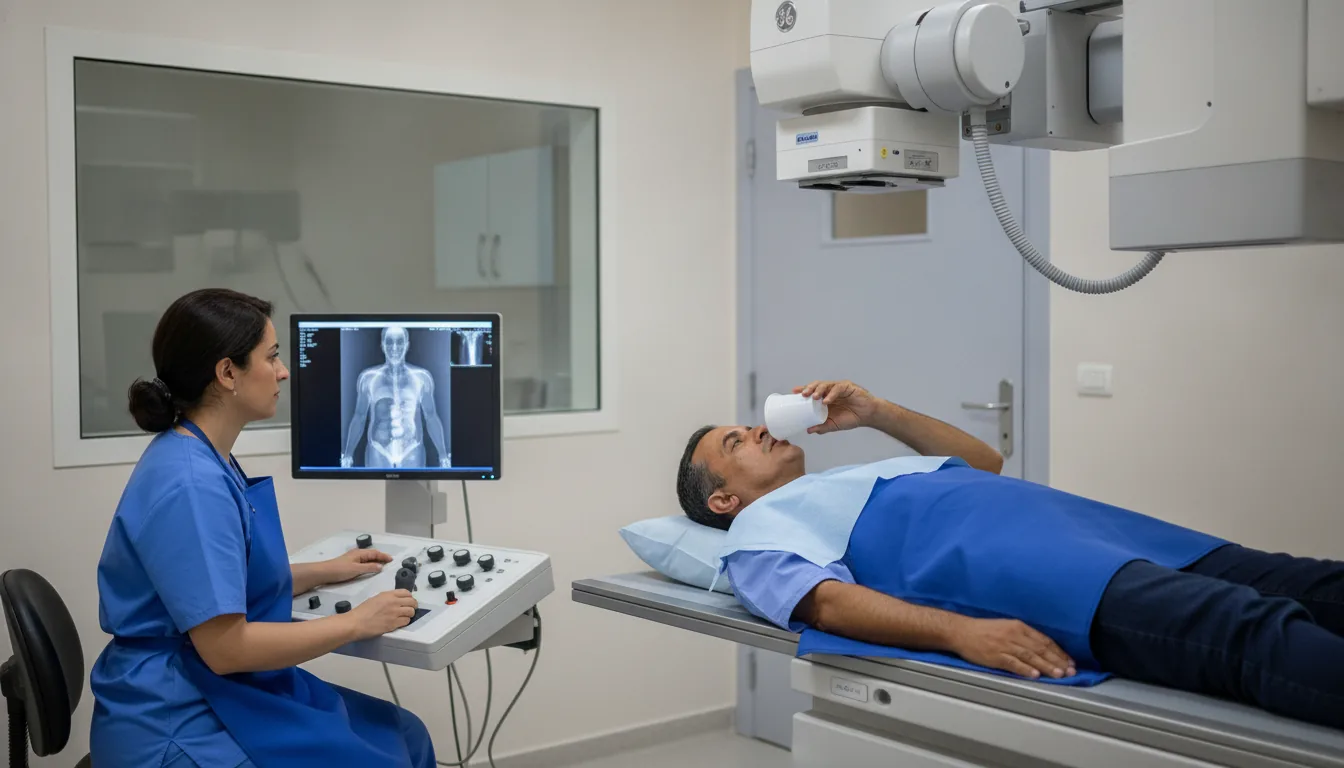
Hysterosalpingography (HSG)
Hysterosalpingography in Tunis, Tunisia · Centre Urbain Nord
Hysterosalpingography (HSG) in Tunis: X-ray of the uterus and fallopian tubes with iodinated contrast, as part of a fertility assessment.
What is it?
When is it indicated?
It checks that the tubes are open, which is necessary for the egg and sperm to meet.
It may show a polyp, a fibroid, a septum or a malformation of the uterus.
It looks for an abnormality in the shape of the uterus.
Selective HSG studies a tube that does not fill during the standard examination.
Preparation
Procedure
You lie on your back on the table, in the gynaecological position
A speculum is inserted, as for a smear test, then a thin cannula is placed at the cervix
The contrast agent is gently injected while the radiologist follows it on a screen
Cramps similar to period pain are common during the injection and ease quickly
A final image may be taken a few minutes later
Light bleeding or discharge may occur for a day or two: bring a sanitary pad
Duration
About 15 to 30 minutes
Results
The images are analysed by a radiologist, who writes a report. It is given to you with the images and sent to your doctor, who will explain the results and the next steps. You will be told on the day of the examination when the results will be ready.
Precautions and contraindications
Your doctor and the radiology team will inform you in detail before the examination. Feel free to ask them your questions.
This information is general and does not replace the advice of your doctor, who chooses the examination suited to your situation.
Other examinations — Conventional radiology
All examinationsRelated searches
- Hysterosalpingography Tunis
- Hysterosalpingography Tunisia
- Hysterosalpingography in Tunisia