
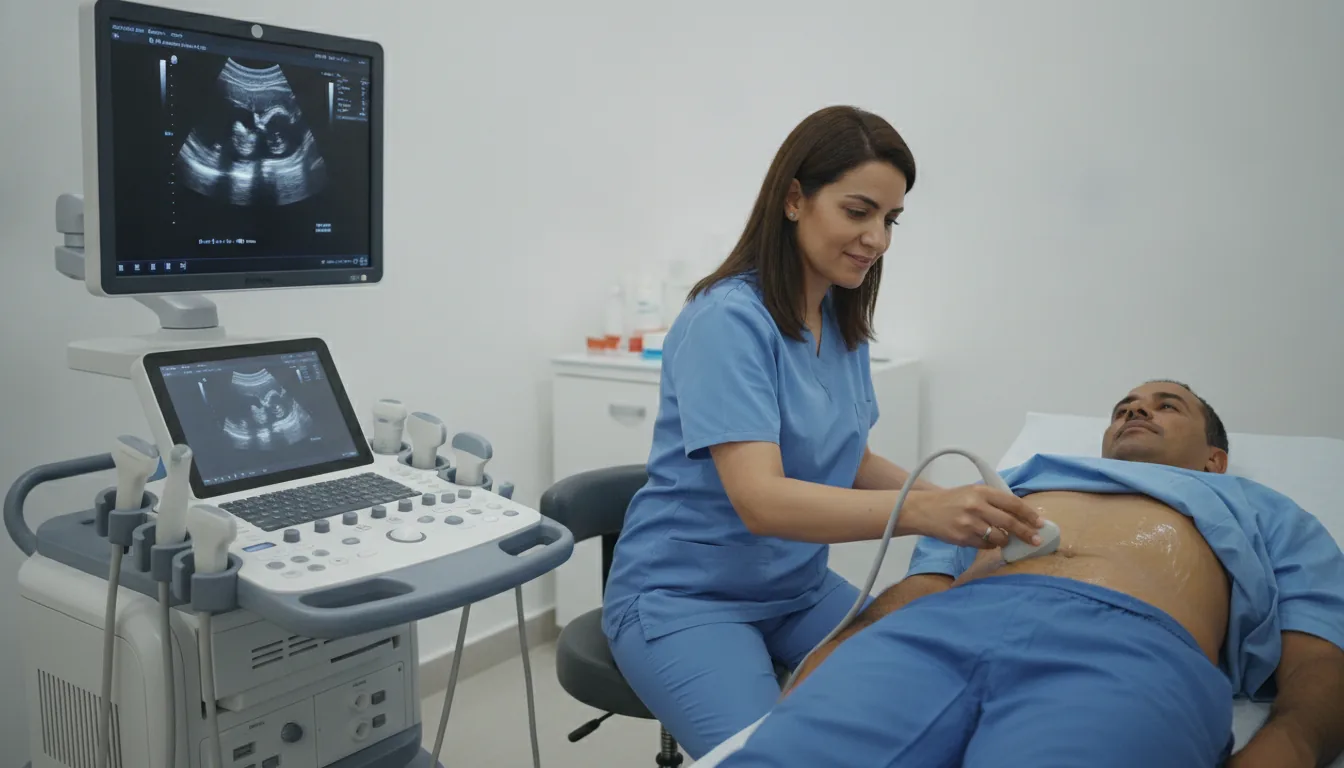
Prostate ultrasound (transabdominal or transrectal)
Centres/Radiology/Ultrasound/Prostate ultrasound

Prostate ultrasound (transabdominal or transrectal)

Prostate ultrasound in Tunis, Tunisia · Centre Urbain Nord

Prostate ultrasound in Tunis, transabdominal or transrectal: prostate volume, urinary symptoms and urine left after voiding.

What is it?

A prostate ultrasound measures the volume of the prostate and examines its appearance. With the transabdominal route, the probe is moved over the lower abdomen with a full bladder; the examination is often combined with a bladder scan (bladder and prostate ultrasound) and measurement of the post-void residual. With the transrectal route, a thin probe protected by a single-use sheath is gently inserted into the rectum. This route gives more precise images of the prostate; it can be combined with a kidney scan during the same session. When prescribed by the urologist, transrectal ultrasound is also used to guide prostate biopsies; in that case, specific instructions are given to you in advance.

When is it indicated?

Urinary symptoms in men

Frequent urges, a weak stream, getting up at night: it measures the volume of the prostate.

Urine left after voiding

It checks whether the bladder empties completely.

Raised PSA or abnormal rectal examination

It completes the urologist's work-up, together with a prostate MRI if needed.

Biopsy guidance

When prescribed by the urologist, it guides the samples taken from the prostate.

Preparation

1For the transabdominal route, come with a full bladder (drink about one litre of water in the hour before, without passing urine)
2For the transrectal route, a small enema may be requested before the examination, as instructed when booking
3Tell us about any anticoagulant or antiplatelet treatment, especially if a biopsy is planned
4Bring your PSA test result and the urologist’s reports
5Bring your referral, previous imaging (ultrasound, X-rays, CT scan, MRI) and any relevant reports

Procedure

1

For the transabdominal route, you lie on your back and the probe is moved over the lower abdomen with a gel

2

The residual volume may be measured after you have passed urine

3

For the transrectal route, you lie on your side with your knees bent; the thin, protected probe is inserted gently

4

The discomfort is usually moderate and brief

5

The gel is wiped off; you can return to your usual activities straight away

Duration

About 15 to 30 minutes

Results

The images are analysed by the doctor performing the examination, who writes a report. The report is given to you with the relevant images and sent to your doctor, who will explain the results and the next steps. You will be told when to expect it on the day of the examination.

Precautions and contraindications

No X-rays: ultrasound uses sound waves, without ionising radiation
Transrectal route: temporary discomfort, rarely slight bleeding
Painless; slight discomfort is possible when the probe presses on a tender area
No contraindications: the examination can be repeated as often as needed

Your doctor and the radiology team will inform you in detail before the examination. Feel free to ask them your questions.

This information is general and does not replace the advice of your doctor, who chooses the examination suited to your situation.

Related searches

  • Prostate ultrasound Tunis
  • Prostate ultrasound Tunisia
  • Prostate ultrasound in Tunisia
Request a quoteBook an appointment