
Why preparation matters so much
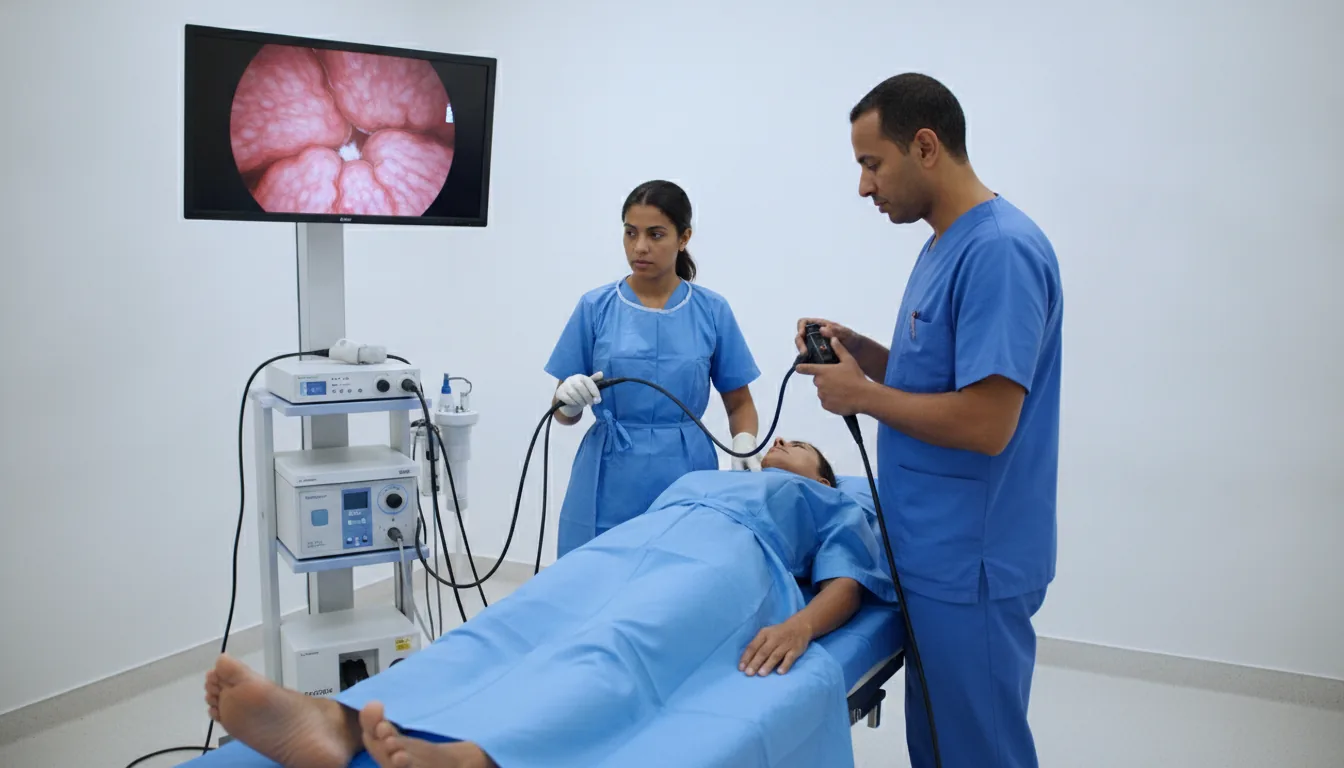
A colonoscopy allows the gastroenterologist to look directly inside the colon and rectum using a flexible endoscope fitted with a camera. It is a valuable test for screening and monitoring many digestive conditions, and it sometimes makes it possible to remove small polyps at the same time, without surgery.
For the doctor to see the bowel wall clearly, the colon must be completely clean. Food residue can hide a small lesion or mean the test has to be rescheduled. Preparation is therefore not a minor detail: it largely determines the quality of the examination.
Rest assured, this preparation is well established and usually goes smoothly. It rests on three pillars: a suitable diet in the days beforehand, taking a bowel-cleansing solution, and following the fasting and medication instructions given by your doctor.
The low-fibre diet in the days before
A few days before the test, your doctor will usually ask you to follow a so-called low-residue diet, meaning a diet low in fibre. The aim is to limit foods that leave waste in the bowel. The exact length of this diet will be specified when the test is prescribed.
Here are the usual guidelines, to be adapted to the instructions you receive:
- Preferred: white rice, white pasta, white bread, peeled potatoes, lean meat, fish, eggs, hard cheeses, strained broth.
- To avoid: fruit and vegetables (fresh, cooked or dried), pulses (lentils, chickpeas, broad beans), whole grains, wholemeal bread, seeds, nuts.
- Also avoid foods with pips or small seeds (tomatoes, figs, kiwis, pomegranates), which easily remain in the bowel.
- Drink water and clear fluids regularly; limit red or dark-coloured drinks, which can make the images harder to read.
Bowel preparation: how to take it well
The bowel-cleansing solution, often called the “prep”, causes repeated liquid stools that gradually clean the bowel. It is usually taken in two stages, the evening before and the morning of the test, according to the protocol prescribed by your doctor. Follow the times and quantities on your prescription carefully: they are what makes the preparation work.
A few tips can make it easier to tolerate:
- Serve the solution well chilled and drink it at a steady pace, glass after glass, rather than all at once.
- Stay close to a toilet from the moment you start: the first effects may appear fairly quickly.
- Add the permitted clear fluids (water, weak tea, strained broth) to avoid dehydration.
- Protect the skin around the anus with a rich cream if it becomes irritated.
- A good sign: by the end of the preparation, stools should be liquid, clear and yellowish, with no residue.
- If you have significant nausea, vomiting or feel unwell, contact the medical team without delay.
Medicines and information to mention
Before any colonoscopy, your doctor needs to know about your health and your treatments. Some situations require adjustments that should never be decided on your own: do not stop or change any medicine without their advice.
Remember to mention in particular:
- Any blood-thinning treatment (anticoagulant or antiplatelet): any adjustment is discussed with the prescribing doctor.
- Diabetes, as the diet and fasting may require your treatment to be adjusted.
- Heart or kidney disease, or any known allergy, especially to medicines.
- Pregnancy, even if only possible.
- Medicines you take regularly by mouth, such as the contraceptive pill, whose effectiveness may be affected by the prep.
On the day: how the colonoscopy is carried out
At Clinique Pasteur in Tunis, colonoscopy is performed in the endoscopy centre under sedation provided by an anaesthetist. A pre-anaesthetic consultation is therefore planned before the test. On the day, you must be fasting according to the instructions you received; bring your prescription, any previous test results and the list of your medicines.
Once settled, you lie on your left side. The anaesthetist gives the sedation through a vein: you fall asleep and do not feel the examination. The gastroenterologist then gently inserts the endoscope and blows in a little air to open out the colon and see its wall clearly. The careful inspection is mainly done while the instrument is being withdrawn.
If a polyp is found, it can often be removed at the same time. Samples (biopsies) may also be taken: they are painless. The examination itself usually does not take long, but plan to be present for a few hours in total, including admission and monitoring as you wake up.
After the colonoscopy: going home
After the test, you are monitored while the effects of the sedation wear off. The doctor then explains what they observed; if samples were taken, their results will be given to you later, at an appointment or through your own doctor.
A few simple rules for what follows:
- Arrange to be accompanied: a relative or friend must take you home.
- Do not drive, operate machinery or make important decisions for the rest of the day after sedation.
- Bloating or mild cramps are common and short-lived; they are caused by the air blown in.
- You can usually return to a normal diet quickly, unless the doctor tells you otherwise.
- Contact the medical team without delay if you have severe abdominal pain, fever or significant bleeding.
Frequently asked questions
How long before a colonoscopy should I start the diet?
The low-fibre diet usually starts a few days before the test. The exact length depends on your situation and is given to you by your doctor when the test is prescribed.
Is a colonoscopy painful?
At Clinique Pasteur in Tunis, colonoscopy is performed under sedation by an anaesthetist: you are asleep during the test and do not feel it. After waking up, mild bloating may last a few hours.
Can I drink water before a colonoscopy?
Clear fluids are generally allowed during the preparation, then fasting is required before the test because of the sedation. Follow the times given by the medical team precisely, as they may vary from one person to another.
How do I know if my preparation is good enough?
By the end of the prep, stools should be liquid, clear and free of residue, rather like slightly yellow water. If this is not the case, let the team know before the test: they will tell you what to do.
Can I go home alone after the test?
No. After sedation, you must be taken home by a relative or friend and must not drive for the rest of the day. Organise your journey home before the day of the test.
This article is for general information only. It does not replace the advice of your doctor, who alone can adapt instructions to your situation.
Learn more
A question? A quote?
Our team answers your questions and supports you throughout your care journey.