
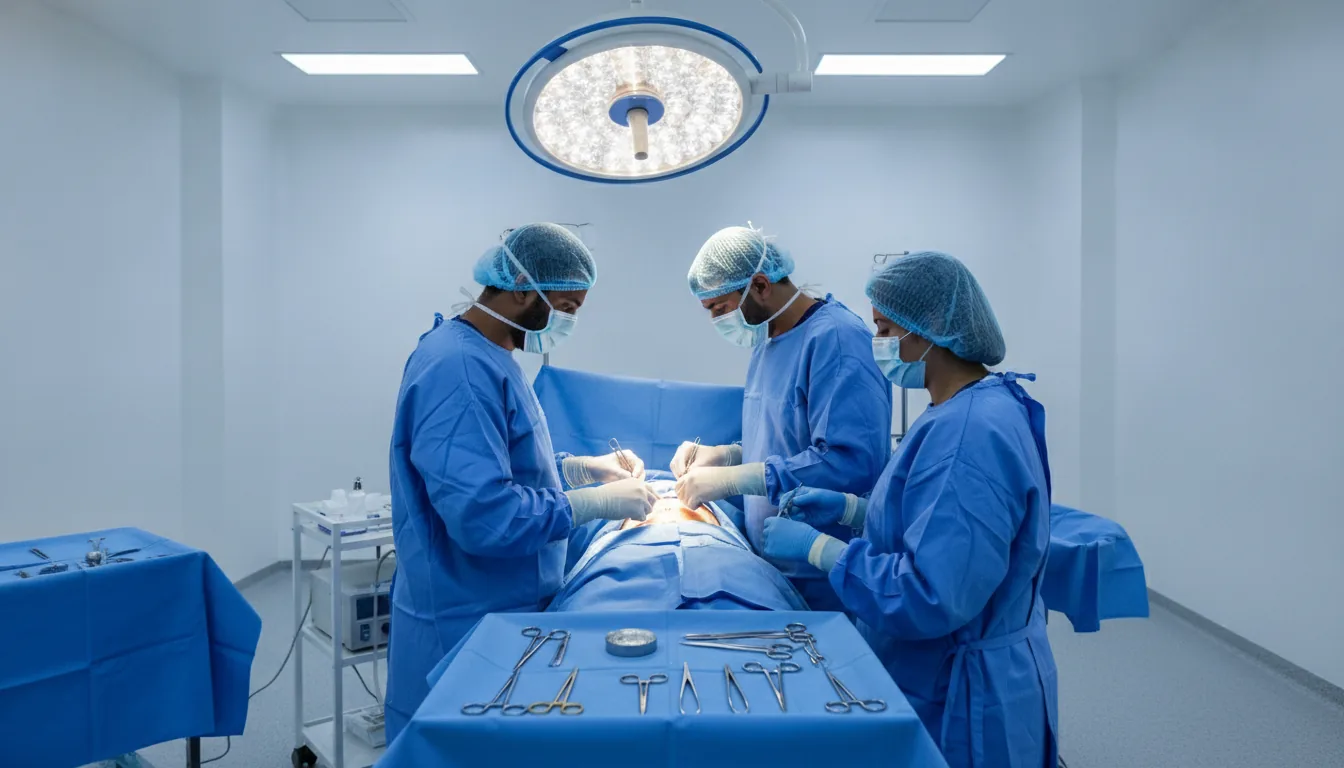
Before you start: what a tummy tuck does
A tummy tuck, or abdominoplasty, is surgery that reshapes the abdomen. It removes the excess skin and fat below the navel, tightens the muscular wall and redefines the waist. It is most often considered when the skin remains stretched after pregnancies or significant weight loss. The site's Abdominoplasty page, offered at the bottom of this article, sets out the essentials.
This guide follows the journey in order: preparation, the day of surgery, the hospital stay, then the weeks of recovery. If you are still deciding between procedures, our article "Liposuction or tummy tuck in Tunisia", in the Health advice section, explains what guides that choice.
As every situation is different, the information below remains general. Only your surgeon and your anaesthetist can adapt it to your case.
Preparation: consultations and instructions
Everything starts with a consultation with the plastic surgeon, who examines the skin, the muscular wall and the distribution of fat, listens to your expectations and defines the plan with you. This is the right time to ask about the scar, your recovery and any future pregnancy plans.
A pre-operative anaesthesia consultation follows. The team then gives you your personalised instructions, which generally include the following:
- a stable weight before the procedure;
- stopping smoking, strongly recommended, as it can delay healing;
- telling the team about all your medication: only the doctor can say whether any of it needs adjusting;
- fasting before the procedure, according to the anaesthesia team's instructions;
- buying the prescribed compression garment, to bring with you on the day of surgery if the team asks you to.
The day of surgery, step by step
A tummy tuck is performed under general anaesthesia and generally takes 2 to 3 hours. This varies with the steps planned, particularly if liposuction of the flanks is combined with it. Here are the main stages:
- the surgeon makes precise markings on the skin before the procedure;
- after anaesthesia, liposuction of the flanks is performed if it was planned;
- the excess skin and fat below the navel are removed;
- the muscular wall is tightened, which corrects any separation of the muscles (diastasis);
- the navel is repositioned naturally;
- the wound is closed in several layers and the compression garment is fitted.
The hospital stay and the first few days
A tummy tuck requires a hospital stay, with careful pain management. The surgeon will tell you during the consultation how long your stay should be in your situation. The team also shows you how to lie down and how to get up comfortably during the first few days.
A feeling of tightness in the abdomen and swelling are usual at first, and they are temporary. It is therefore normal not to stand fully upright straight away and to move slowly.
Early mobilisation, encouraged by the team, is part of your care: together with the preventive treatment prescribed, it helps to prevent phlebitis. Walking a little, even short distances, as soon as the team allows it is therefore useful.
The compression garment and the gradual return to activities
The compression garment is worn for a few weeks. It supports the abdomen and contributes to comfort during recovery. The exact length of time and how to wear it are set by your surgeon: follow their instructions rather than a rule found elsewhere.
Activities resume gradually. Everyday movements come back first, then work, depending on the effort it involves, and finally sport and lifting, which put direct strain on the newly tightened wall. Your surgeon gives you the go-ahead for each stage at your check-ups.
The abdomen looks different from the day of surgery, but swelling still hides the result. It can be assessed after a few months, once the swelling has subsided and the scar has faded. Keeping a stable weight then helps to preserve it.
The scar: where it sits and how it changes
The scar is placed very low on the abdomen, so that it stays hidden by underwear and swimwear. Feel free to bring a style you like to wear to the consultation: it helps you discuss this concretely with the surgeon.
It fades over time, but how it changes varies from one person to another and takes several months. Localised delayed healing can occur; it is more frequent in smokers, which is why the advice on smoking matters. Your surgeon tells you which care to apply and which precautions to take, particularly regarding the sun.
Coming from abroad, and knowing when to call
If you live abroad, you can describe your situation in the quote request form: your file is reviewed by the relevant specialist, then the team helps you plan your consultation and surgery dates and arrange accommodation and transfers. All communication can take place in French, English or Arabic. Plan to stay long enough for the first check-ups, and set your return date with the surgeon.
Wherever you are during your recovery, certain signs mean you should contact your surgeon quickly, without waiting for the next check-up:
- a fever, or pain that is unusual or getting worse;
- bleeding or significant swelling;
- discharge from the scar or redness around it;
- pain or swelling in the calf, or breathlessness: in this case, call without delay.
Frequently asked questions
Can you walk after a tummy tuck?
Yes, and it is actively encouraged. You get up early, as soon as the team allows it, because this helps to prevent phlebitis. The first steps are slow, and it is normal to feel tightness in the abdomen at first.
How long is the recovery?
It varies with the person and the steps performed. The compression garment is worn for a few weeks, activities resume gradually and the result can be assessed after a few months. The surgeon gives you a timetable suited to your situation.
When can I go back to sport after a tummy tuck?
Sport and lifting come back after everyday activities, as they put strain on the muscular wall that has just been tightened. Wait for your surgeon's agreement, given at your check-ups.
Will the scar show?
It is placed very low on the abdomen to stay hidden by underwear and swimwear, and it fades over time. Its final appearance varies from one person to another and can be assessed after several months.
I live abroad: when can I go home?
Your return date depends on your recovery and is decided with the surgeon: raise it as soon as you start planning your stay and allow some margin. You leave with your medical report and follow-up instructions, and the team remains available for your questions.
This article is for general information only. It does not replace the advice of your doctor, who alone can adapt instructions to your situation.
Learn more
A question? A quote?
Our team answers your questions and supports you throughout your care journey.