
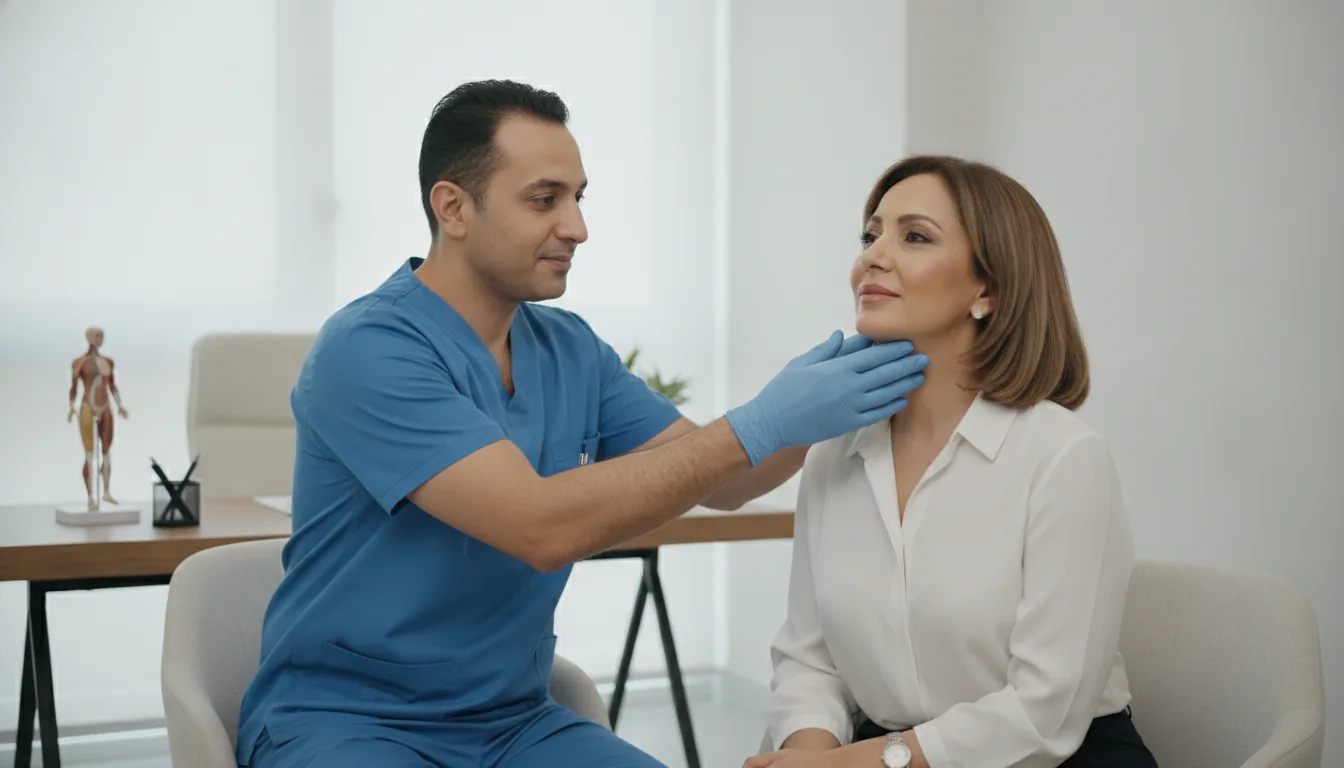
The neck and facelift in a few words
A neck and facelift (cervicofacial lift) is a cosmetic surgery procedure that corrects sagging of the lower face and neck. Over time, the jawline becomes less defined, jowls appear, the lines at the corners of the mouth deepen and the skin of the neck loosens.
A facelift does not change your features: it repositions sagging tissues to give the face sharper contours and a rested look. The surgeon does not simply tighten the skin: they also work on the deep muscle layer, called the SMAS. This deeper work helps avoid a "pulled" or frozen look and keeps a natural expression.
At Clinique Pasteur Tunis, the neck and facelift is part of cosmetic surgery. It is performed by plastic surgeons, with one night in hospital and follow-up after the procedure.
Who is it for? Reasons to consult
There is no fixed age for a facelift. The degree of sagging of the face and neck guides the decision, much more than the age on your identity card. The most common reasons to consult are:
- a less defined jawline, with jowls appearing;
- loose or crepey skin on the neck;
- marked lines at the corners of the mouth, giving a sad or stern look;
- sagging cheeks, sometimes with loss of facial volume;
- the wish to look rested without changing your features.
Before surgery: consultation and preparation
Everything starts with a detailed consultation with the plastic surgeon. They assess your face and neck, take photographs and listen to what bothers you. They check with you that your expectations are realistic and explain the planned technique, where the scars will be and what recovery involves. It is also the moment to find out whether other procedures could help: eyelid surgery (blepharoplasty) for the eyes, or facial fat grafting to restore volume, during the same operation.
An anaesthesia consultation follows. The team gives you personalised instructions. Preparation usually includes:
- stopping smoking, recommended before and after surgery to support healing;
- a list of your current treatments: some medicines, such as aspirin or anti-inflammatories, may need to be avoided, but only the doctor can tell you;
- fasting before surgery, according to the anaesthesia team's instructions;
- washing your hair the day before surgery;
- organising your return home and your first days of rest.
The day of surgery
The neck and facelift is performed under general anaesthesia or deep sedation, depending on the case. It usually lasts 2 to 3 hours.
The surgeon makes incisions hidden around the ear and in the scalp. They re-tension the deep muscle layer (SMAS), then redrape the skin without excessive pulling and remove the excess. The procedure ends with fine sutures and a supportive dressing that holds the tissues during the first days.
You are then monitored in the recovery room before returning to your room for one night in hospital. The exact arrangements for your stay are agreed in advance with the surgeon and the anaesthetist.
The first days and the following weeks
After a facelift, the face is swollen (oedema) and bruised. A feeling of numbness in some areas of the face or around the ears is also common: it is temporary. These effects usually fade within one to two weeks, after which most people return to social life.
A few tips are often given for a comfortable recovery. They are only indicative: always follow your surgeon's instructions.
- sleep with your head slightly raised to limit swelling;
- follow the care and dressing instructions you are given;
- avoid physical effort and sport until your surgeon allows it;
- protect your face and scars from the sun;
- do not smoke while healing.
Scars, results and warning signs
The scars are placed around the ear and in the hair. They are discreet and fade over time. The face keeps changing for a few months as swelling settles: only then can the result really be judged. Natural ageing continues afterwards, and the result depends on each person, the quality of their skin and how well instructions are followed. Your surgeon will explain in consultation what you can reasonably expect.
Like any surgery, a facelift carries risks, which the surgeon explains before the procedure: temporary bruising and swelling, temporary numbness, scars. A haematoma can occur after surgery; it is rare and treated promptly. Sudden painful swelling on one side of the face, fever, bleeding that does not stop or any symptom that worries you should lead you to contact the team caring for you without delay.
Coming from abroad? Clinique Pasteur Tunis supports international patients: online quote request, planning of consultation and surgery dates, and communication in French, English or Arabic.
Frequently asked questions
How long does a neck and facelift take?
The procedure usually lasts 2 to 3 hours, under general anaesthesia or deep sedation depending on the case. It is followed by monitoring in the recovery room and one night in hospital.
Where are facelift scars placed?
The incisions are hidden around the ear and in the scalp. The scars are discreet and fade over time. Your surgeon will show you where they will be during the consultation.
When can I return to social life after a facelift?
Swelling and bruising usually fade within one to two weeks; most people return to social life after this period. Sport is resumed gradually, with your surgeon's approval.
At what age can you have a facelift?
There is no fixed age. The degree of sagging of the jawline and neck guides the decision. Your surgeon will assess with you whether a facelift is suitable or whether other procedures should be considered.
Can a facelift be combined with other procedures?
Yes, depending on the case. A facelift can be combined, during the same operation, with blepharoplasty for the eyelids or facial fat grafting to restore volume. This is discussed during the consultation.
This article is for general information only. It does not replace the advice of your doctor, who alone can adapt instructions to your situation.
Learn more
A question? A quote?
Our team answers your questions and supports you throughout your care journey.