
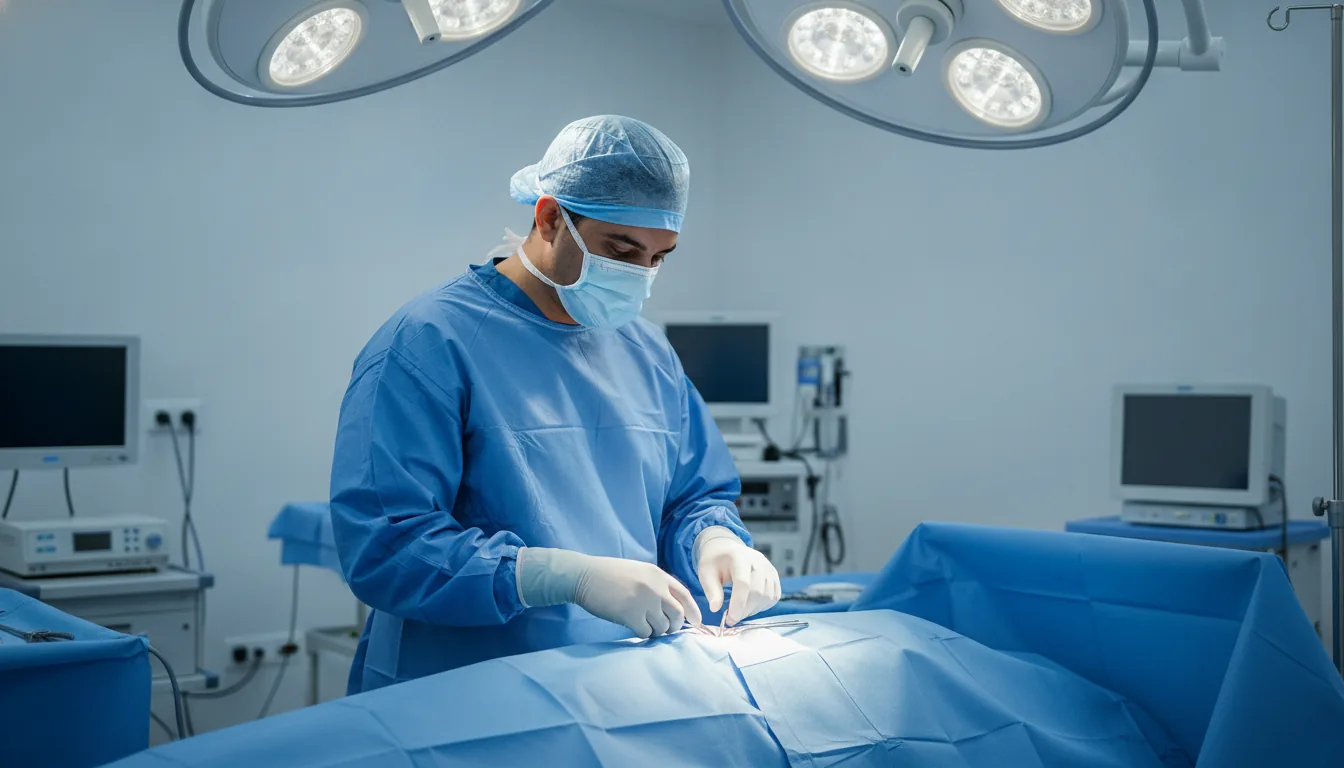
Simple anal fistula surgery
Surgeries/General/Simple anal fistula

Simple anal fistula surgery

Simple anal fistula in Tunis, Tunisia · Centre Urbain Nord

Treatment of a superficial anal fistula by laying it open, to remove the infected tract and achieve lasting healing.

What is it?

An anal fistula is a small abnormal channel connecting the inside of the anal canal to the skin around the anus. It usually follows an anal abscess: a small gland in the anus became infected and the infection tracked its way to the skin. A fistula shows up as a discharge of pus or fluid, and as flare-ups of inflammation or abscesses that keep coming back. A fistula is called simple when its tract is superficial and crosses only a small part of the anal muscle (sphincter). In this case, the standard treatment is fistulotomy, or laying open: the surgeon opens the tract along its whole length, turning it into an open wound that heals gradually from the bottom up. A fistula does not heal on its own and antibiotics alone are not enough: treatment is surgical. It prevents recurrent abscesses and the development of new, more complex tracts. At Clinique Pasteur Tunis, the procedure is performed in the operating theatre, often as day surgery or with one night in hospital. Wound care is organised and explained before discharge.
Simple anal fistula surgery

When is it indicated?

Persistent discharge near the anus

A small opening near the anus that discharges pus or fluid, continuously or from time to time, is most often a sign of a fistula.

Recurrent anal abscesses

Abscesses that keep coming back in the same place point to a fistula tract that needs treatment to stop the recurrences.

Superficial fistula confirmed on examination

When the tract is shallow and crosses only a thin layer of muscle, laying it open is the simplest and most effective treatment.

After a drained abscess

A fistula may remain after an abscess has been drained: its treatment is then planned once the infection has settled.

Preparation

1Surgical consultation with a proctological examination
2Pelvic MRI or endoanal ultrasound if the tract needs to be mapped
3Pre-operative blood tests and anaesthetic consultation
4Small rectal enema on the morning of surgery as instructed
5Nothing to eat or drink for 6 hours before surgery

Procedure

1

General or spinal anaesthesia

2

Identification of the external and internal openings of the tract

3

Gentle exploration of the tract with a probe

4

Opening of the tract along its whole length (fistulotomy)

5

Cleaning of the tract and, if needed, a sample for analysis

6

Dressing and monitoring in the recovery room

Duration

20 to 40 minutes

Aftercare & Recovery

Patients go home the same day or the next day. The wound is left open and heals gradually over 3 to 6 weeks, with simple local care (showers, dressings), sometimes provided by a nurse. Normal activities resume quickly. Follow-up appointments check that the wound is healing well.

Risks and side effects

Moderate pain and discharge during healing
Slight bleeding in the first few days
Delayed healing, monitored at follow-up
Recurrence of the fistula, which is uncommon
Mild continence problems, rare for a simple fistula

These risks remain rare. Your surgeon will inform you in detail before the procedure.

Request a Quote

Contact us to schedule a consultation or receive a personalized quote.

Request a Quote +216 36 402 000

At a glance

Duration: 20 to 40 minutes
Preparation: Required
Dedicated specialist team

Related searches

  • Simple anal fistula Tunis
  • Simple anal fistula Tunisia
  • Simple anal fistula in Tunisia
Request a quote