
What liposuction does, and what it does not do
Liposuction, also called lipoaspiration, removes localised fat deposits that resist diet and physical activity. Its purpose is to refine a figure where some areas remain out of proportion with the rest of the body, even at a stable weight.
It is not a treatment for excess weight: it does not replace weight loss or the management of obesity. Nor does it tighten very loose skin. When there is a lot of excess skin, for example on the abdomen after pregnancies, a tummy tuck is usually discussed instead; our article "Liposuction or tummy tuck in Tunisia: which to choose?", in the Health Tips section, explains this choice.
This guide describes the procedure itself, in order: the consultation, preparation, the day of surgery, then the weeks of recovery. The information remains general: only your surgeon and your anaesthetist can adapt it to your situation.
The areas that can be treated
Which areas to treat, and whether to combine several, is decided with the surgeon according to your body shape and your expectations. Liposuction can also complement another body contouring procedure, such as a tummy tuck, for a more even overall result.
Liposuction can involve several areas of the body, alone or combined during the same procedure:
- the abdomen and the hips ("love handles");
- the outer thighs ("saddlebags") and the thighs;
- the knees;
- the arms;
- the double chin.
Preparation: what you are asked to do beforehand
Everything starts with a consultation with the plastic surgeon. They assess the areas to be treated, the quality of the skin and your expectations, and explain what the procedure can reasonably achieve in your case. This is the right time to talk about your medical history, your medication and your plans, and to ask all your questions.
A pre-operative anaesthesia consultation follows. The team then gives you your personalised instructions, which usually include the following points:
- a stable weight before the procedure;
- telling the team about all your medication: only the doctor can say whether any of it needs adjusting;
- fasting before the procedure, according to the precise instructions of the anaesthesia team;
- buying the prescribed compression garment, to bring on the day of surgery if the team asks you to;
- arranging your return home, with someone to accompany you.
The day of surgery, step by step
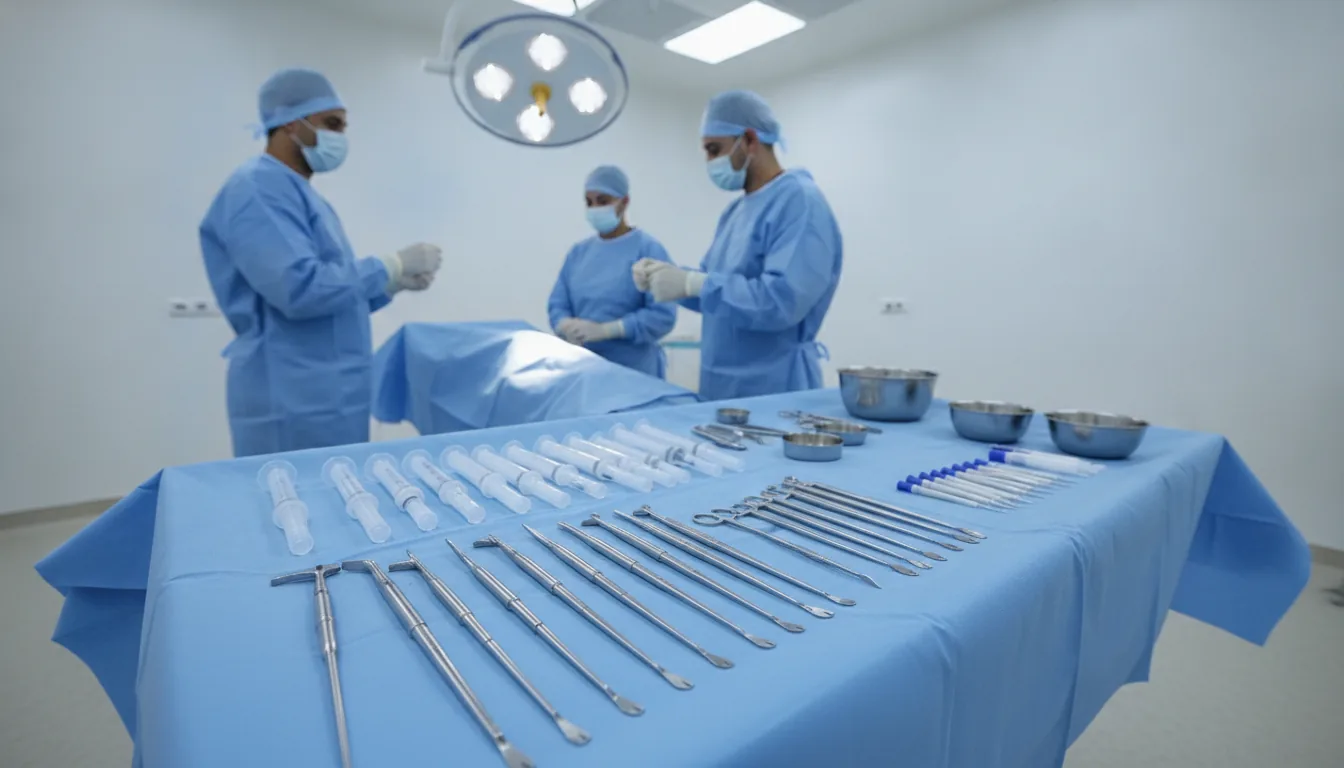
Liposuction usually takes 1 to 2 hours, depending on the number and extent of the areas treated. It is performed under general or regional anaesthesia, as decided with the surgeon and the anaesthetist. Here are the main steps:
- the surgeon draws markings on the skin to identify the areas to be treated;
- after anaesthesia, they make tiny incisions, placed in natural skin folds so that they remain discreet;
- they infiltrate the tissues to prepare them for suction;
- they remove the fat with fine cannulas, evenly, following the contours of the body;
- they close the incisions with discreet stitches, then put on the compression garment.
The first days after the procedure
Depending on the extent of the procedure, liposuction is done as day surgery, meaning you go home the same day, or with a short hospital stay. The surgeon tells you at the consultation what is planned for you.
Bruising and swelling of the treated areas are usual at first. They are temporary and gradually decrease. Skin sensitivity may also be altered for a while. Discomfort or aching is common: the prescribed treatment helps relieve it.
Moving gently and walking a little as soon as the team allows it is part of your care. Everyday activities come back quickly, but it is better not to overdo it in the first days and to keep the compression garment on as instructed.
The compression garment and how the result develops
The compression garment is worn for a few weeks. It helps the skin retract evenly over the treated areas and adds to your comfort. The exact duration and how to wear it are set by your surgeon: follow their instructions rather than a rule read elsewhere.
Work, then sport, resume gradually, depending on the effort they require and on the surgeon's approval at follow-up visits. The result cannot be judged straight away: the figure becomes slimmer as the swelling goes down, and the final result can be assessed after a few months.
The fat cells removed do not grow back. The result is therefore lasting, provided you keep a balanced lifestyle and a stable weight. Depending on the plan, the fat removed can also be reused for lipofilling, to restore volume elsewhere: the Lipofilling page of the website, suggested at the bottom of this article, presents this technique.
Coming from abroad, and knowing when to call
If you are coming from abroad, you can describe your plans in the quote request form: your file is reviewed by the relevant specialist, then the team helps you plan the dates of the consultation and the procedure and arrange accommodation and transfers. Communication is in French, English or Arabic. Plan to stay long enough for the first follow-up visits, and set your return date with the surgeon.
Wherever you are during your recovery, some signs should prompt you to contact your surgeon quickly, without waiting for the next follow-up visit:
- a fever, or unusual pain that increases instead of decreasing;
- significant swelling, or swelling that appears on one side only;
- discharge or redness at an incision;
- pain or swelling in the calf, or shortness of breath: in that case, call without delay.
Frequently asked questions
Does liposuction make you lose weight?
No. Liposuction is not a treatment for excess weight: it removes localised fat deposits that resist diet and exercise, in order to refine the figure. It is intended rather for people whose weight is stable. The surgeon tells you at the consultation whether it suits your situation.
Are liposuction and lipoaspiration the same thing?
Yes, they are two names for the same procedure: removing fat with fine cannulas inserted through small incisions. On the website, the page is called "Liposuction / Lipoaspiration".
How long should the compression garment be worn?
Usually for a few weeks. It helps the skin retract evenly and improves comfort. The exact duration, and when it can be taken off at night or for washing, are set by your surgeon.
When can you see the result of liposuction?
The figure becomes slimmer gradually, as the swelling goes down. The final result can be assessed after a few months. It is therefore normal for the area to still look swollen during the first weeks.
Can several areas be treated at once?
Yes, several areas can be treated during the same procedure, for example the abdomen and the hips. The number of areas affects the length of the procedure and the type of hospital stay: the surgeon suggests what is reasonable in your case.
This article is for general information only. It does not replace the advice of your doctor, who alone can adapt instructions to your situation.
Learn more
A question? A quote?
Our team answers your questions and supports you throughout your care journey.