
Haematology and haemostasis (CBC, blood group, coagulation)
Centres/Laboratory/Haematology

Haematology and haemostasis (CBC, blood group, coagulation)

Haematology in Tunis, Tunisia · Centre Urbain Nord

Analysis of blood cells (complete blood count, blood smear), blood grouping and coagulation tests, with same-day results for most morning samples.

What is it?

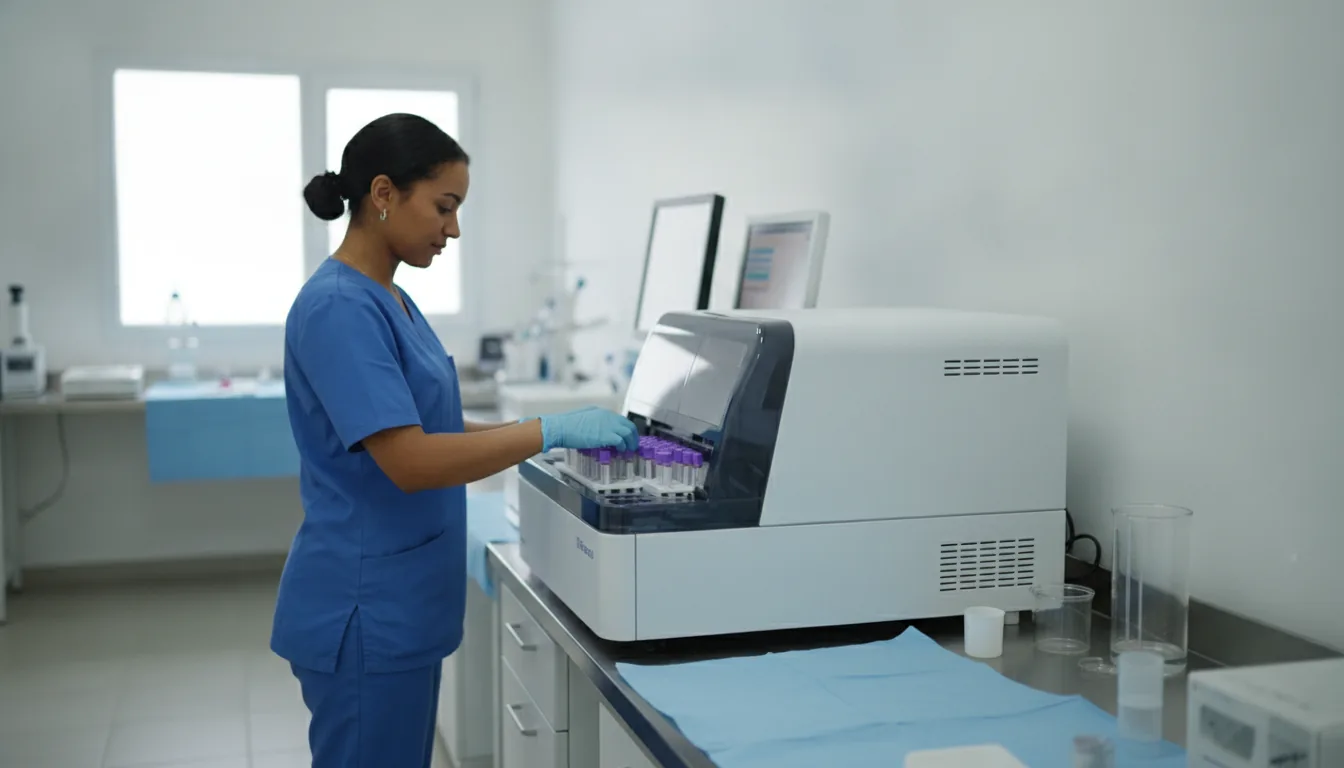
Haematology studies the cells of the blood: red cells, white cells and platelets. The complete blood count (CBC) is the most commonly prescribed test; it detects anaemia, infection, inflammation or a platelet abnormality. When a result requires it, the biologist examines the blood smear under the microscope to assess the appearance of the cells. The laboratory also performs blood grouping and the immunohaematology tests required before surgery, a transfusion or during pregnancy. Haemostasis, or coagulation, covers the tests that assess the blood's ability to form a clot and stop bleeding: PT-INR, aPTT, fibrinogen, D-dimers, factor assays. These tests are essential before an operation, to monitor anticoagulant treatment or to investigate a tendency to bleed or to form clots. The partner laboratory located within the Centre Médical Pasteur is ISO 15189 accredited by TUNAC; its automated analysers are continuously checked through external quality control programmes, and every result is validated by a biologist before being issued.
Haematology and haemostasis (CBC, blood group, coagulation)

When is it indicated?

Routine or screening blood test

The complete blood count is part of every health check: it reports at once on red cells, white cells and platelets.

Fatigue, pallor, suspected anaemia

A low haemoglobin level, completed by iron and ferritin assays, explains persistent fatigue and guides treatment.

Fever or infection: assessing the white cell response

A rise or fall in white cells helps the doctor distinguish a bacterial infection, a viral infection or another cause.

Pre-operative work-up: blood group and coagulation

Before any operation at the clinic, the blood group and coagulation tests are checked for the safety of the surgery and anaesthesia.

Monitoring of anticoagulant treatment (INR)

Patients on anticoagulants receive their INR quickly, with a comment from the biologist on the target range if needed.

Pregnancy follow-up

Blood grouping, antibody screening and blood counts are part of the regular follow-up of pregnant women.

Preparation

1Bring the prescription and, where applicable, insurance documents
2No fasting is needed for a blood count or coagulation tests, unless other tests are prescribed at the same time
3Report any ongoing anticoagulant or antiplatelet treatment
4Sampling preferably in the morning for a same-day result

Procedure

1

Reception and file creation by the medical secretary

2

Venous blood sample from the arm, with sterile single-use equipment

3

Analysis on haematology and coagulation analysers

4

Microscope reading of the smear by the biologist if necessary

5

Biological validation and issue of the report, available online

Duration

A few minutes for sampling; same-day results for a morning sample

Results

The report gives each value with its reference range and, if needed, a comment from the biologist. In case of a significant abnormal result, the biologist contacts the prescribing doctor. Results are available online on the laboratory's secure portal.

Risks and side effects

Small bruise at the puncture site, harmless
Rare vasovagal faintness, prevented by lying down during sampling

These risks remain rare. Your physician will inform you in detail before the examination.

Book an Appointment

Contact us to schedule your examination or request a quote.

Request a Quote +216 36 402 000

At a glance

Duration: A few minutes for sampling; same-day results for a morning sample
Preparation: Required

Related searches

  • Haematology Tunis
  • Haematology Tunisia
  • Haematology in Tunisia
Book an appointment