
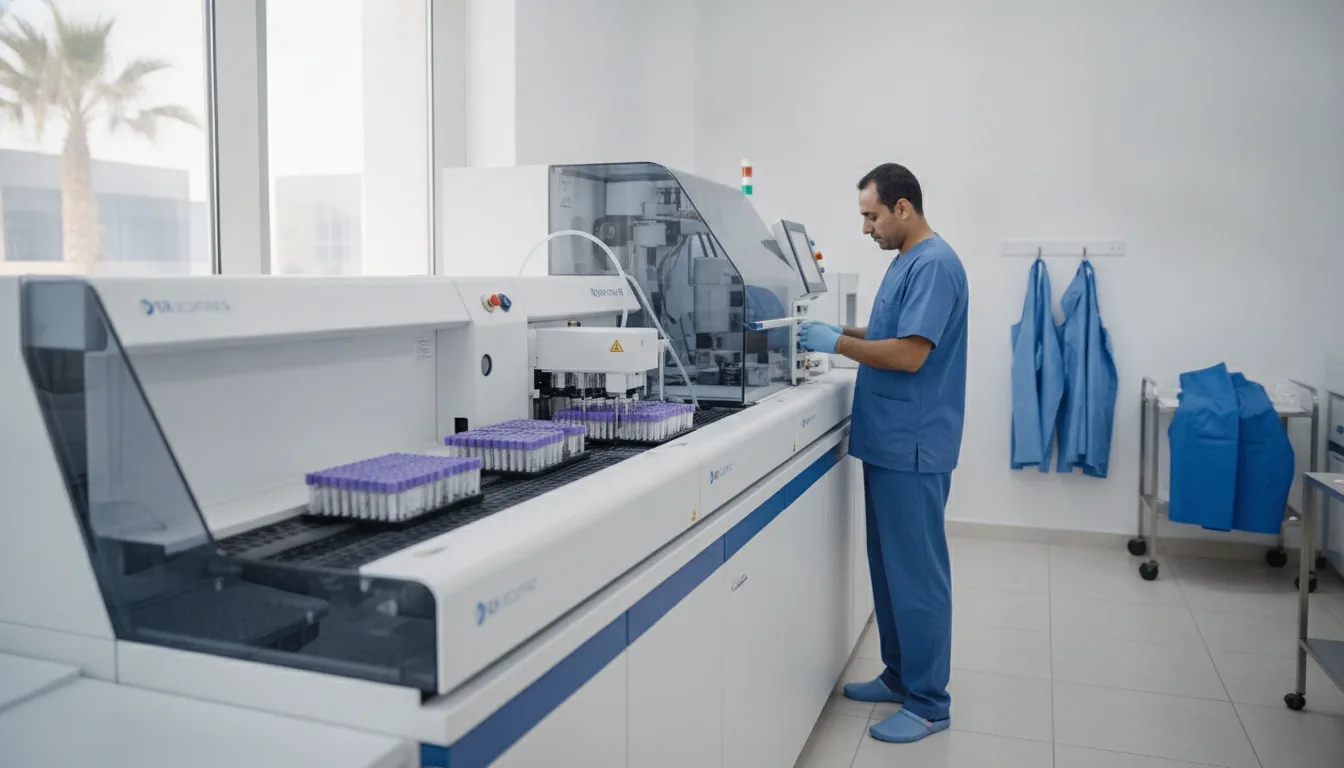
Biochemistry (blood sugar, lipids, kidney and liver tests)
Centres/Laboratory/Biochemistry

Biochemistry (blood sugar, lipids, kidney and liver tests)

Biochemistry in Tunis, Tunisia · Centre Urbain Nord

Measurement of the molecules in blood and urine: sugar, cholesterol, kidney and liver function, electrolytes, vitamins, on accredited automated analysers.

What is it?

Biochemistry measures the substances contained in blood, urine or other body fluids: glucose and glycated haemoglobin for diabetes, cholesterol and triglycerides for cardiovascular risk, creatinine and urea for the kidneys, transaminases and bilirubin for the liver, electrolytes (sodium, potassium, calcium), proteins, iron, vitamins, cardiac or pancreatic enzymes. These tests form the basis of the health check-up and of the follow-up of chronic diseases. They are carried out on latest-generation analysers whose accuracy is continuously verified by internal controls and external quality assessments. Within the Centre Médical Pasteur, the partner laboratory issues most biochemistry results on the same day for samples taken in the morning, which allows the clinic's doctors to decide quickly, including in emergencies and during hospitalisation.
Biochemistry (blood sugar, lipids, kidney and liver tests)

When is it indicated?

Annual health check

Blood sugar, cholesterol, kidney and liver function give a simple overview of general health.

Diabetes: blood glucose and glycated haemoglobin

Glycated haemoglobin reflects blood sugar control over the past three months and guides treatment adjustment.

Cardiovascular risk: lipid profile

Total cholesterol, HDL, LDL and triglycerides assess the risk and track the effect of a diet or treatment.

Monitoring of the kidneys and liver

Creatinine, urea, transaminases and bilirubin check how these organs are working, particularly under medication.

Pre-operative work-up and inpatient follow-up

Patients operated on or hospitalised at the clinic benefit from rapid tests to adjust their care.

Chest pain: cardiac enzymes in an emergency

Troponin testing, available at any hour, helps emergency physicians confirm or rule out a heart attack.

Preparation

1Strict fasting of 8 to 12 hours for blood glucose and the lipid profile: no food, no smoking, water only
2Sampling in the morning, preferably before 11 am
3Report current treatments, the time of the last dose and any particular situation (pregnancy, night work)
4Avoid intense physical exercise the day before
5Bring the prescription and previous results for comparison

Procedure

1

Reception and check of sampling conditions (fasting, treatments)

2

Blood sample and, depending on the prescription, urine collection

3

Centrifugation and analysis on biochemistry analysers

4

Quality control and validation by the biologist

5

Report issued to the patient and the doctor, available online

Duration

A few minutes; same-day results for a morning sample

Results

Each parameter is presented with its reference values and compared with the patient's previous results when available. The biologist adds an interpretation comment if necessary and contacts the prescriber in case of a significant abnormality.

Risks and side effects

Small bruise at the puncture site
Result distorted if fasting was not respected: a repeat sample is then offered

These risks remain rare. Your physician will inform you in detail before the examination.

Book an Appointment

Contact us to schedule your examination or request a quote.

Request a Quote +216 36 402 000

At a glance

Duration: A few minutes; same-day results for a morning sample
Preparation: Required

Related searches

  • Biochemistry Tunis
  • Biochemistry Tunisia
  • Biochemistry in Tunisia
Book an appointment