
Blood biomarkers of Alzheimer's disease
Centres/Laboratory/Alzheimer's biomarkers

Blood biomarkers of Alzheimer's disease

Alzheimer's biomarkers in Tunis, Tunisia · Centre Urbain Nord

Measurement of Alzheimer's disease biomarkers in blood (pTau217, amyloid beta 1-42 and their ratio) and in cerebrospinal fluid, for an early biological assessment of cognitive disorders.

What is it?

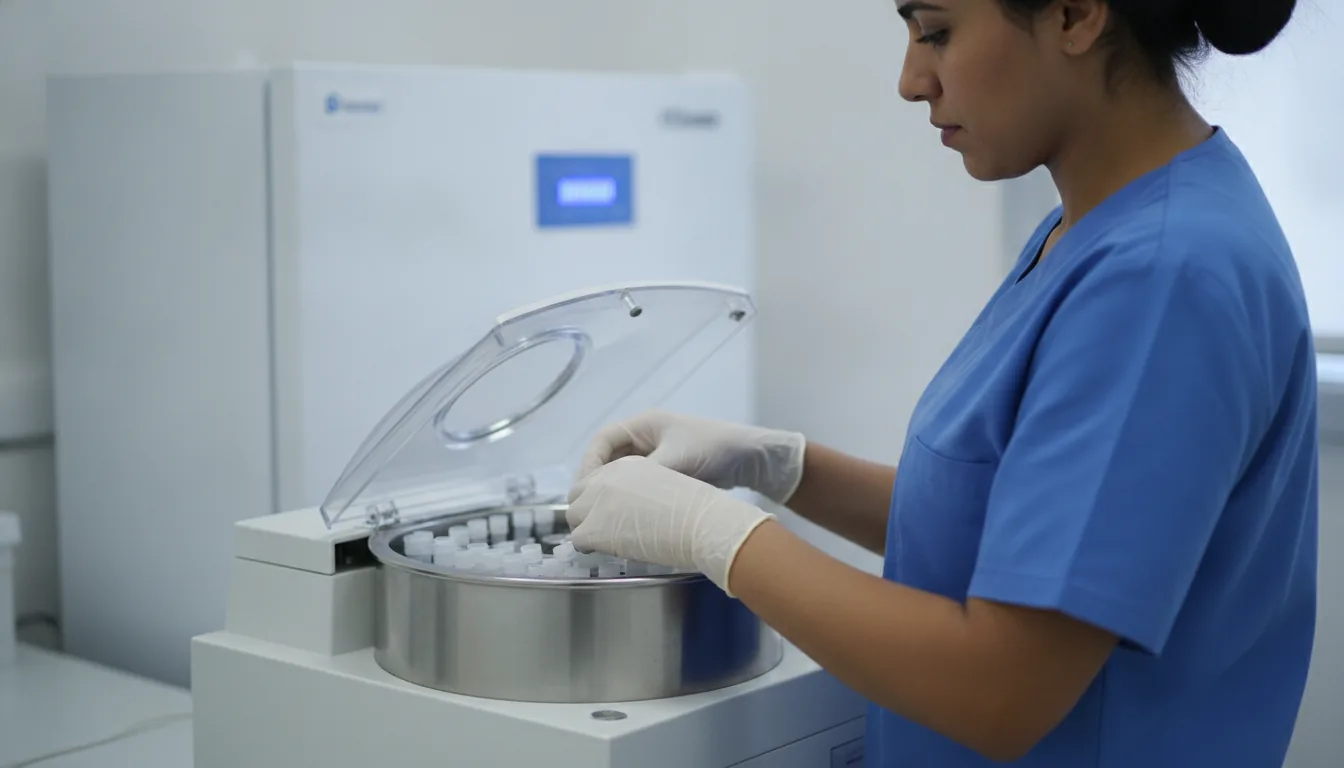
The partner laboratory of the Centre Médical Pasteur offers the measurement of the biomarkers involved in Alzheimer's disease. In blood: phosphorylated Tau protein 217 (pTau217), amyloid beta 1-42 peptide and the pTau217 / amyloid beta 1-42 ratio. In cerebrospinal fluid, collected by lumbar puncture: pTau181, total Tau, amyloid beta 1-42 and 1-40. These markers reflect the two characteristic processes of the disease, amyloid deposits and the accumulation of Tau protein, and their abnormalities can appear several years before the first symptoms. The blood assay, simple and non-invasive, makes this biological work-up much more accessible; the pTau217 / amyloid beta 1-42 ratio is today one of the best-performing blood markers, with strong agreement with amyloid imaging. These tests are part of a specialised diagnostic approach, prescribed by a neurologist or geriatrician, in a person with memory problems or wishing an early assessment of their risk. They are performed under strict pre-analytical conditions (rapid centrifugation, cold storage), guaranteed by the laboratory's workflow.
Blood biomarkers of Alzheimer's disease

When is it indicated?

Memory or behavioural problems in adults

Together with the neurology consultation and imaging, the assay helps distinguish early Alzheimer's disease from another cause of cognitive problems.

Early risk assessment in a worried person or with a family history

Blood biomarkers can reveal an ongoing process before symptoms, as part of specialised follow-up.

Biological confirmation before specific management

The result objectively shows the presence of amyloid and Tau pathology consistent with Alzheimer's disease.

Less invasive alternative to lumbar puncture

When lumbar puncture or amyloid imaging are difficult to access, the blood assay provides a reliable first answer.

Preparation

1Prescription by a specialist doctor (neurologist, geriatrician, psychiatrist) after clinical assessment
2Blood sample after an overnight fast
3Report current treatments
4For cerebrospinal fluid: lumbar puncture performed by the doctor, collection conditions specified by the laboratory

Procedure

1

Blood sample in a dedicated tube, fasting

2

Rapid centrifugation and cold storage of the plasma according to a strict protocol

3

Measurement of the biomarkers on a specialised platform

4

Calculation of the pTau217 / amyloid beta 1-42 ratio and validation by the biologist

5

Report sent to the prescribing doctor, who interprets it with the patient

Duration

A few minutes for sampling; turnaround time communicated by the laboratory at the time of sampling

Results

The result is always interpreted by the specialist doctor, taking into account the clinical examination, memory tests and imaging. An abnormal result indicates a biological process consistent with Alzheimer's disease; a normal result is reassuring but does not rule out other causes of cognitive problems.

Risks and side effects

Small bruise at the puncture site for the blood sample
For cerebrospinal fluid: possible headache after the lumbar puncture, explained by the doctor

These risks remain rare. Your physician will inform you in detail before the examination.

Book an Appointment

Contact us to schedule your examination or request a quote.

Request a Quote +216 36 402 000

At a glance

Duration: A few minutes for sampling; turnaround time communicated by the laboratory at the time of sampling
Preparation: Required

Related searches

  • Alzheimer blood test Tunisia
  • pTau217 Tunis
Book an appointment