
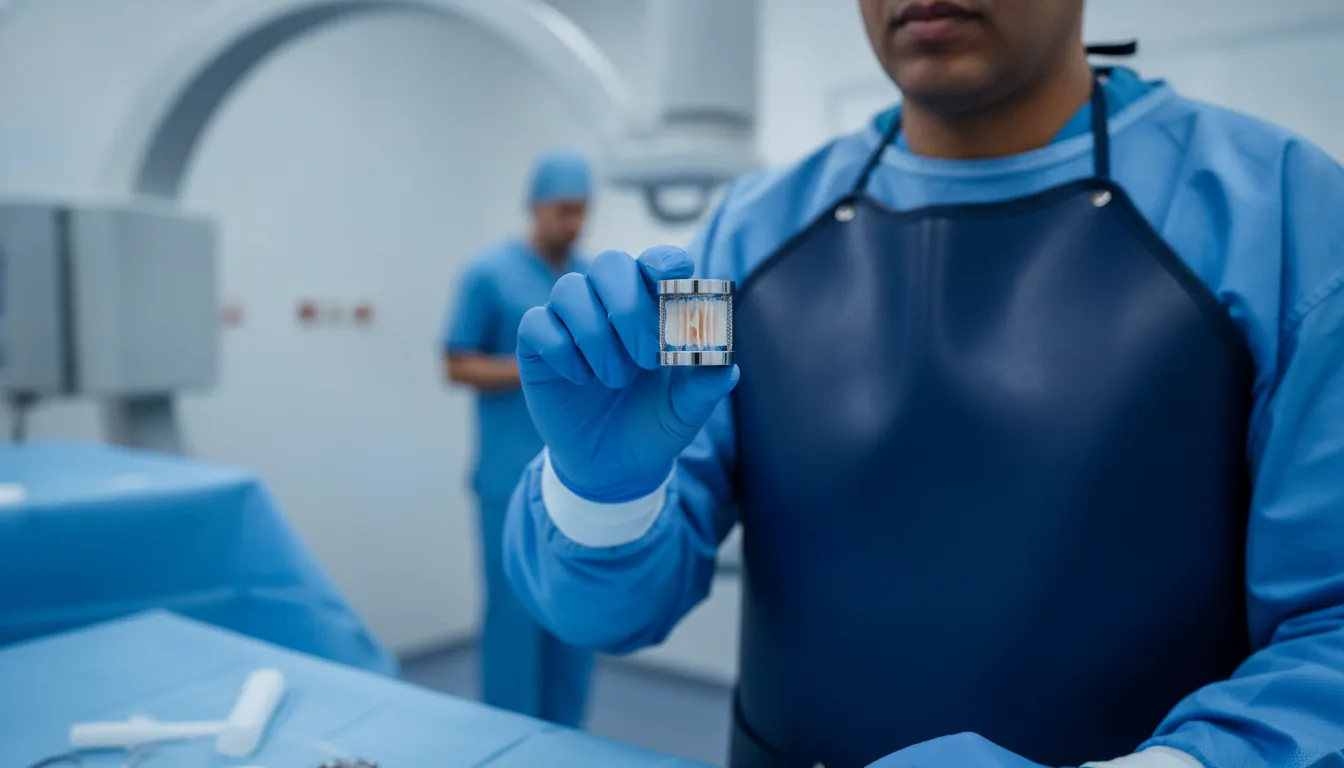
TAVI: transcatheter aortic valve implantation

TAVI: transcatheter aortic valve implantation

TAVI in Tunis, Tunisia · Centre Urbain Nord

Implantation of a new aortic valve through a catheter, most often via the groin artery, without opening the chest or stopping the heart.

What is it?

Aortic stenosis is a common condition with age: the aortic valve, which opens with each heartbeat to let blood leave the heart, becomes thickened and calcified and no longer opens enough. It can cause breathlessness, chest pain, dizziness or fainting. When it is severe and causing symptoms, the valve needs to be replaced. TAVI (transcatheter aortic valve implantation) involves bringing a biological valve, folded inside a catheter, up to the heart, most often through the femoral artery at the groin. The new valve is deployed inside the diseased valve, which it pushes aside, and works immediately. The procedure is generally performed under local anaesthesia with sedation, without opening the chest or using a heart-lung machine. Other access routes exist when the leg arteries are not suitable. The choice between TAVI and surgical valve replacement is made by a multidisciplinary team (the "heart team") of cardiologists, cardiac surgeons and anaesthetists. It takes into account age, surgical risk, the anatomy of the valve and arteries, other illnesses and the patient's wishes. TAVI is now offered primarily to older patients and to those at high surgical risk. At Clinique Pasteur Tunis, patient selection is based on this joint discussion, and the procedure is performed in a latest-generation catheterisation laboratory, with a cardiac surgery team and cardiac intensive care on site.
TAVI: transcatheter aortic valve implantation

When is it indicated?

Severe symptomatic aortic stenosis

Breathlessness, chest pain or dizziness on exertion show that a very narrow valve is straining the heart; replacing it improves symptoms and outlook.

Older patient or high surgical risk

When open-heart surgery would be demanding or risky, TAVI offers an alternative with a much faster recovery.

Anatomy suitable for the femoral route

The preliminary CT scan checks that the leg arteries and the valve allow the prosthesis to be passed and deployed safely.

Degeneration of a previous aortic bioprosthesis

A biological valve implanted years ago can wear out; a new valve can sometimes be implanted inside it by catheter ("valve-in-valve").

Heart team decision

The indication is never decided alone: cardiologists and cardiac surgeons choose the best option together, with the patient.

Preparation

1Echocardiography confirming severe aortic stenosis
2CT scan of the heart and arteries to measure the valve and check the access route
3Coronary angiography to look for, and if needed treat, narrowed coronary arteries
4Blood tests, dental care if needed and anaesthetic consultation
5Heart team review and detailed information for the patient and family
6Adjustment of anticoagulants as instructed and fasting before the procedure

Procedure

1

Positioning in the catheterisation laboratory, local anaesthesia with sedation, rarely general anaesthesia

2

Puncture of the femoral artery and placement of a temporary pacing lead

3

Crossing the diseased valve with a guidewire under X-ray guidance

4

Deployment of the new valve, often during a brief rapid pacing of the heart through the lead

5

Immediate check of valve function by angiography and echocardiography

6

Closure of the artery with a dedicated device and transfer to intensive care

Duration

About 1 to 2 hours

Results

Patients usually get up the next day. The hospital stay is usually 2 to 5 days, with heart rhythm monitoring. Relief of breathlessness is often felt within a few weeks. Antithrombotic treatment is prescribed, along with a follow-up echocardiogram and regular cardiology follow-up. Prevention of endocarditis (dental hygiene, antibiotics for certain procedures) becomes important.

Risks and side effects

Complications at the groin puncture site (bruising, bleeding), usually treated simply
Slowing of the heart rhythm sometimes requiring a pacemaker
Small leak around the new valve, generally without consequence
Stroke, uncommon, against which precautions are taken
Rare serious complications, for which a cardiac surgery team is on site

These risks remain rare. Your physician will inform you in detail before the examination.

Request a quote

Request your quote online or call us on the number below:

Request a Quote +216 36 402 000

At a glance

Duration: About 1 to 2 hours
Preparation: Required

Related searches

  • TAVI Tunis
  • TAVI Tunisia
  • TAVI in Tunisia
Request a quoteBook an appointment