
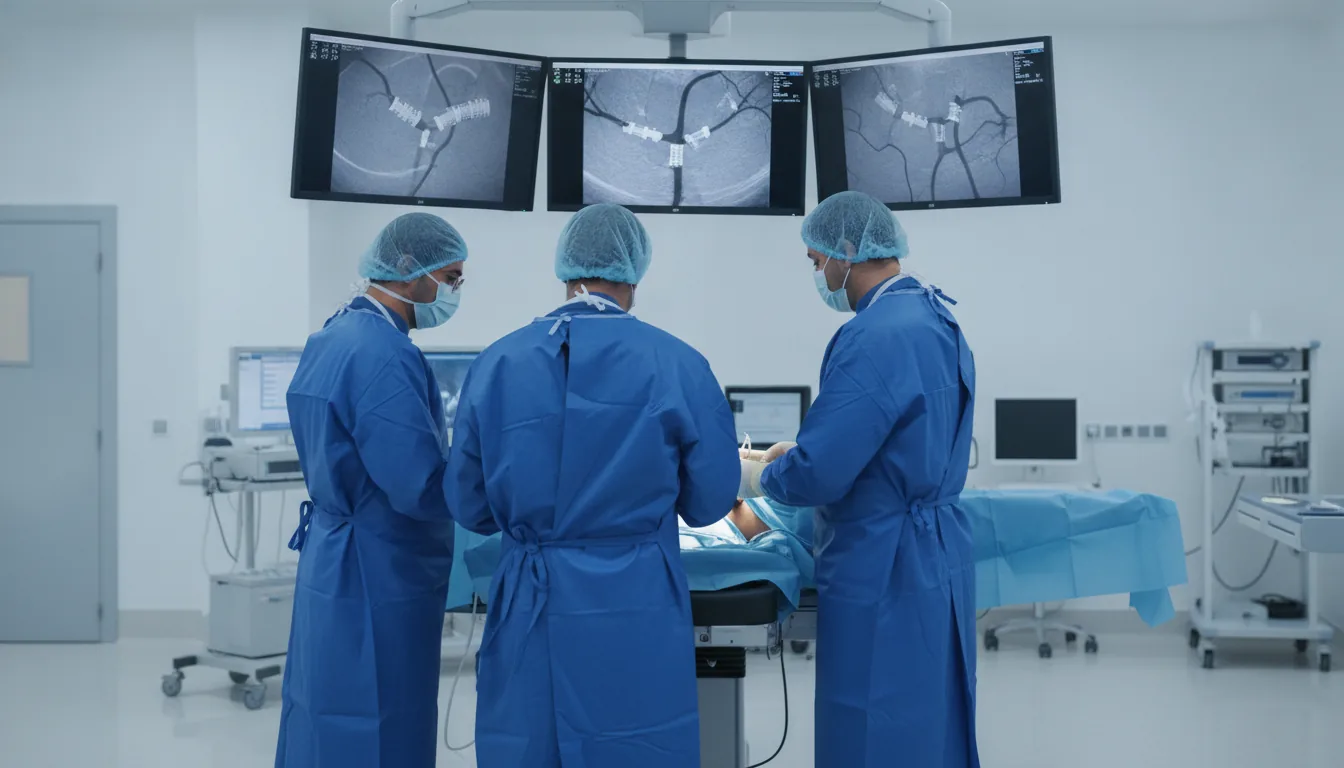
Complex coronary angioplasty (multiple arteries, multiple stents)

Complex coronary angioplasty (multiple arteries, multiple stents)

Complex angioplasty in Tunis, Tunisia · Centre Urbain Nord

Catheter treatment of multiple, long or calcified coronary narrowings with several stents, without opening the chest.

What is it?

Complex coronary angioplasty refers to procedures that go beyond a single, straightforward narrowing: disease in several coronary arteries, long lesions requiring several stents, heavily calcified or small arteries. As with a standard angioplasty, the procedure is performed through a catheter inserted most often through the wrist artery (radial approach), sometimes through the groin artery (femoral approach), without opening the chest. The interventional cardiologist prepares the artery with balloons, then deploys one or more drug-eluting stents, small metal mesh tubes coated with a medicine that limits re-narrowing. When the plaque is heavily calcified, dedicated tools can be used to break it up before the stent is placed, such as a rotating burr (rotational atherectomy) or shock waves delivered through a balloon (intravascular lithotripsy). Intracoronary imaging often helps to choose the stent size and to check that the stents are fully expanded. This procedure is offered to patients with extensive coronary artery disease causing angina or reduced blood supply to the heart muscle. The choice between angioplasty and coronary bypass surgery is made case by case by cardiologists and cardiac surgeons together (the "heart team"), taking into account the anatomy of the lesions, heart function, diabetes and general health. Treatment may be carried out in a single session or in several stages. At Clinique Pasteur Tunis, these angioplasties are performed in a latest-generation catheterisation laboratory, with a cardiac intensive care unit on the same floor and a cardiac surgery team on site.
Complex coronary angioplasty (multiple arteries, multiple stents)

When is it indicated?

Narrowings in several coronary arteries

When several heart arteries are narrowed, angioplasty can treat them one by one, in one or more sessions, if the team considers it more suitable than bypass surgery.

Long or successive lesions in the same artery

A very extensive narrowing sometimes needs several stents placed end to end to cover the whole diseased segment.

Heavily calcified arteries

Calcium makes the artery hard and difficult to open; special tools break it up first so that the stent can expand properly.

Angina persisting despite medication

If chest pain or breathlessness on exertion continues despite well-followed treatment, restoring blood flow usually relieves these symptoms.

Extensive lack of blood supply to the heart muscle

When tests show that a large part of the heart is short of blood, treating the culprit arteries protects the heart muscle.

Preparation

1Prior coronary angiography and review of the case by cardiologists and cardiac surgeons
2Blood tests including kidney function, because of the contrast dye
3Antiplatelet treatment started as prescribed by the cardiologist
4Report any allergy, especially to iodine, and any anticoagulant or diabetes treatment
5Fasting for a few hours before the procedure

Procedure

1

Positioning in the catheterisation laboratory, local anaesthesia at the wrist or groin

2

Placement of a sheath in the artery and advancement of a guiding catheter to the coronary arteries

3

Passage of a very fine guidewire across each narrowing

4

Lesion preparation with balloons and, if needed, treatment of calcium

5

Stent deployment and check with contrast injection, sometimes with intracoronary imaging

6

Removal of the equipment and application of a pressure dressing or closure device

Duration

1 to 3 hours depending on the number of lesions

Results

The patient is monitored in the cardiac intensive care unit and then on the ward; the hospital stay is usually 1 to 3 days. Most activities can be resumed within about a week. Dual antiplatelet therapy is essential for several months and must never be stopped without the cardiologist's advice. Regular cardiology follow-up and control of risk factors (smoking, cholesterol, blood pressure, diabetes) are essential.

Risks and side effects

Bruising at the puncture site, usually harmless
Reaction to the contrast dye or temporary decline in kidney function, monitored and prevented
Stent thrombosis or re-narrowing, now uncommon with drug-eluting stents and antiplatelet therapy
Rare serious coronary or cardiac complications, managed immediately by the team

These risks remain rare. Your physician will inform you in detail before the examination.

Request a quote

Request your quote online or call us on the number below:

Request a Quote +216 36 402 000

At a glance

Duration: 1 to 3 hours depending on the number of lesions
Preparation: Required

Related searches

  • Complex angioplasty Tunis
  • Complex angioplasty Tunisia
  • Complex angioplasty in Tunisia
Request a quoteBook an appointment