
Left main and coronary bifurcation angioplasty
Centres/Interventional Cardiology/Left main and bifurcations

Left main and coronary bifurcation angioplasty

Left main and bifurcations in Tunis, Tunisia · Centre Urbain Nord

Angioplasty of a narrowing in the left main coronary artery or at the point where a coronary artery divides into two branches.

What is it?

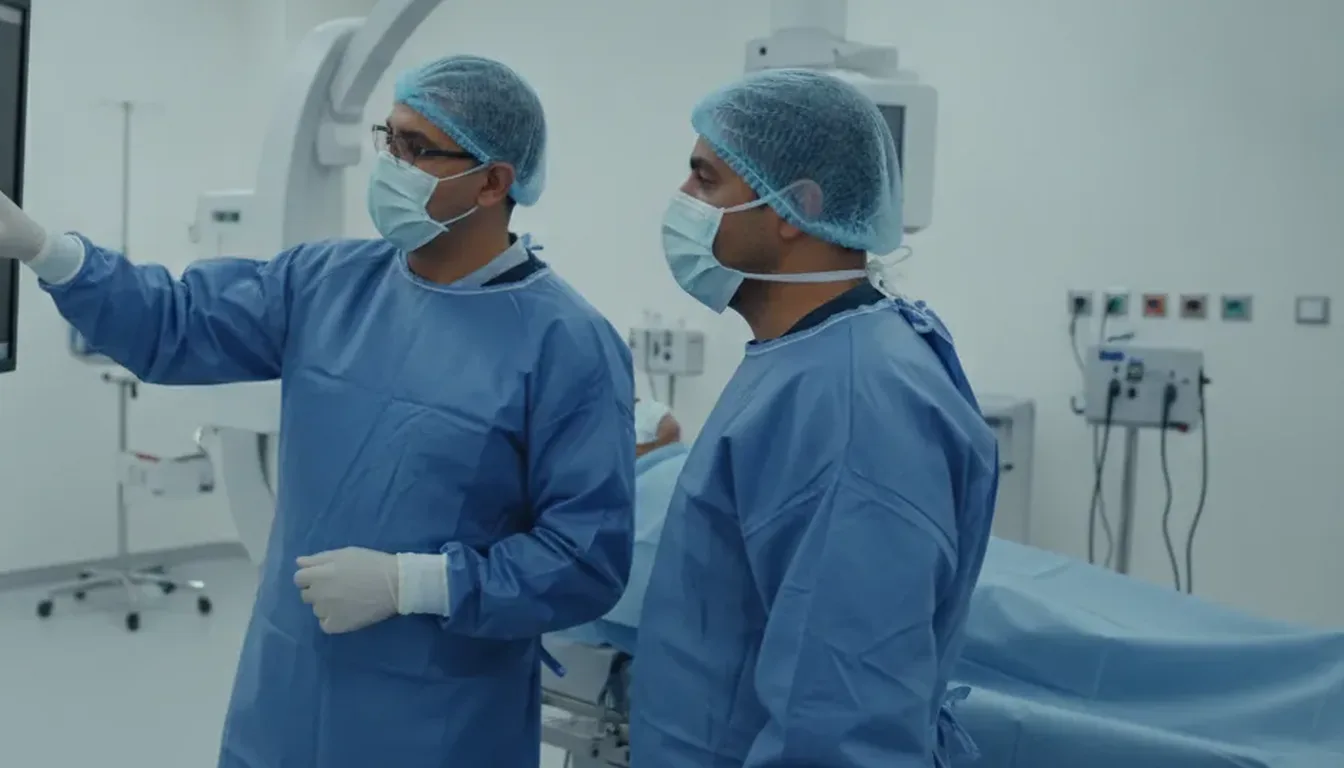
The left main is the first segment of the left coronary artery: it supplies a large part of the heart before dividing into two main branches. A bifurcation is a point where an artery splits in two. A narrowing at these sites is delicate to treat, because the main artery must be reopened without closing off the branch that arises from it. The angioplasty is performed through a catheter, most often via the wrist. Depending on the anatomy, the cardiologist uses either a single-stent strategy in the main vessel, protecting the side branch with a guidewire, or a two-stent technique when both branches are diseased. Simultaneous balloon inflations in both branches ("kissing") help to fine-tune the result. Intracoronary imaging (intravascular ultrasound or OCT) is particularly useful here to measure the artery and confirm that the stents are well expanded. For a left main narrowing, angioplasty and coronary bypass surgery are both valid options; the choice is made jointly by cardiologists and cardiac surgeons (the "heart team"), according to the complexity of the lesions, the other arteries involved, diabetes and the patient's general health, and the patient is involved in the decision. At Clinique Pasteur Tunis, these procedures are performed in a latest-generation catheterisation laboratory, with a cardiac surgery team and a cardiac intensive care unit on site.
Left main and coronary bifurcation angioplasty

When is it indicated?

Significant left main narrowing

This segment feeds a large part of the heart; a significant narrowing must be treated, by angioplasty or bypass surgery according to the team's decision.

Lesion at a coronary bifurcation

When the narrowing lies at a branching point, a suitable technique reopens the main artery while preserving the side branch.

Angina or reduced blood supply to the heart on exertion

These symptoms, or ischaemia shown by tests, reflect a shortage of blood to the heart muscle, which treating the arteries improves.

Patient for whom angioplasty is preferred to bypass surgery

Depending on the anatomy and general health, the joint medical-surgical discussion may choose angioplasty as the most suitable solution.

Preparation

1Coronary angiography and heart team review of the case
2Echocardiography to assess heart function
3Blood tests including kidney function and clotting
4Antiplatelet treatment as prescribed
5Fasting for a few hours before the procedure

Procedure

1

Local anaesthesia at the wrist or groin and placement of the arterial sheath

2

Advancement of the guiding catheter to the origin of the left coronary artery

3

Passage of a guidewire into each branch to protect them

4

Intracoronary imaging measurements to choose the technique and stent size

5

Placement of one or two stents, then balloon inflations to optimise the bifurcation

6

Final check with contrast and imaging, removal of the equipment and compression

Duration

About 1 to 2 hours

Results

Monitoring in the cardiac intensive care unit and then on the ward, with a usual hospital stay of 1 to 3 days. Return to everyday activities within about a week. Dual antiplatelet therapy is essential for several months. Regular cardiology follow-up is arranged, sometimes with a check-up examination depending on the case.

Risks and side effects

Bruising at the puncture site, generally minor
Closure or narrowing of a side branch during the procedure, most often corrected in the same session
Stent thrombosis or re-narrowing, uncommon when treatment is well followed
Rare serious cardiac complications, under continuous monitoring by the team

These risks remain rare. Your physician will inform you in detail before the examination.

Request a quote

Request your quote online or call us on the number below:

Request a Quote +216 36 402 000

At a glance

Duration: About 1 to 2 hours
Preparation: Required

Related searches

  • Left main and bifurcations Tunis
  • Left main and bifurcations Tunisia
  • Left main and bifurcations in Tunisia
Request a quoteBook an appointment