
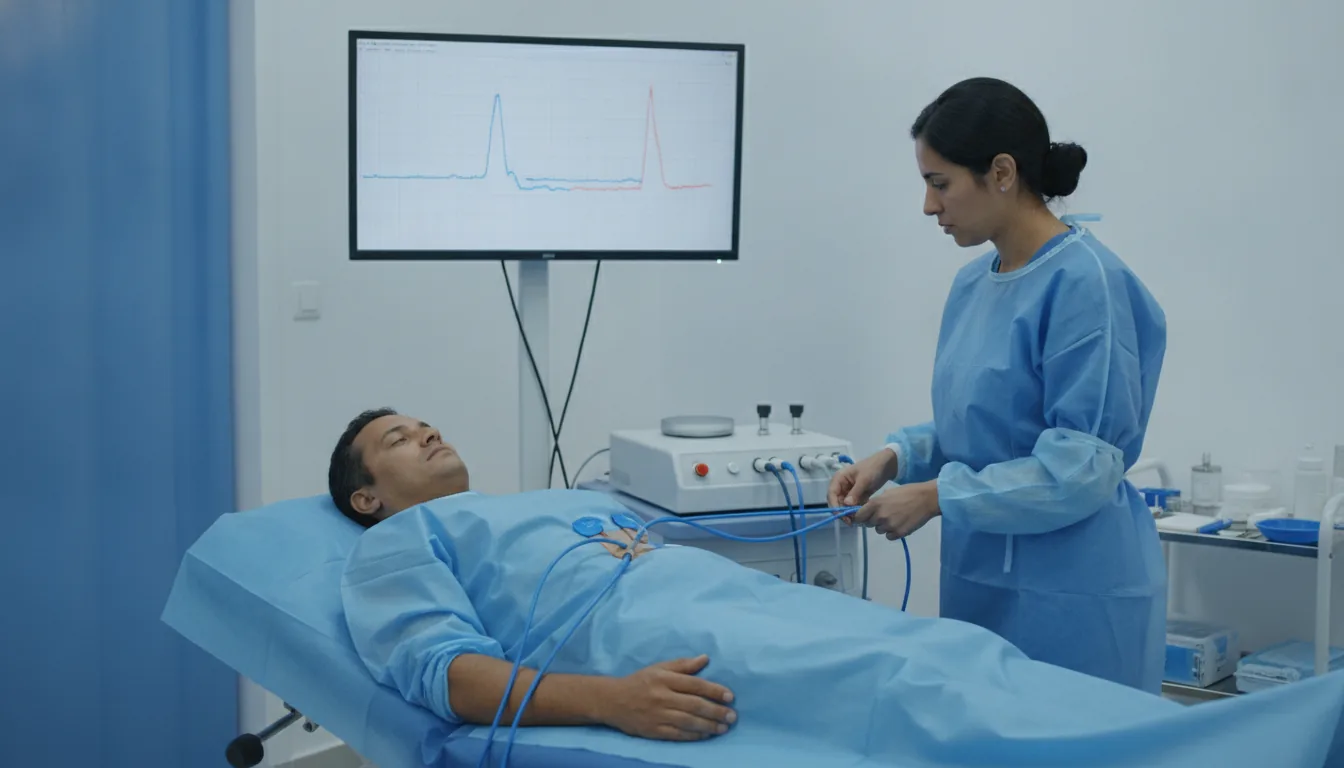
Evaluation of bladder emptying disorders
Emptying disorders in Tunis, Tunisia · Centre Urbain Nord
Targeted functional exploration to identify the cause of bladder emptying difficulties: mechanical obstruction, detrusor underactivity or dyssynergia.
What is it?
When is it prescribed?
It helps explain why the bladder empties poorly when a large amount of urine remains after voiding.
It is offered when the bladder persistently or repeatedly fails to empty, to find the cause.
It clarifies the origin of difficulty urinating before a prostate operation.
It helps identify a bladder that does not contract enough, a common situation with age.
It is useful when a neurological disease prevents the bladder from emptying properly.
It helps assess the impact of a recurring narrowing of the urinary channel.
It is offered when the medications intended to make urination easier have not been enough.
It helps confirm a lack of coordination between the bladder and the sphincter when urinating.
Preparation
How the exam is performed
Free uroflowmetry and measurement of the initial post-void residual
Insertion of the bladder catheter and the rectal pressure sensor
Possible placement of perineal EMG electrodes
Controlled bladder filling until a comfortable desire to void is reached
Voiding phase with simultaneous recording of bladder and abdominal pressures, flow and EMG
Pressure-flow study with plotting on the Abrams-Griffiths nomogram
Assessment of bladder-sphincter coordination
Measurement of the final post-void residual
Removal of the equipment
Duration
30 to 45 minutes
Results
The assessment classifies the emptying disorder into three categories: bladder outlet obstruction (with quantification of the degree), detrusor underactivity or detrusor-sphincter dyssynergia. The Abrams-Griffiths nomogram provides an objective classification. The report guides management: deobstruction surgery, self-catheterisation, rehabilitation or neuromodulation.
Risks and side effects
These risks remain rare. Your physician will explain them in detail before the exam.
Request a quote
Request your quote online or call us on the number below:
Request a Quote +216 36 402 000At a glance
Read also
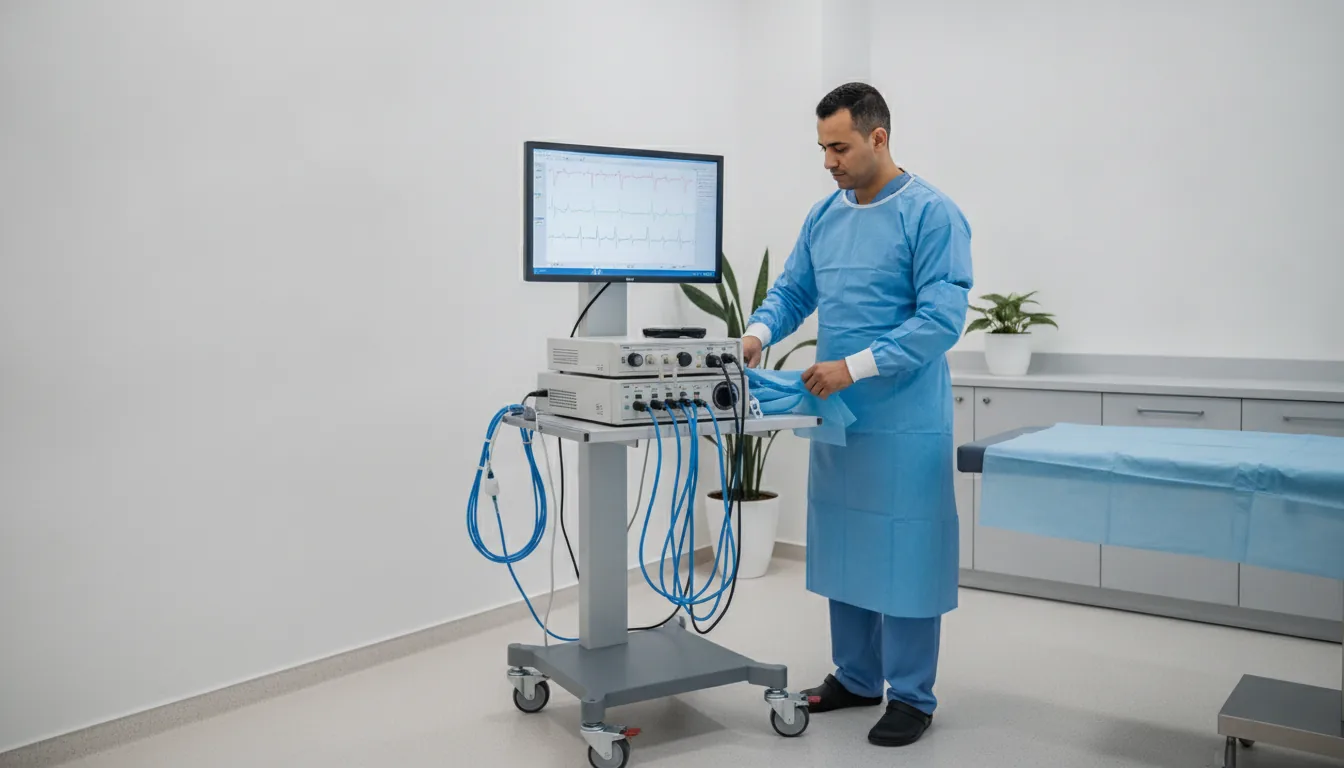
Urodynamic testing: what it is for and how it works
Urodynamic testing studies how the bladder and urethra work, to understand the cause of urinary problems. Here is what it is for, how to prepare and how it is carried out.
Read the articlePost-void residual (PVR): measurement and procedure
Measuring post-void residual urine checks, in a few minutes and without pain, whether your bladder empties properly. Here is what it is for and how it is done.
Read the articleRelated searches
- Emptying disorders Tunis
- Emptying disorders Tunisia
- Emptying disorders in Tunisia