
Percutaneous nephrolithotomy (PCNL)
Surgeries/Urological/PCNL (large kidney stones)

Percutaneous nephrolithotomy (PCNL)

PCNL (large kidney stones) in Tunis, Tunisia · Centre Urbain Nord

Removal of large kidney stones through a small tunnel made through the skin of the back, under X-ray and endoscopic guidance.

What is it?

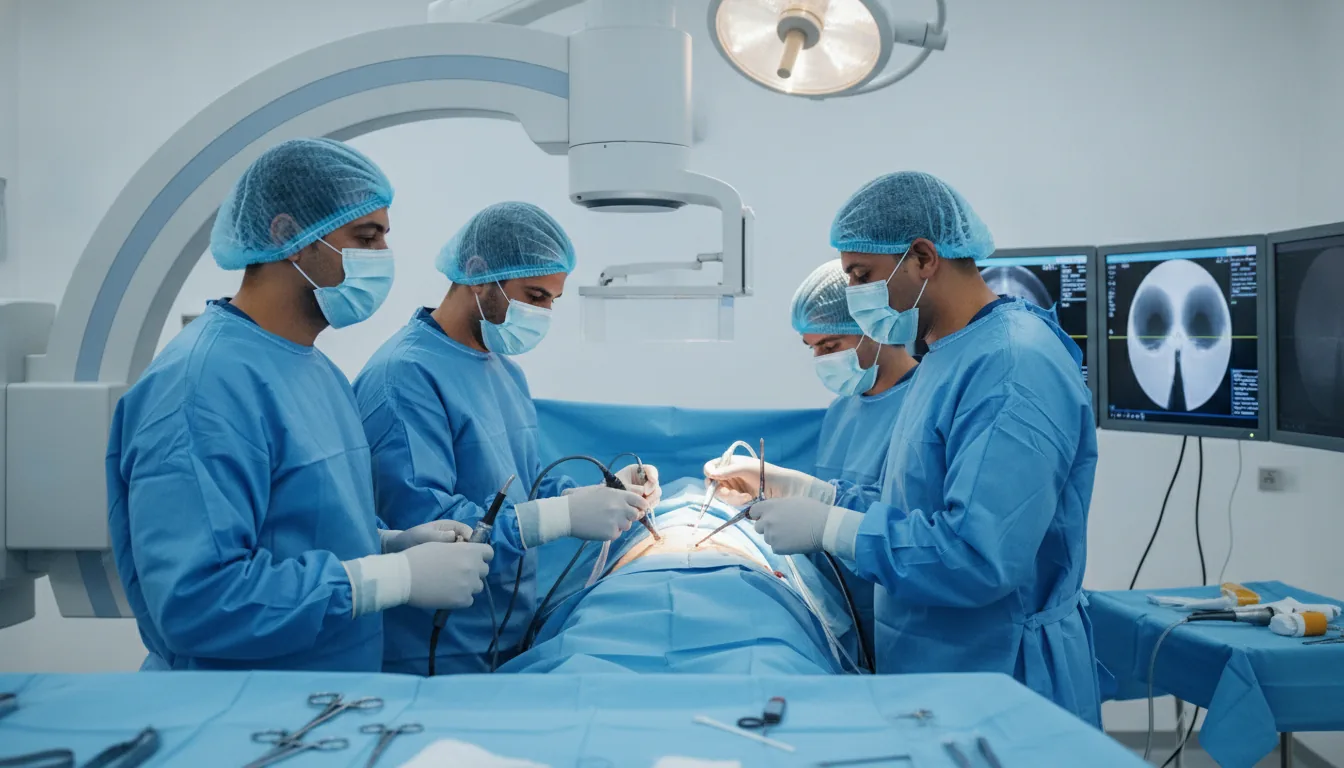
Percutaneous nephrolithotomy (PCNL) is the reference technique for removing large kidney stones, particularly those over 2 centimetres or those that fill the kidney's drainage cavities (staghorn stones). It avoids open surgery. The surgeon creates a small tunnel a few millimetres wide through the skin of the back into the kidney, guided by fluoroscopy and often by ultrasound. An endoscope is passed through this tunnel: the stone is broken up with a laser or an ultrasonic probe, and the fragments are suctioned or removed with forceps. Narrower-tunnel techniques (mini-PCNL) are available depending on stone size. PCNL is offered when the stone is too large to be treated effectively by ureteroscopy or extracorporeal lithotripsy. The removed stone is analysed, which helps to give advice that lowers the risk of new stones. At Clinique Pasteur Tunis, the procedure takes place in an operating theatre equipped with imaging, with a hospital stay of a few days and an imaging check before discharge.
Percutaneous nephrolithotomy (PCNL)

When is it indicated?

Kidney stone larger than 2 centimetres

Large stones cannot pass on their own or be treated easily through the natural passages. Going directly into the kidney usually allows them to be removed in one session.

Staghorn stone

Some stones take the shape of the kidney's cavities, like a branch of coral. PCNL is the most suitable technique to remove them.

Hard stones or stones resistant to other techniques

When lithotripsy or ureteroscopy have not been enough, the percutaneous route allows treatment to be completed.

Stones associated with infection or impaired kidney drainage

A large stone can keep infections going or block urine. Removing it protects the kidney.

Preparation

1CT scan of the urinary tract to define the size and position of the stone
2Urine test: the urine must be sterile, otherwise antibiotics are given beforehand
3Blood tests and anaesthesia consultation
4Stopping or adjusting anticoagulants as advised by the doctor
5Fasting for 6 hours before the procedure

Procedure

1

General anaesthesia

2

Placement of a small catheter in the ureter through the natural passages to outline the kidney cavities

3

Positioning on the stomach or on the back depending on the technique

4

Puncture of the kidney through the skin under X-ray guidance, then dilation of the tract

5

Fragmentation of the stone and removal of the fragments under endoscopic vision

6

Possible placement of a kidney drain and/or a double-J stent

7

Monitoring in the recovery room, then on the ward

Duration

1 to 3 hours depending on the stone

Aftercare & Recovery

The hospital stay is usually 2 to 4 days. Any drain is removed before discharge; a double-J stent may be left for a few weeks. Strenuous effort should be avoided for 2 to 3 weeks. An imaging check confirms that no fragments remain, and stone analysis allows prevention advice to be given.

Risks and side effects

Bleeding, usually moderate; a transfusion is rarely needed
Fever or urinary infection after the procedure
Residual fragments that may require an additional procedure
Temporary urine leakage from the skin opening after the drain is removed
Injury to a nearby organ, rare

These risks remain rare. Your surgeon will inform you in detail before the procedure.

Request a Quote

Contact us to schedule a consultation or receive a personalized quote.

Request a Quote +216 36 402 000

At a glance

Duration: 1 to 3 hours depending on the stone
Preparation: Required
Dedicated specialist team

Related searches

  • PCNL (large kidney stones) Tunis
  • PCNL (large kidney stones) Tunisia
  • PCNL (large kidney stones) in Tunisia
Request a quote