
Prostate biopsy
Surgeries/Urological/Prostate biopsy

Prostate biopsy

Prostate biopsy in Tunis, Tunisia · Centre Urbain Nord

Ultrasound-guided sampling of small pieces of prostate tissue to look for cancer when the PSA level or MRI suggests it.

What is it?

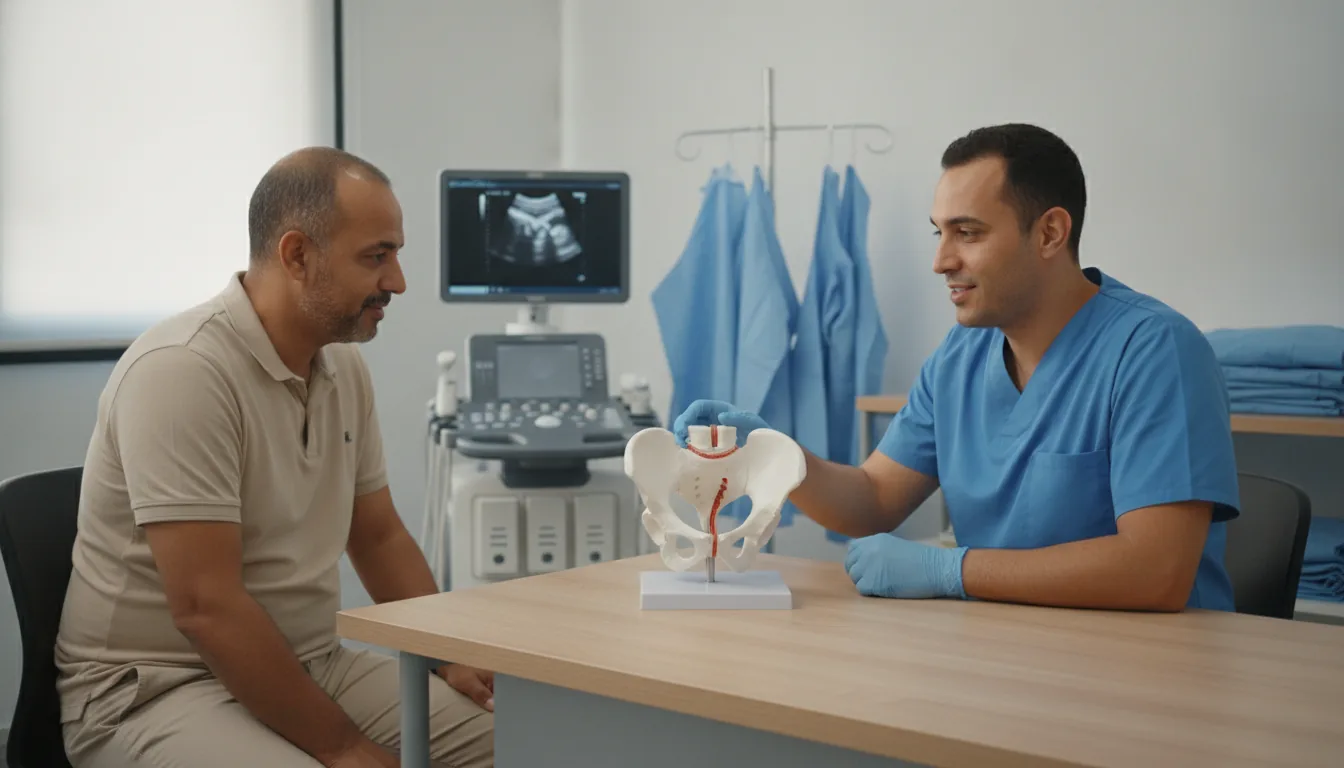
A prostate biopsy consists of taking small samples of the gland with a very fine needle; they are then examined under the microscope. It is the only test that can confirm or rule out prostate cancer and determine how aggressive it is. The samples are guided by an ultrasound probe. They can be taken through the skin of the perineum (transperineal route), a technique that lowers the risk of infection, or through the wall of the rectum (transrectal route). When a prostate MRI has shown a suspicious area, targeted samples of that area are added to the standard ones, taking the MRI images into account. A biopsy is offered when the PSA level is high or rising, when the digital rectal examination is abnormal, or when MRI shows a suspicious lesion. The urologist makes the decision taking into account the patient's age, health and wishes. At Clinique Pasteur Tunis, the test is performed under local anaesthesia or brief general anaesthesia, as a day-case procedure. The results are given and explained in a consultation, together with the next steps if needed.
Prostate biopsy

When is it indicated?

High or rising PSA

PSA is a protein measured in the blood. A high level, or one that rises from year to year, can have several causes; a biopsy shows whether cancer is present.

Abnormal digital rectal examination

If the urologist feels a hard or irregular area during the examination, samples reveal its nature.

Suspicious area on prostate MRI

MRI identifies areas that need checking. A targeted biopsy samples exactly that spot.

Monitoring of a low-risk cancer

In some patients followed without immediate treatment, repeat biopsies confirm that the disease remains stable.

Preparation

1Consultation with the urologist and, in most cases, a prostate MRI before the test
2Urine test to rule out infection
3Stopping or adjusting anticoagulants and antiplatelet drugs as advised by the doctor
4Preventive antibiotic as prescribed
5Simple rectal enema if the transrectal route is chosen

Procedure

1

Positioning suited to the chosen route

2

Local anaesthesia or brief general anaesthesia

3

Placement of the ultrasound probe

4

Systematic samples spread across the prostate

5

Targeted samples of the area seen on MRI, if needed

6

Short observation, then discharge home the same day

Duration

20 to 30 minutes

Aftercare & Recovery

Patients go home the same day. Blood may appear in the urine, stools or semen for a few days to a few weeks; this is harmless. Patients are advised to drink plenty of fluids and avoid strenuous physical activity for a few days. The results are available within one to two weeks and are explained in a consultation.

Risks and side effects

Temporary blood in the urine, stools or semen
Mild discomfort or pain in the perineum
Temporary difficulty passing urine, uncommon
Urinary or prostate infection with fever, uncommon: any fever after the test requires prompt medical attention

These risks remain rare. Your surgeon will inform you in detail before the procedure.

Request a Quote

Contact us to schedule a consultation or receive a personalized quote.

Request a Quote +216 36 402 000

At a glance

Duration: 20 to 30 minutes
Preparation: Required
Dedicated specialist team

Related searches

  • Prostate biopsy Tunis
  • Prostate biopsy Tunisia
  • Prostate biopsy in Tunisia
Request a quote