
Laser prostate surgery (HoLEP enucleation, vaporisation)
Surgeries/Urological/Laser prostate surgery

Laser prostate surgery (HoLEP enucleation, vaporisation)

Laser prostate surgery in Tunis, Tunisia · Centre Urbain Nord

Laser treatment of an enlarged prostate, performed through the natural passages without any incision and with reduced bleeding.

What is it?

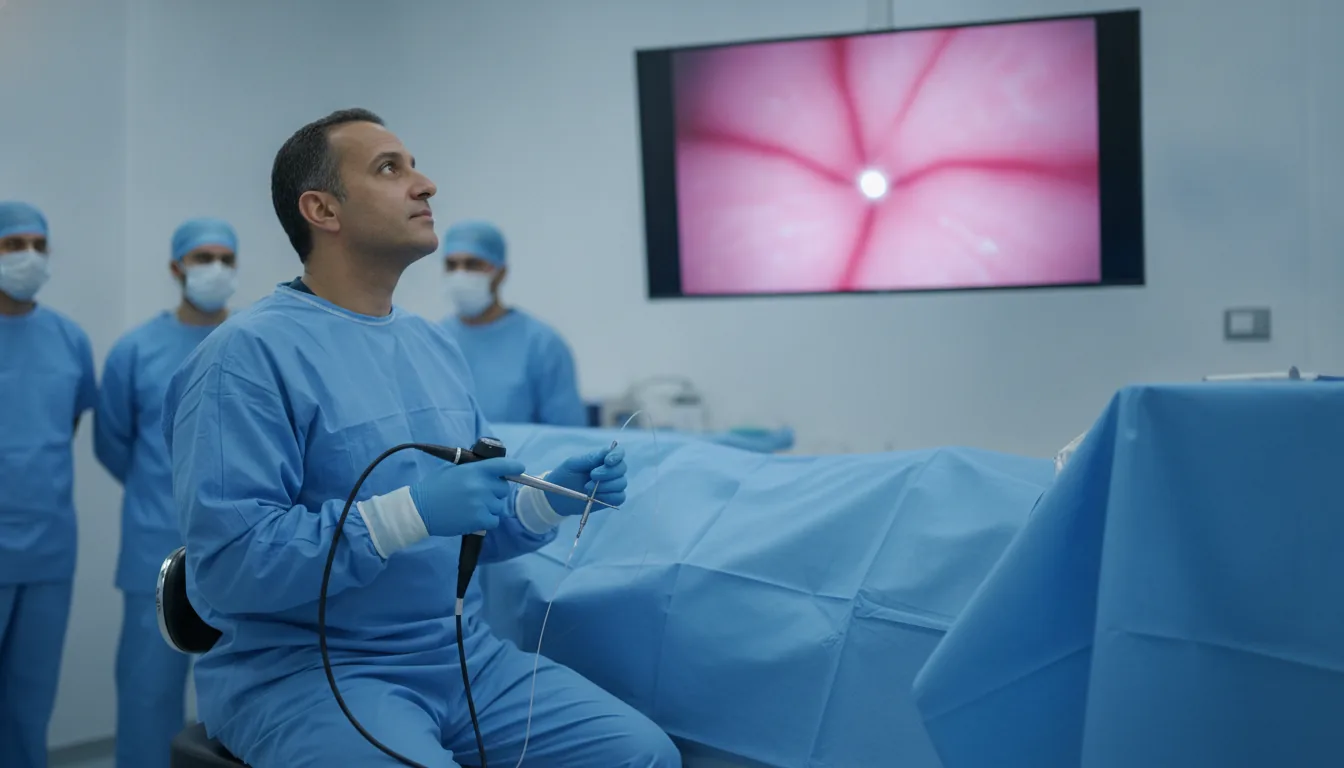
Laser prostate surgery treats benign prostatic enlargement (benign prostatic hyperplasia), the growth of the gland with age that obstructs the flow of urine. Like conventional resection, it is performed through the natural passages: an endoscope is passed through the urethra, with no skin incision at all. There are two main techniques. Holmium laser enucleation of the prostate (HoLEP) separates the enlarged tissue from its capsule, much like removing the stone from a fruit, then breaks it up and suctions it out of the bladder; it is also suitable for very large prostates, and the removed tissue is examined under the microscope. Vaporisation "melts" the prostate tissue layer by layer and is mainly suited to medium-sized prostates. The laser seals small blood vessels as it works, which limits bleeding. This is an advantage for patients taking anticoagulant or antiplatelet medication, whose continuation or adjustment is decided together with the cardiologist. The urinary catheter is usually kept for a shorter time than after conventional surgery. At Clinique Pasteur Tunis, the urologist chooses the technique after a full work-up (ultrasound, uroflowmetry, sometimes urodynamic testing) and discusses it with the patient. The procedure takes place in the operating theatre with a short hospital stay.
Laser prostate surgery (HoLEP enucleation, vaporisation)

When is it indicated?

Enlarged prostate causing significant urinary symptoms

Weak stream, getting up at night, urgency or a feeling that the bladder is not empty: when these symptoms spoil daily life, removing the obstructing tissue brings lasting relief.

Medication no longer effective or poorly tolerated

When drugs are no longer enough or cause troublesome side effects, surgery becomes the most effective solution.

Urinary retention or recurrent infections

A prostate that blocks urine completely or keeps infections going must be treated to protect the bladder and kidneys.

Large prostate (HoLEP enucleation)

Laser enucleation makes it possible to remove large prostates through the natural passages, where open surgery used to be required.

Patient on anticoagulant or antiplatelet treatment

The laser causes little bleeding, which makes the procedure safer for patients who cannot easily stop these treatments, after the cardiologist's advice.

Preparation

1Urological work-up: ultrasound, uroflowmetry, PSA test and sometimes urodynamic testing
2Urine test: the urine must be sterile before the procedure
3Anaesthesia consultation a few days beforehand
4Adjustment of anticoagulant treatment as advised by the doctor
5Fasting for 6 hours before the procedure

Procedure

1

General or spinal anaesthesia, as advised by the anaesthetist

2

Endoscope passed through the urethra, with no incision

3

Laser enucleation of the obstructing tissue or vaporisation of the prostate tissue

4

Fragmentation and suction of the removed tissue in the bladder (enucleation)

5

Careful control of bleeding

6

Placement of a temporary urinary catheter, sometimes with bladder irrigation

7

Monitoring in the recovery room, then return to the ward

Duration

1 to 2 hours depending on prostate size

Aftercare & Recovery

The hospital stay is usually 1 to 2 days. The catheter is most often removed after 24 to 48 hours. Burning or urgency may persist for a few weeks while healing takes place. Patients are advised to drink plenty of fluids and avoid strenuous effort for about 3 weeks. A follow-up visit with the urologist is scheduled.

Risks and side effects

Temporary burning and urgency during healing
Mild blood in the urine in the following days or weeks
Retrograde ejaculation, common but harmless, explained before the procedure
Temporary urinary leakage, which usually improves within a few weeks
Urinary infection, prevented by checking the urine before the procedure

These risks remain rare. Your surgeon will inform you in detail before the procedure.

Request a Quote

Contact us to schedule a consultation or receive a personalized quote.

Request a Quote +216 36 402 000

At a glance

Duration: 1 to 2 hours depending on prostate size
Preparation: Required
Dedicated specialist team

Related searches

  • Laser prostate surgery Tunis
  • Laser prostate surgery Tunisia
  • Laser prostate surgery in Tunisia
Request a quote