
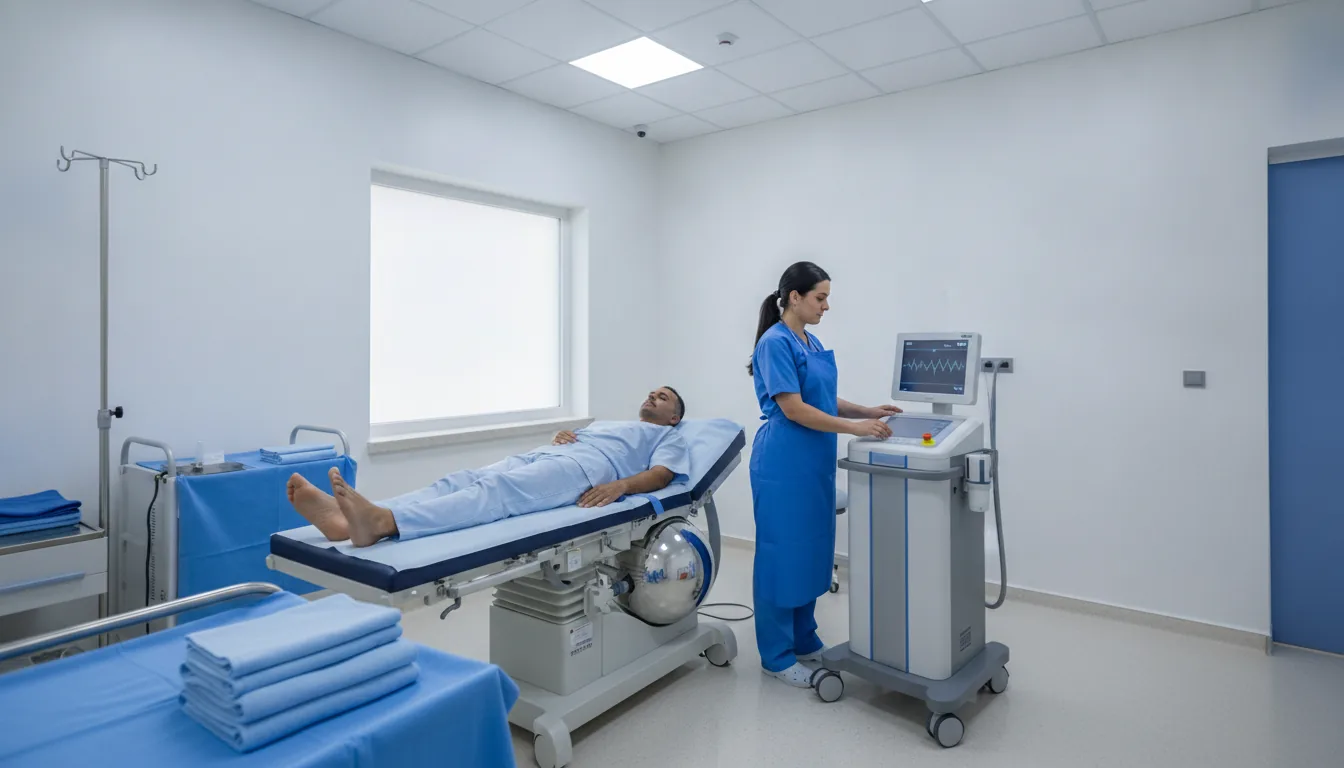
Extracorporeal shock wave lithotripsy (ESWL)
Surgeries/Urological/Shock wave lithotripsy

Extracorporeal shock wave lithotripsy (ESWL)

Shock wave lithotripsy in Tunis, Tunisia · Centre Urbain Nord

Breaking up kidney or ureteral stones with shock waves delivered from outside the body, with no incision and no endoscope.

What is it?

Extracorporeal shock wave lithotripsy (ESWL) breaks up a urinary stone using shock waves produced by a device placed against the skin. The waves pass through the body without harming it and are focused on the stone, which breaks into small fragments that are then passed naturally in the urine. The stone is located by fluoroscopy or ultrasound and is targeted precisely throughout the session. The patient lies on a treatment table; simple pain relief or light sedation is usually enough, without general anaesthesia. ESWL is suitable for small to medium-sized stones (generally less than 2 centimetres) located in the kidney or the upper part of the ureter. Its effectiveness depends on the hardness and position of the stone and on the patient's build; several sessions are sometimes needed. It cannot be used during pregnancy, or in case of untreated urinary infection or a bleeding disorder. At Clinique Pasteur Tunis, the urologist chooses between ESWL, ureteroscopy and percutaneous nephrolithotomy according to the characteristics of the stone, and explains the advantages of each option to the patient.
Extracorporeal shock wave lithotripsy (ESWL)

When is it indicated?

Kidney stone smaller than 2 centimetres

For small and medium-sized stones, ESWL can often break them up without any procedure inside the body.

Stone in the upper ureter

A stone stuck close to the kidney can, in some cases, be broken up through the skin, without an endoscope.

Stone causing pain or growing in size

A stone that causes renal colic or grows larger at follow-up checks should be treated.

Wish to avoid general anaesthesia

The session is usually carried out with simple pain relief, which suits many patients.

Preparation

1Recent imaging (CT scan or X-ray) to locate the stone
2Urine test: the urine must be sterile
3Clotting tests and stopping anticoagulants or aspirin as advised by the doctor
4Pregnancy test for women of childbearing age
5Arranging for someone to accompany you home

Procedure

1

Positioning on the treatment table

2

Pain relief medication, sometimes light sedation

3

Locating the stone by fluoroscopy or ultrasound

4

Delivery of the shock waves, felt as small regular taps on the flank

5

Regular checks of fragmentation during the session

6

Short observation, then discharge home

Duration

45 minutes to 1 hour

Aftercare & Recovery

Patients go home the same day. The fragments pass in the urine over the following days or weeks; patients are advised to drink plenty of fluids and to strain their urine to collect fragments for analysis. Blood in the urine and colicky pain may occur as fragments pass. A follow-up imaging test checks the result; a further session is sometimes needed.

Risks and side effects

Temporary blood in the urine
Renal colic as fragments are passed
Bruising or tenderness of the skin of the flank
Incomplete fragmentation requiring another session or another technique
Bleeding around the kidney or urinary infection, rare

These risks remain rare. Your surgeon will inform you in detail before the procedure.

Request a Quote

Contact us to schedule a consultation or receive a personalized quote.

Request a Quote +216 36 402 000

At a glance

Duration: 45 minutes to 1 hour
Preparation: Required
Dedicated specialist team

Related searches

  • Shock wave lithotripsy Tunis
  • Shock wave lithotripsy Tunisia
  • Shock wave lithotripsy in Tunisia
Request a quote