
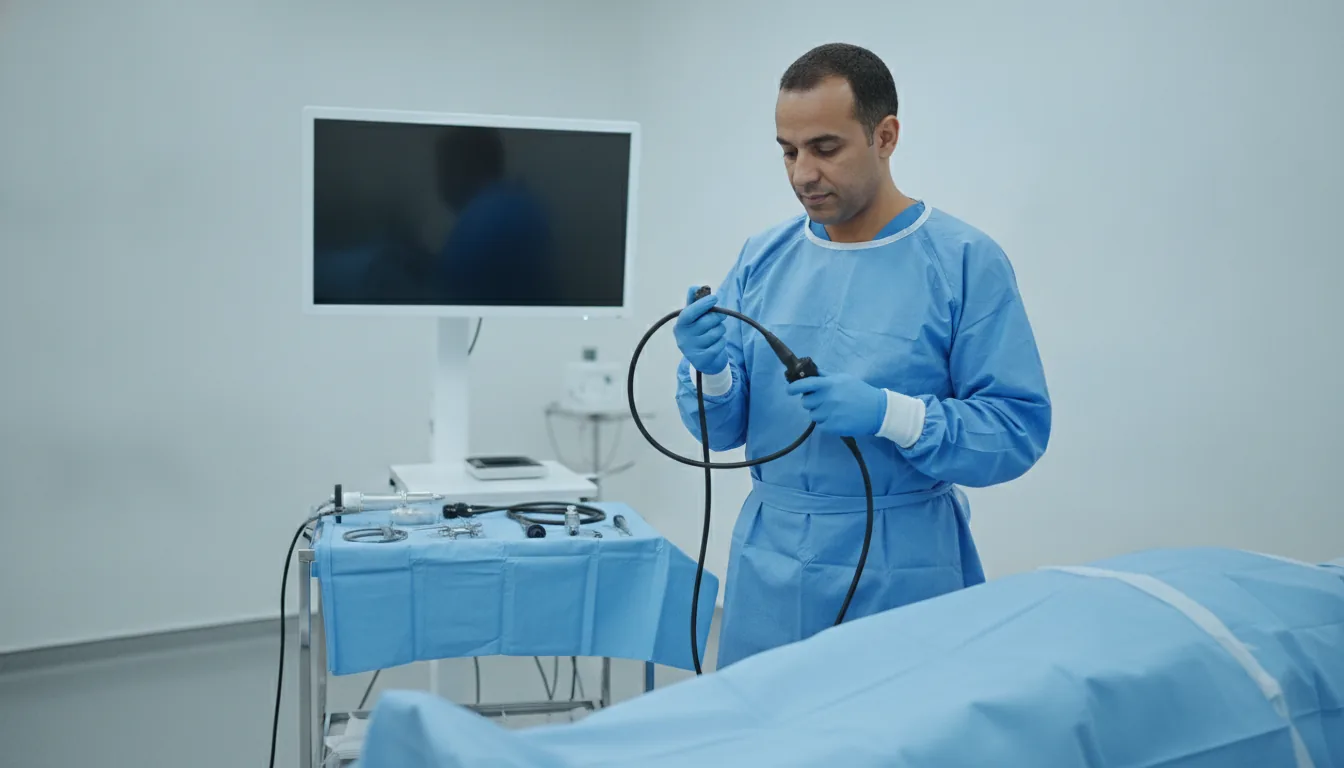
Cystoscopy (bladder endoscopy)
Cystoscopy in Tunis, Tunisia · Centre Urbain Nord
Examination of the inside of the urethra and bladder with a thin flexible camera, usually under simple local anaesthesia.
What is it?
When is it indicated?
Even a single episode of visible blood in the urine should be investigated. Cystoscopy looks for a cause in the bladder or urethra.
After treatment of a bladder tumour, regular cystoscopies allow any recurrence to be detected and treated early.
Frequent urges, pain or repeated infections without an obvious cause may justify looking inside the bladder.
A weak stream in a young man may be due to a narrowing of the urethra, which cystoscopy can reveal.
The stent is removed in a few minutes using small forceps passed through the endoscope.
Preparation
Procedure
Lying down, with legs slightly apart
Cleaning of the genital area
Application of an anaesthetic gel into the urethra
Gentle insertion of the flexible endoscope into the bladder
Filling the bladder with saline to see the walls clearly
Complete examination, possible biopsy, then removal of the endoscope
Duration
5 to 15 minutes
Aftercare & Recovery
Patients go home immediately after an examination under local anaesthesia. Mild burning when passing urine and a little blood are possible for 24 to 48 hours; drinking plenty of fluids is advised. The urologist explains the findings straight away; if a biopsy was taken, its result is given in a consultation.
Risks and side effects
These risks remain rare. Your surgeon will inform you in detail before the procedure.
Request a Quote
Contact us to schedule a consultation or receive a personalized quote.
Request a Quote +216 36 402 000At a glance
Related searches
- Cystoscopy Tunis
- Cystoscopy Tunisia
- Cystoscopy in Tunisia