
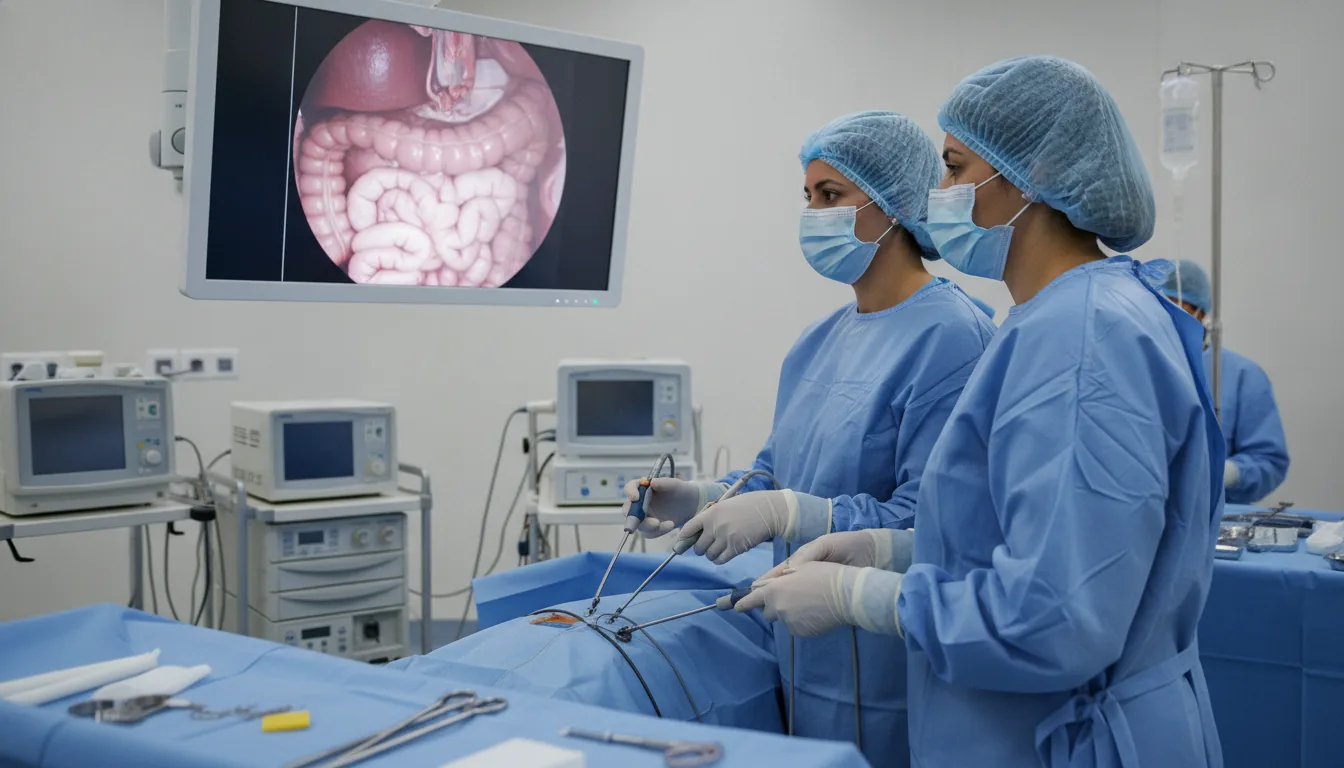
Diagnostic laparoscopy in gynaecology
Diagnostic laparoscopy in Tunis, Tunisia · Centre Urbain Nord
Examination of the pelvis with a small camera inserted through the navel, to understand pain or infertility and treat at the same time.
What is it?
When is it indicated?
When the lower abdomen has been painful for a long time and no cause is found on ultrasound or MRI, looking directly often reveals the source.
Laparoscopy checks the condition of the tubes and looks for adhesions or endometriosis that could interfere with pregnancy.
It confirms the disease, shows how extensive it is and, often, allows the lesions to be treated at the same time.
Tissues stuck together can cause pain or block the tubes. They can be released during the operation.
When an image remains unclear despite tests, laparoscopy allows it to be seen, sampled or removed.
Preparation
Procedure
Admission on the day of the operation
General anaesthetic
Small incision in the navel and inflation of the abdomen with gas
Insertion of the camera and one or two fine instruments
Examination of the womb, tubes, ovaries and peritoneum, with a dye test if needed
Treatment of any lesions found when possible, and samples taken
Release of the gas, closure of the small incisions and monitoring in the recovery room
Duration
30 minutes to 1 hour 30 depending on the procedures performed
Aftercare & Recovery
Patients go home the same day or the next day. Pain is moderate; shoulder discomfort caused by the gas may last one or two days. Activities can be resumed within about a week. The surgeon explains what was seen and suggests the next steps: monitoring, medical treatment, further surgery or fertility care.
Risks and side effects
These risks remain rare. Your surgeon will inform you in detail before the procedure.
Request a Quote
Contact us to schedule a consultation or receive a personalized quote.
Request a Quote +216 36 402 000At a glance
Related searches
- Diagnostic laparoscopy Tunis
- Diagnostic laparoscopy Tunisia
- Diagnostic laparoscopy in Tunisia