
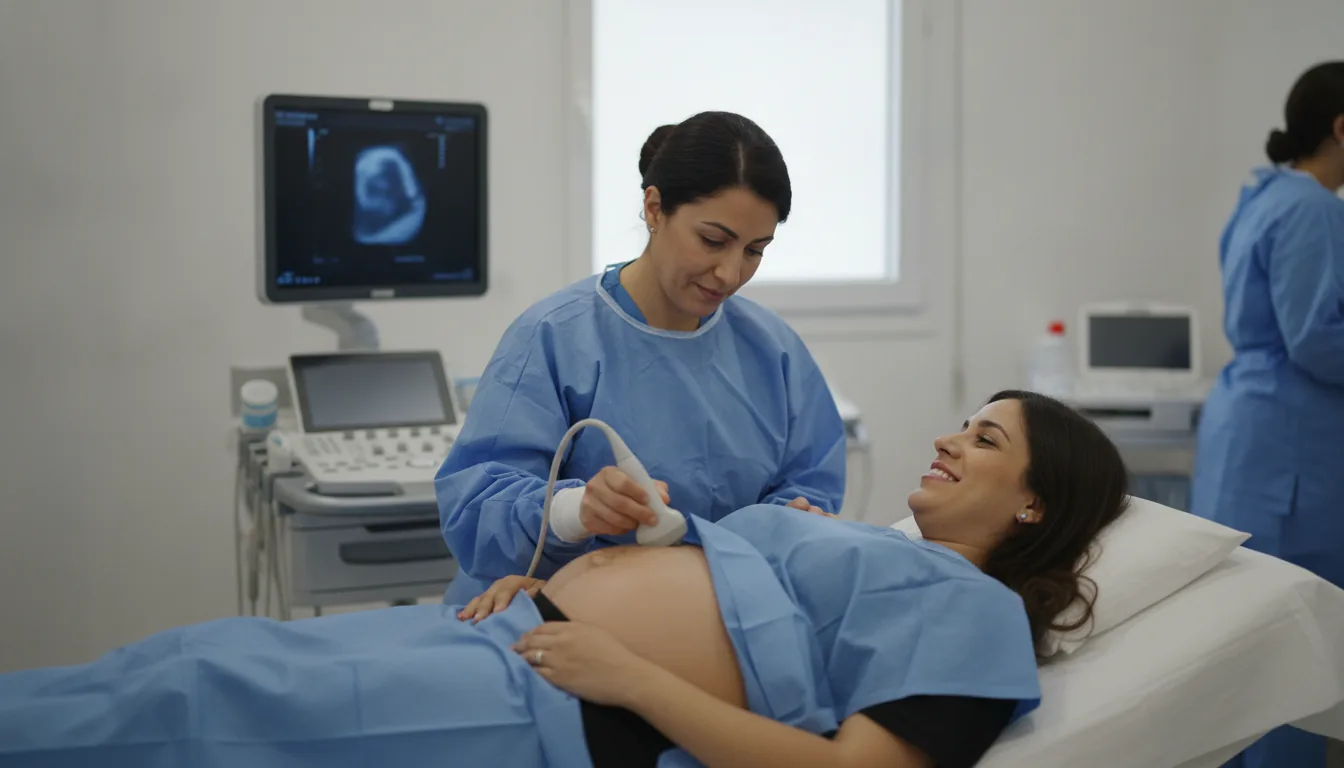
Cervical cerclage

Cervical cerclage

Cervical cerclage in Tunis, Tunisia · Centre Urbain Nord

A stitch placed around the cervix during pregnancy to help keep it closed and reduce the risk of late miscarriage or very preterm birth.

What is it?

During pregnancy, the cervix must stay long and closed until term. In some women it opens too early, without painful contractions, which can lead to late miscarriage or very preterm birth. Cerclage consists of placing a strong stitch around the cervix to keep it closed. The procedure is done through the vagina, with no abdominal incision, usually under spinal anaesthesia. It is either planned at the end of the first trimester in women with a relevant history, or decided during pregnancy when the ultrasound shows a shortening cervix. Less often, it is done as an emergency when the cervix is already open. The decision is made by the obstetrician after careful review of the history and the cervical ultrasound. Cerclage is not suitable in every situation, for example if there is infection, active bleeding or ruptured membranes. At Clinique Pasteur Tunis, cerclage is performed in the operating theatre by the obstetric team, with monitoring of the baby before and after the procedure. The stitch is removed at the end of pregnancy, around 36 to 37 weeks, or earlier if labour begins.
Cervical cerclage

When is it indicated?

History of late miscarriage or very preterm birth

When a previous pregnancy ended in the second trimester because the cervix opened, a preventive cerclage may be offered.

Cervix shortening on ultrasound

In a woman at risk, a cervix that is too short on ultrasound may justify a cerclage to reinforce it.

Open cervix found in the second trimester

In some cases, an emergency cerclage may help prolong the pregnancy, after careful assessment of the risks.

Previous surgery on the cervix

After some extensive cone biopsies, the cervix may be weakened; cerclage is considered depending on cervical length.

Preparation

1Pregnancy ultrasound and measurement of cervical length
2Screening for vaginal or urinary infection, treated if needed
3Anaesthetic consultation
4Fasting for 6 hours before the procedure
5Discussion with the obstetrician about the expected benefits and limits

Procedure

1

Admission on the day of the procedure

2

Check of the baby's wellbeing

3

Spinal anaesthesia in most cases

4

Access to the cervix through the vagina, with no abdominal incision

5

A strong stitch is passed around the cervix and tightened to close it

6

Further check of the baby after the procedure

7

Monitoring for a few hours, then return to the ward

Duration

About 15 to 30 minutes

Aftercare & Recovery

Discharge is the same day or the next day. Light discharge or mild cramps may occur for a few days. Relative rest and avoiding intercourse are often advised for a period set by the obstetrician. The pregnancy is closely monitored. The stitch is removed at around 36 to 37 weeks, a simple procedure usually done without anaesthesia; vaginal birth is then possible.

Risks and side effects

Light bleeding and mild cramps in the following days
Infection or rupture of the membranes, uncommon
Onset of contractions, monitored after the procedure
Cerclage reduces the risk but does not rule out preterm birth
If labour starts before planned removal, the stitch must be removed without delay: seek care immediately

These risks remain rare. Your surgeon will inform you in detail before the procedure.

Request a Quote

Contact us to schedule a consultation or receive a personalized quote.

Request a Quote +216 36 402 000

At a glance

Duration: About 15 to 30 minutes
Preparation: Required
Dedicated specialist team

Related searches

  • Cervical cerclage Tunis
  • Cervical cerclage Tunisia
  • Cervical cerclage in Tunisia
Request a quote