
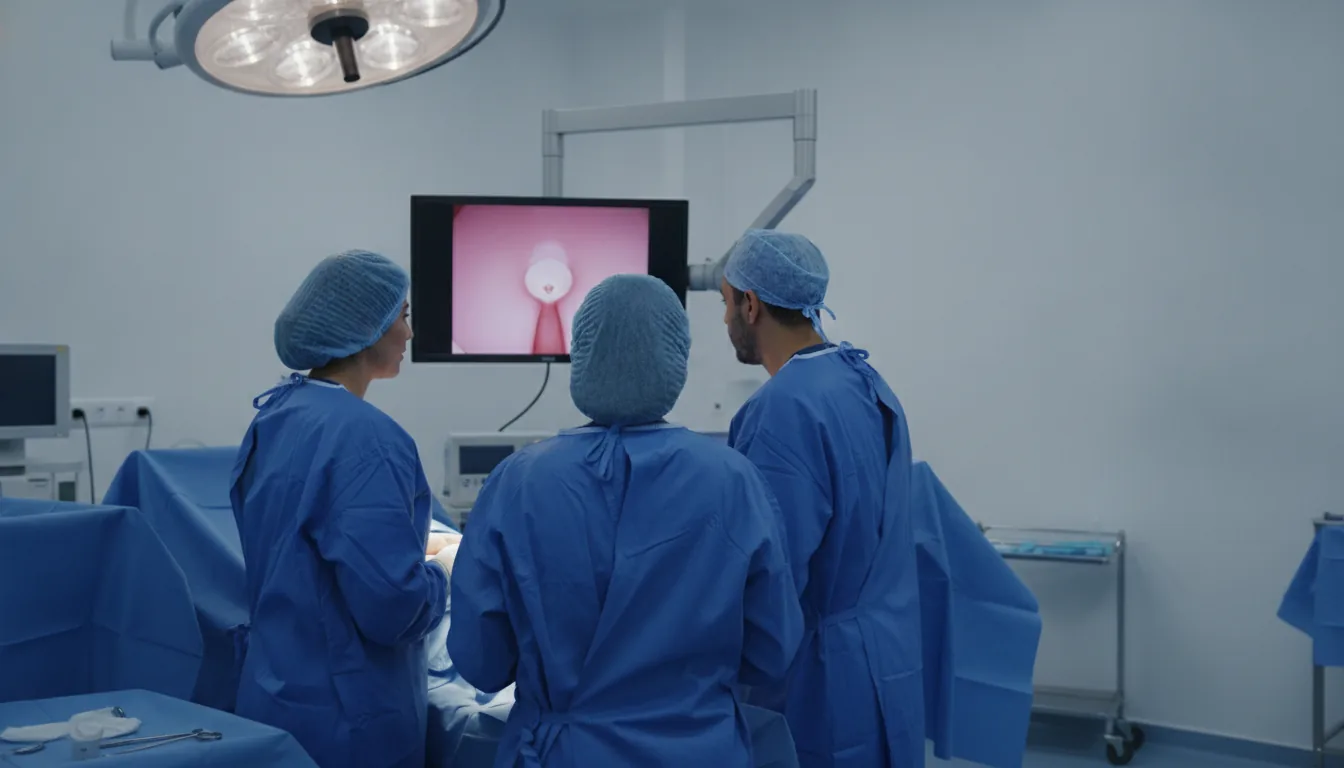
Operative hysteroscopy (polyp, septum, fibroid)
Operative hysteroscopy in Tunis, Tunisia · Centre Urbain Nord
Treatment of polyps, septa, small fibroids and adhesions inside the womb through the natural passages, with no incision.
What is it?
When is it indicated?
This is a small growth of the lining of the womb. It can cause bleeding or interfere with pregnancy; it is removed and analysed.
A fibroid that protrudes into the womb often causes heavy periods. If it is accessible, it can be removed without opening the abdomen.
Some women are born with a wall of tissue dividing the womb. Dividing it can reduce the risk of miscarriage.
After a curettage or an infection, the walls of the womb can stick together. Releasing them helps restore normal periods and fertility.
When the threads of a coil can no longer be seen or the coil has moved, hysteroscopy allows it to be removed under direct vision.
Preparation
Procedure
Admission as a day case
Short general anaesthetic or spinal anaesthetic
Gentle dilation of the cervix
Insertion of the operative hysteroscope and filling of the cavity with a sterile fluid
Removal or division of the lesion with fine instruments
Removed tissue sent for analysis
Monitoring for a few hours, then discharge home
Duration
15 minutes to 1 hour depending on the procedure
Aftercare & Recovery
Most patients go home the same day. Light bleeding and cramps may last a few days. Activities can be resumed within one to three days. It is advisable to avoid baths, tampons and intercourse for about a week. A follow-up appointment discusses the analysis; a check hysteroscopy is sometimes offered, especially after division of a septum or adhesions.
Risks and side effects
These risks remain rare. Your surgeon will inform you in detail before the procedure.
Request a Quote
Contact us to schedule a consultation or receive a personalized quote.
Request a Quote +216 36 402 000At a glance
Related searches
- Operative hysteroscopy Tunis
- Operative hysteroscopy Tunisia
- Operative hysteroscopy in Tunisia