
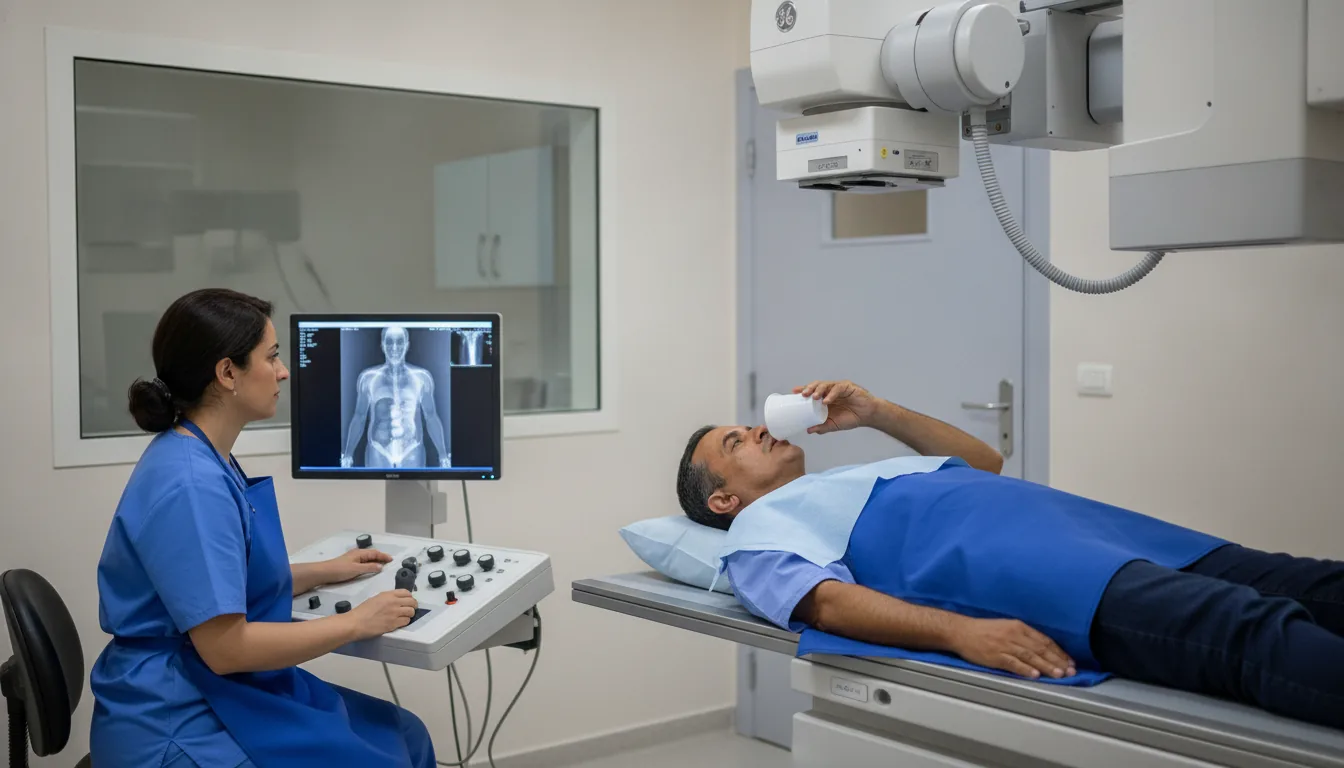
Fluoroscopy-guided joint and spinal injections
Centres/Radiology/Conventional radiology/Fluoroscopy-guided injection

Fluoroscopy-guided joint and spinal injections

Fluoroscopy-guided injection in Tunis, Tunisia · Centre Urbain Nord

Fluoroscopy-guided injection in Tunis: a medicine injected into a joint or near the spine, guided by X-rays.

What is it?

An injection (infiltration) consists of injecting a medicine, usually a corticosteroid (a powerful anti-inflammatory), into or near a joint, or near the spine (close to a nerve or a small joint of the back). Fluoroscopy (live images on a screen) allows the doctor to guide the needle precisely to the right area. A small amount of iodinated contrast is often injected before the medicine to check that the needle is in the right position. The aim is to relieve pain that does not respond to usual treatments: arthritis, sciatica, nerve pain, joint inflammation. The effect usually appears after a few days and how long it lasts varies from person to person.

When is it indicated?

Painful arthritis

Injecting a hip, knee, shoulder or small joint of the back can reduce pain and inflammation.

Sciatica or cervical nerve pain

An injection near the nerve root can relieve pain radiating down the leg or arm.

Inflammatory joint pain

It can settle an inflamed joint when oral treatments are not enough.

Identifying the source of pain

The relief obtained after the injection sometimes helps the doctor confirm where the pain comes from.

Preparation

1Tell us before the examination if you are pregnant or think you might be
2Tell us if you take an anticoagulant or antiplatelet medicine ("blood thinner"): you will be told what to do
3Tell us if you have diabetes: blood sugar may rise for a few days after a corticosteroid injection, so closer monitoring is advised
4Tell us about any fever, ongoing infection (even dental or urinary) or wound near the area: the injection will then be postponed
5Tell us about any allergy to iodinated contrast, local anaesthetic or medicine
6Arrange for someone to accompany you home if possible
7Bring your referral and any previous X-rays or reports of the same area

Procedure

1

You are positioned on the X-ray table in a way that gives access to the area to be treated

2

The skin is carefully disinfected; local anaesthesia may be given

3

The doctor guides the needle under fluoroscopy, then checks its position with a little contrast

4

The medicine is injected; you may feel pressure or pain similar to your usual pain

5

A dressing is applied and you are monitored for a short time

6

Relative rest is advised for the rest of the day, or as instructed by the doctor

Duration

About 15 to 30 minutes, including monitoring

Results

The doctor who performs the injection writes a report of the procedure, which is given to you and sent to your doctor. Its effectiveness is assessed over the following days or weeks: your doctor will review it with you.

Precautions and contraindications

Temporary pain at the injection site or a temporary increase in pain for a day or two
Facial flushing, hot flushes or raised blood sugar for a few days (effect of the corticosteroid)
Joint infection: rare but serious; seek urgent care in case of fever, redness or significant swelling
Bleeding or bruising, especially if you take anticoagulants
Not performed if there is an ongoing infection; avoided during pregnancy

Your doctor and the radiology team will inform you in detail before the examination. Feel free to ask them your questions.

This information is general and does not replace the advice of your doctor, who chooses the examination suited to your situation.

Related searches

  • Fluoroscopy-guided injection Tunis
  • Fluoroscopy-guided injection Tunisia
  • Fluoroscopy-guided injection in Tunisia
Request a quoteBook an appointment