
Abdominal and abdominopelvic MRI
Abdominal MRI in Tunis, Tunisia · Centre Urbain Nord
Abdominal MRI in Tunis: liver, pancreas, kidneys, spleen and adrenal glands; extended to the pelvis (abdominopelvic) or chest as requested.
What is it?
When is it indicated?
It can often tell whether a liver lesion is benign (cyst, haemangioma) or whether it needs monitoring or further investigation.
It examines pancreatic cysts in detail and their connection with the pancreatic ducts, to decide on monitoring or treatment.
It helps characterise a lesion found by chance on another test.
It monitors the liver in case of cirrhosis or chronic hepatitis, and can assess iron or fat overload.
It complements the CT scan to clarify involvement of the abdominal organs.
Preparation
Procedure
You change in a cubicle and put your metal objects in a locker
A drip is placed in your arm if an injection is planned
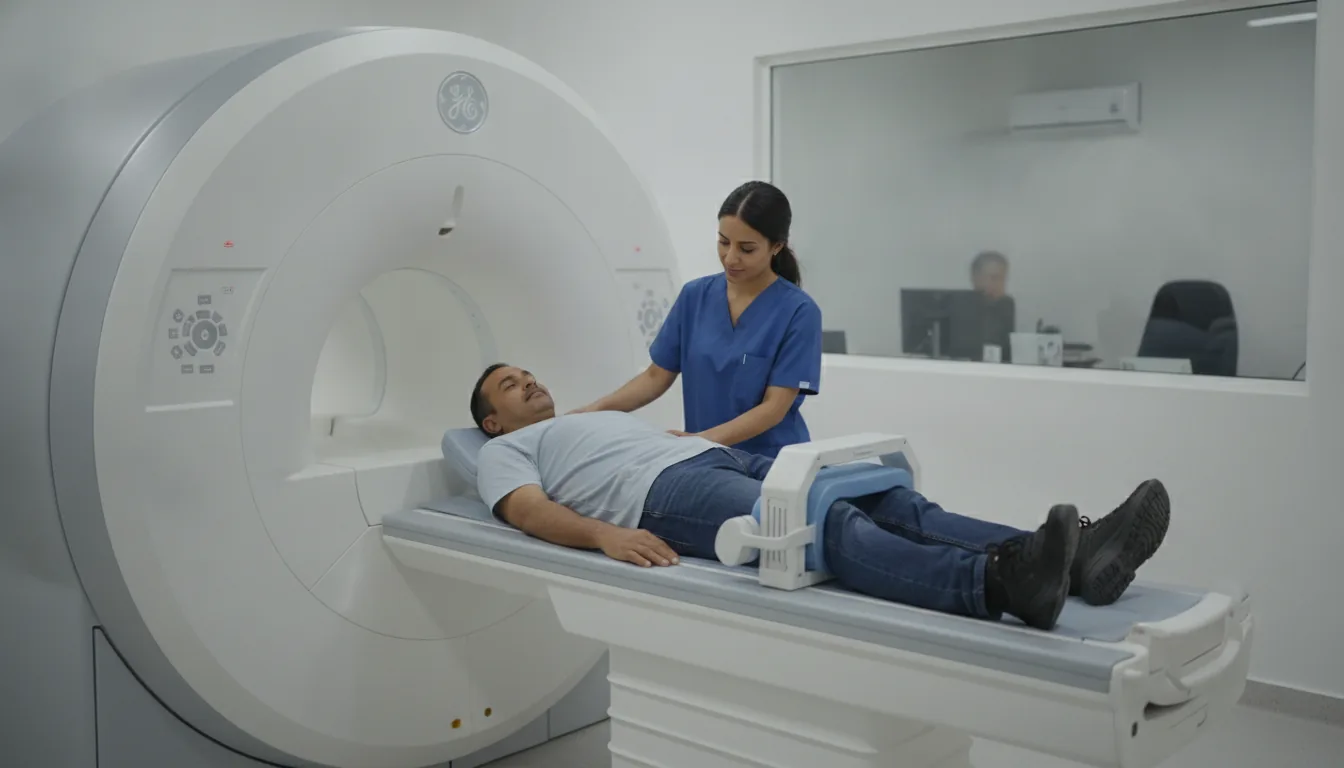
You lie on your back, with a coil placed on your abdomen
You will be given breathing instructions: many series are taken while you hold your breath for a few seconds
A medicine that calms bowel movements may be injected for sharper images
The scanner makes loud, repetitive noises while the images are being taken: headphones or earplugs are provided
You stay in contact with the team through a microphone and a call bell that you hold in your hand
Duration
About 30 to 45 minutes
Results
The images are analysed by a radiologist, who writes a report. The report is given to you with the images and sent to your doctor, who will explain the results and the next steps. You will be told when to expect it on the day of the examination.
Precautions and contraindications
Your doctor and the radiology team will inform you in detail before the examination. Feel free to ask them your questions.
This information is general and does not replace the advice of your doctor, who chooses the examination suited to your situation.
Related searches
- Abdominal MRI Tunis
- Abdominal MRI Tunisia
- Abdominal MRI in Tunisia