
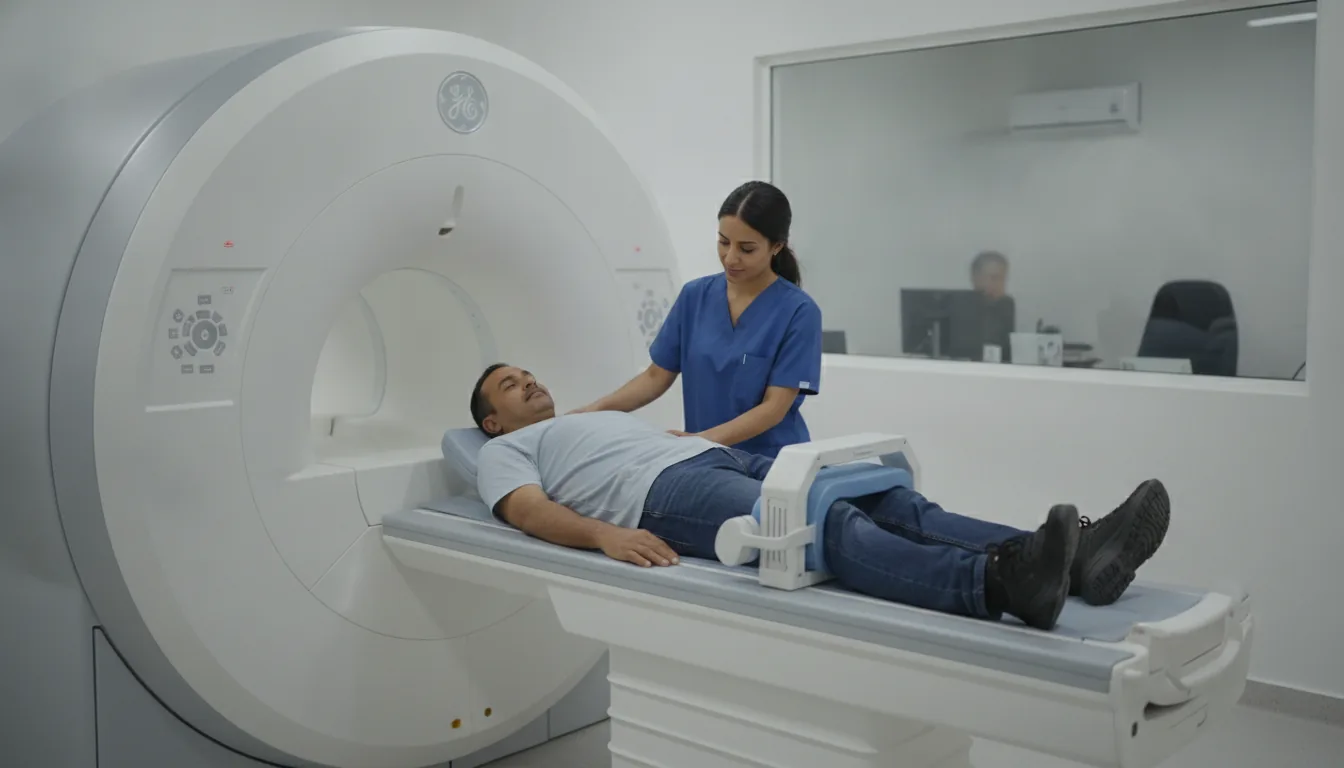
Brain MRI

Brain MRI

Brain MRI in Tunis, Tunisia · Centre Urbain Nord

Brain MRI in Tunis: the key test to examine the brain (headaches, dizziness, memory problems, stroke, epilepsy), without X-rays.

What is it?

A brain MRI is an imaging test of the brain and its surroundings (meninges, cranial nerves, blood vessels). It uses a magnet and radio waves, without X-rays, and gives very detailed images of the different areas of the brain. It is the most precise test for understanding the cause of many neurological symptoms: unusual headaches, dizziness, problems with vision, speech or memory, epileptic seizures, weakness on one side of the body. It is also used to monitor a known condition. Depending on your doctor's question, an injection of contrast agent (gadolinium) may be needed. The examination can be completed with spectroscopy (a chemical analysis of a specific area of the brain, useful for example to characterise a lesion), with an MR angiography of the neck vessels, or combined with a spine MRI during the same session.

When is it indicated?

Unusual or persistent headaches

When headaches change pattern, do not respond to treatment or come with other symptoms, MRI helps rule out a cause in the brain.

Suspected stroke or stroke follow-up

MRI shows very early an area of the brain with poor blood supply and helps the doctor choose the treatment.

Epilepsy, memory problems, dizziness

It looks for an abnormality that could explain seizures, a memory problem or a balance disorder.

Multiple sclerosis and inflammatory diseases

MRI shows the plaques and makes it possible to follow the course of the disease and the effect of treatment.

Detection and follow-up of a tumour

It specifies the size and nature of a lesion; spectroscopy can provide additional information.

Preparation

1Remove jewellery, watch, piercings, hair clips, bank cards and any metal object before entering the scanner room
2Tell us in advance about any pacemaker or defibrillator, implant (cochlear implant, neurostimulator, pump), surgical clip, heart valve, prosthesis or metal fragment: some are MRI-compatible, others are not
3Tell us if you are pregnant or think you might be
4Let us know if you are afraid of enclosed spaces (claustrophobia): the team will support you and your doctor can prescribe a mild sedative
5If an injection is planned, tell us about any kidney disease, allergy or past reaction to a contrast agent; a recent blood test (creatinine) may be requested
6No fasting is usually needed; remove eye make-up (some products contain metal particles)
7Bring your referral, previous imaging (MRI, CT scan, ultrasound) and any relevant reports

Procedure

1

You change in a cubicle and put your metal objects in a locker

2

You lie on your back; your head is placed in a helmet-shaped coil and held in place with small cushions

3

The scanner makes loud, repetitive noises while the images are being taken: headphones or earplugs are provided

4

You need to keep still during each series of images so that they are sharp

5

If an injection is needed, the contrast agent (gadolinium) is given through a small drip in your arm during the examination

6

You stay in contact with the team through a microphone and a call bell that you hold in your hand

7

After the examination, you can return to your usual activities straight away

Duration

About 20 to 40 minutes; a little longer if spectroscopy or an MR angiography is added

Results

The images are analysed by a radiologist, who writes a report. The report is given to you with the images and sent to your doctor, who will explain the results and the next steps. You will be told when to expect it on the day of the examination.

Precautions and contraindications

No X-rays: MRI does not use ionising radiation
Not possible with a pacemaker, defibrillator or implant that is not MRI-compatible, or with a metal foreign body in the eye
Allergic reaction to gadolinium: rare, and usually mild (redness, itching)
In case of severe kidney failure, the gadolinium injection is avoided or adjusted by the doctor
During pregnancy, MRI is only performed if it is really useful, and usually without an injection
You may feel enclosed inside the tunnel; the examination can be stopped at any time

Your doctor and the radiology team will inform you in detail before the examination. Feel free to ask them your questions.

This information is general and does not replace the advice of your doctor, who chooses the examination suited to your situation.

Related searches

  • Brain MRI Tunis
  • Brain MRI Tunisia
  • Brain MRI in Tunisia
Request a quoteBook an appointment