
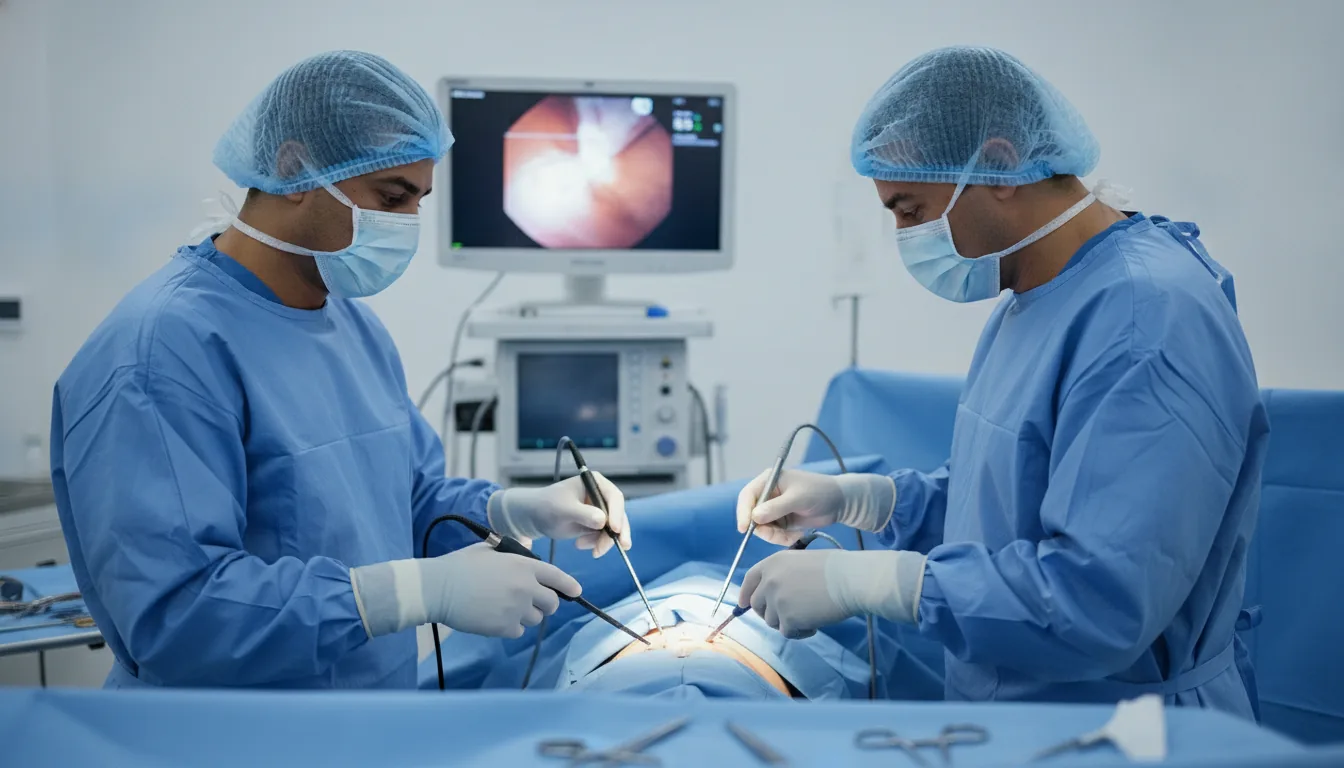
Two operations, one goal
Sleeve gastrectomy and gastric bypass are two types of obesity surgery, also called bariatric surgery. Both aim for lasting weight loss and an improvement in the conditions often linked to obesity, such as type 2 diabetes, high blood pressure or sleep apnoea.
They have a lot in common: both are performed by laparoscopy, through small incisions, under general anaesthesia; both reduce the size of meals; both also act on the hormones that regulate hunger. Above all, they are part of the same care pathway: assessment before surgery, nutritional and psychological preparation, then long-term follow-up.
What sets them apart is the route food takes after the operation. Understanding this difference helps you follow the surgeon's explanations and ask the right questions during your consultation.
The sleeve: a tube-shaped stomach
Sleeve gastrectomy involves removing a large part of the stomach to give it the shape of a tube. The amount of food you can eat at one time decreases, you feel full sooner, and the production of a hormone that stimulates appetite falls.
The sleeve does not change the route food takes: it still passes from the stomach into the intestine as before. Digestion and the absorption of nutrients therefore remain natural.
- A single procedure on the stomach, with no intestinal bypass
- Food reintroduced in stages: liquid, puréed, then normal
- One point to watch: gastro-oesophageal reflux, which may appear or worsen and require suitable treatment
- Regular nutritional follow-up to prevent deficiencies
The bypass: a small pouch and a short circuit
Roux-en-Y gastric bypass combines two mechanisms. The surgeon first creates a small pouch from the upper part of the stomach, which limits meal size. This pouch is then connected directly to the intestine, bypassing part of the digestive tract. Food no longer passes through the rest of the stomach, and its absorption is changed.
This dual action also affects the regulation of hunger and blood sugar. This is why a bypass is often considered when type 2 diabetes accompanies obesity. Its design also protects the oesophagus from acid reflux: it is often preferred when troublesome reflux is already present before surgery.
There is also a variant, the mini gastric bypass (omega loop bypass), which has only one connection to the intestine instead of two. Whether it is suitable is discussed case by case, according to each patient's situation.
What guides the choice
No single operation suits everyone. The choice is made at the end of the pre-operative assessment, based on your personal situation, and is then approved by the multidisciplinary team (surgeon, nutritionist, psychologist, anaesthetist and other specialists as needed). The factors taken into account include:
- Associated conditions: type 2 diabetes or significant gastro-oesophageal reflux may point towards a bypass
- Your eating habits, assessed during the nutritional evaluation
- Your medical history, especially any previous obesity surgery
- Your ability to take vitamin supplements and attend regular appointments over the long term
- Your general health and anatomy, assessed by the surgeon and the anaesthetist
- Your expectations and questions, which deserve to be expressed freely
After surgery: what changes day to day
In both cases, eating resumes gradually, following a precise schedule provided by the team: first drinks and liquid textures, then puréed food, before returning to normal food in small portions. The nutritionist supports each stage and keeps an eye on protein intake and hydration.
After a bypass, daily vitamins and regular medical and nutritional follow-up are essential for life, to prevent vitamin and mineral deficiencies. Some people also feel discomfort after very sugary meals (dumping syndrome), which dietary advice helps to avoid.
After a sleeve, digestion follows its usual route, but follow-up is just as important: it monitors your nutritional balance, adjusts any supplements and detects reflux. Whatever the operation, it is your new habits and regular follow-up that help consolidate the result over time.
Preparing for your consultation
To prepare well for your first consultation, bring your medical reports, the list of your current treatments and, if you have them, your latest test results. It helps to write down your questions in advance.
A few questions to ask the surgeon: why this operation rather than the other in your case? What are the specific points to watch with this procedure? How is follow-up organised, and with which professionals? What happens if the result is not what you hoped for?
You can also request a quote online on the clinic's website: it is free and without obligation. The operation itself is only decided after the full assessment and approval of your file by the team.
Frequently asked questions
Which operation leads to more weight loss?
Both operations lead to significant, gradual weight loss over the months following surgery. The result depends mainly on your starting point, your new habits and how regularly you attend follow-up. No operation can promise a result: your surgeon will explain what you can reasonably expect.
I have diabetes: is a bypass mandatory?
No. A bypass is often considered when type 2 diabetes accompanies obesity, because it also acts on blood sugar regulation, but a sleeve also often helps improve diabetes through weight loss. The choice is made case by case, together with the team that manages your diabetes.
Can a sleeve be converted to a bypass later?
Yes, in certain situations: troublesome reflux after a sleeve, weight regain, or insufficient weight loss despite well-conducted follow-up. This is called revisional bariatric surgery. It requires a full assessment of the existing procedure and a team discussion of your file.
Do I need vitamins after a sleeve as well as after a bypass?
After a bypass, vitamin and mineral supplements are essential for life. After a sleeve, regular nutritional follow-up monitors your intake and the team tells you whether supplements are needed, and for how long. In both cases, never change your supplements without medical advice.
What about the mini bypass — how is it different?
The mini bypass is a variant of the classic bypass, with a single connection between the stomach and the intestine instead of two. Like the Roux-en-Y bypass, it requires supplements and long-term follow-up, and it has its own point to watch, bile reflux, which is monitored during follow-up. Whether it suits you is discussed case by case.
This article is for general information only. It does not replace the advice of your doctor, who alone can adapt instructions to your situation.
Learn more
A question? A quote?
Our team answers your questions and supports you throughout your care journey.