
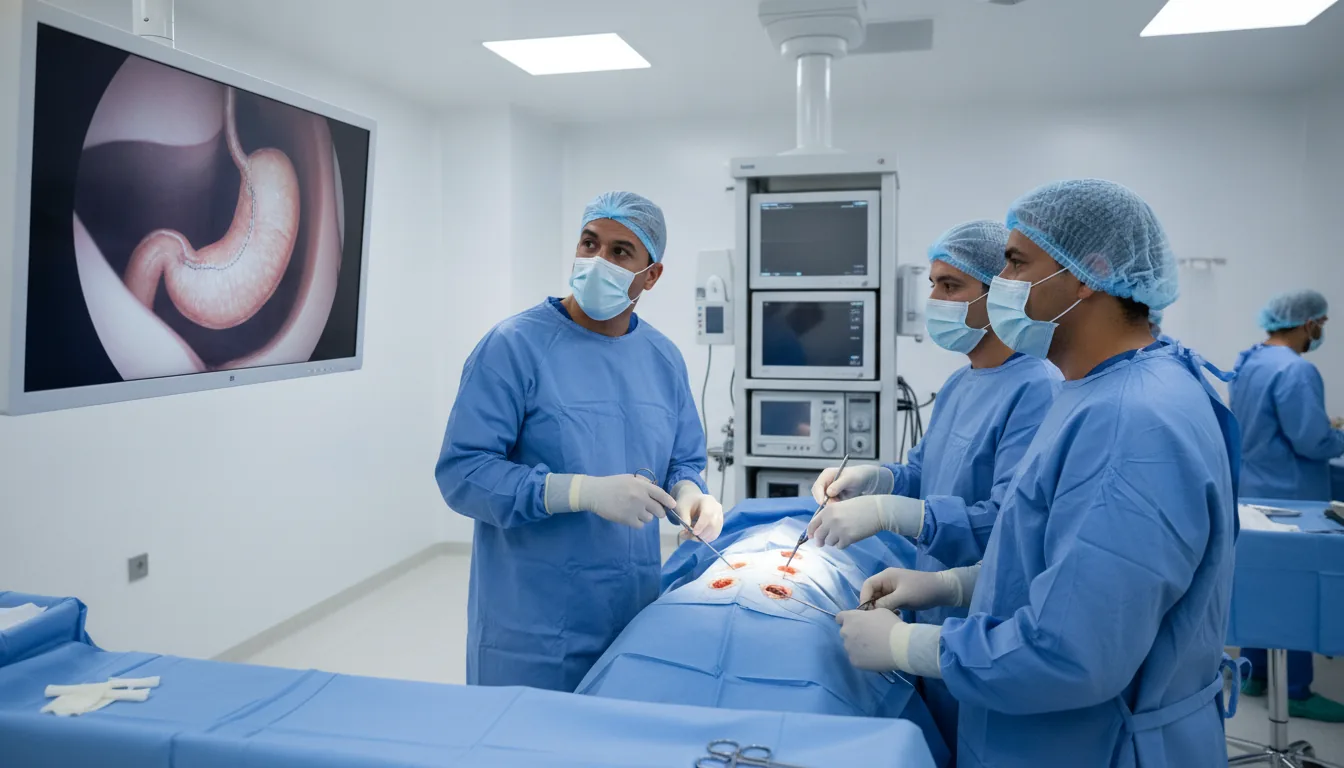
Sleeve gastrectomy in a few words
Sleeve gastrectomy is a type of obesity surgery. It involves removing a large part of the stomach to give it the shape of a narrow tube, or sleeve. Meal portions become smaller, you feel full sooner, and the production of a hormone that stimulates appetite decreases.
Unlike a gastric bypass, the sleeve does not change the route food takes: digestion still follows the same path. The operation is performed by laparoscopy, meaning through small incisions, which generally makes recovery more comfortable.
It is important to understand this from the start: the sleeve is a tool, not a miracle cure. It is part of a complete journey, before and after surgery, and it is this whole journey, together with your new habits, that leads to a lasting result.
Step 1: the first consultation
Everything begins with a consultation with the surgeon. It is an open discussion, with no commitment: the aim is to review your history, your weight, your past weight-loss attempts, any medical conditions and your treatments.
The surgeon explains how the operation works, its expected benefits, its constraints and its risks, as well as the other possible options. Together, you check whether surgery can be considered in your situation. This decision is never made alone or in a hurry.
To make the most of this appointment, remember to bring:
- A list of your current medications and any allergies.
- Your medical reports, recent blood tests and examinations.
- A history of the diets and programmes you have already followed.
- Your questions, written down in advance so you don't forget anything.
Step 2: the pre-operative assessment and preparation
If a sleeve is being considered, a full assessment is arranged. It checks that the operation can take place in good conditions and that it is right for you. It usually includes blood tests, a cardiology review, an endoscopic examination of the stomach and an anaesthesia consultation.
The assessment also includes a nutritional evaluation and a psychological evaluation. These are not "tests to pass": they help prepare you for the dietary changes ahead and support you through this new stage of life.
Your file is then reviewed by the multidisciplinary team (surgeon, anaesthetist, nutritionist, psychologist) to confirm that the sleeve is the most suitable option. Depending on your situation, the team may prescribe a specific diet before surgery. Do not change any treatment on your own: any adjustment is decided with your doctor.
Step 3: the day of surgery
On the day, you fast according to the precise instructions given by the anaesthesia team. You are welcomed, settled in, then taken to the operating theatre. The operation is carried out under general anaesthesia: you are asleep throughout.
The surgeon inserts the instruments through small incisions in the abdomen. The stomach is calibrated around a tube, then divided and stapled to create the sleeve. The staple line is checked for leaks before the incisions are closed. At Clinique Pasteur Tunis, bariatric surgery is performed in an operating theatre dedicated to laparoscopy.
When you wake up, you are monitored in the recovery room before returning to your room. The nursing team looks after your comfort, especially pain relief, and encourages you to get up fairly quickly, which helps a good recovery.
Step 4: the hospital stay and going home
Drinks are reintroduced gradually, in small sips, under the team's supervision. The stay is generally short; its length depends on your recovery and will be confirmed by the surgeon.
At home, eating resumes in successive stages: first liquid, then puréed, then normal texture. The pace of these stages is set by the medical and nutrition team. A few everyday tips will help you:
- Eat slowly, in small amounts, and stop as soon as you feel full.
- Drink regularly, in small sips, preferably between meals.
- Favour protein-rich foods, following the nutritionist's advice.
- Take the prescribed vitamin supplements and do not stop them on your own.
- Contact the team without delay if you have a fever, unusual abdominal pain, repeated vomiting or shortness of breath.
Step 5: long-term follow-up
Weight loss after a sleeve is gradual and spreads over several months. During this period, and well beyond, regular appointments are planned with the surgeon and the nutritionist. They track your progress, adjust your diet and detect any deficiencies.
Nutritional follow-up is a cornerstone of the journey. At Clinique Pasteur Tunis, a nutritional coaching centre supports operated patients in coordination with the surgeons, and psychological support is also offered. Gradually returning to suitable physical activity is also part of the usual advice.
This follow-up is a valuable ally: it helps consolidate results, prevent complications such as reflux or deficiencies, and build new lifestyle habits that suit you.
Frequently asked questions
Is sleeve gastrectomy suitable for everyone?
No. It is intended for people living with significant obesity, especially when well-conducted diets have not been enough or when related conditions are present. The decision is made after a full assessment and a discussion with the multidisciplinary team.
Is the operation painful?
It is performed under general anaesthesia. Thanks to laparoscopy, pain after surgery is generally moderate and well relieved by the treatments prescribed by the team.
How long is the hospital stay?
The stay is generally short, as laparoscopy allows a quicker recovery. Its exact length depends on your condition and will be given to you by the surgeon.
Do I need to follow a diet before surgery?
Depending on your situation, the team may prescribe a preparatory diet. The instructions are personalised: follow those given to you by the surgeon and the nutritionist.
I live abroad: can I have surgery at Clinique Pasteur Tunis?
Yes, the clinic welcomes international patients. The journey remains the same, with particular attention to organising your stay and your follow-up after you return home. Contact the clinic to prepare your visit.
This article is for general information only. It does not replace the advice of your doctor, who alone can adapt instructions to your situation.
Learn more
A question? A quote?
Our team answers your questions and supports you throughout your care journey.