
Rhinoplasty in a nutshell
Rhinoplasty is the cosmetic surgery procedure that reshapes the nose to bring it into harmony with the rest of the face: correcting a hump, refining the tip, straightening a deviation or reducing the overall size of the nose.
When breathing is impaired by a deviated nasal septum, a functional procedure (septoplasty) can be performed at the same time. The operation then meets both a cosmetic wish and a need to breathe better.
At Clinique Pasteur Tunis, rhinoplasty is part of cosmetic surgery. Every project is personal: the aim is a natural-looking nose that suits each person's features and personality, not one model for everyone.
Before surgery: consultation and preparation
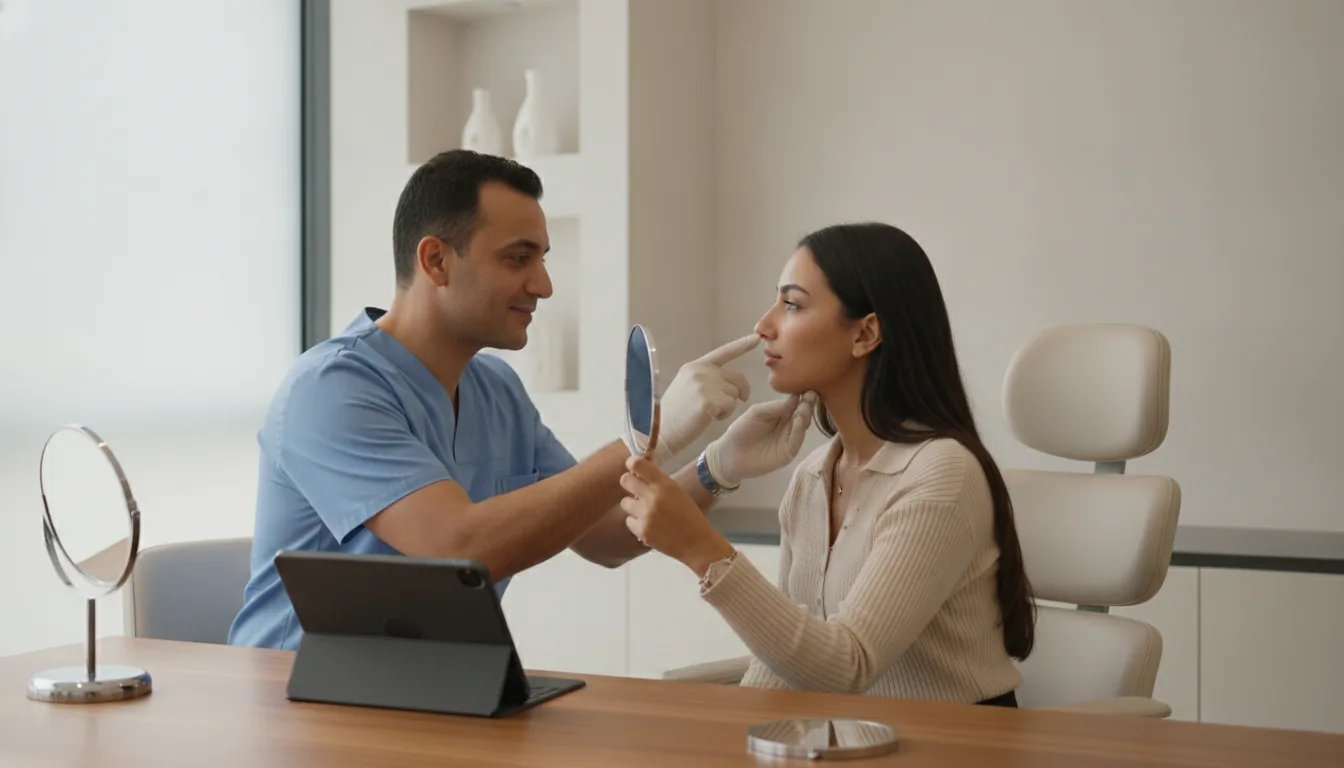
Everything starts with an in-depth consultation with the plastic surgeon. He or she analyses the face, its proportions and the nose itself, takes photographs and listens carefully to what bothers you. Depending on the case, a simulation helps visualise the project and check that your expectations are realistic.
This is also the time to ask all your questions: the planned technique, recovery, scars, organisation of your stay. An anaesthesia consultation then takes place before the operation, and the team gives you personalised instructions. Preparation generally includes:
- stopping smoking, recommended to support good healing;
- fasting before the operation as instructed by the anaesthesia team;
- a list of all your current medications: only the doctor can tell you whether one needs to be adjusted;
- planning your return home and your first days of rest.
On the day of surgery
Rhinoplasty is performed under general anaesthesia and usually takes 1 to 2 hours, depending on the corrections required.
The surgeon may use a closed approach, with incisions hidden inside the nostrils, or an open approach when the corrections call for it. He or she reshapes the bone and cartilage according to the agreed plan, corrects the septum if needed, and finishes with fine sutures. So-called preservation techniques respect the natural structures of the nose as much as possible, which helps make recovery gentler.
A protective splint is then placed on the nose. You are monitored in the recovery room before returning to your room. The exact arrangements for your stay are agreed in advance with the surgeon and the anaesthetist.
The first days: splint, swelling and a blocked nose
The first days are mainly marked by swelling (oedema) and bruising around the nose and eyes, along with a feeling of a blocked nose. These effects are usual and temporary. Pain is generally moderate and is relieved by the prescribed painkillers.
For a comfortable recovery, the following advice is often given. It is only a guide: always follow your surgeon's instructions.
- sleep with your head slightly raised to limit swelling;
- do not blow your nose hard, and carry out nasal care as prescribed;
- avoid physical exertion and sport;
- keep your still-bruised face out of the sun;
- avoid resting glasses on your nose until the surgeon allows it.
The following weeks: back to social life
The splint is removed early, at a follow-up consultation. Bruising and swelling then fade over a few days to a few weeks, and social life can resume shortly afterwards. Slight swelling may still be noticeable up close, but it usually goes unnoticed by those around you.
Returning to work depends on your job and how you feel. Sport is resumed gradually, once the surgeon allows it; contact sports, where the nose could be knocked, generally have to wait longer.
Swelling, discomfort or bruising that decreases day after day is part of normal healing. On the other hand, bleeding that does not stop, a fever, increasing pain or any symptom that worries you should prompt you to contact the team caring for you without delay.
The following months: a result that refines
The nose keeps changing for several months as the swelling subsides. The result refines gradually, and the tip of the nose is usually the last area to reveal its final shape. A little patience is therefore needed before judging the result.
As with any surgery, the result depends on each person: skin, anatomy and healing. Small irregularities may sometimes persist; they are uncommon and may justify a touch-up if the surgeon considers it useful.
Follow-up consultations make it possible to check that everything is progressing well and to answer your questions until the final result.
Travelling from abroad for rhinoplasty in Tunis
If you live abroad and are considering rhinoplasty in Tunisia, it is important to plan a stay that covers the operation, the first days of recovery and the follow-up consultation at which the splint is removed. The recommended length of stay is set with the surgeon according to your case.
You can request a personalised quote online, describing your project and attaching photos if needed. The international patients service then helps you organise dates, accommodation and transfers, in French, English or Arabic. Once you are back home, stay in touch with the team for follow-up.
Frequently asked questions
How long does rhinoplasty take?
The operation usually takes 1 to 2 hours and is performed under general anaesthesia. The duration depends on the corrections required, particularly if a procedure on the nasal septum is combined.
Does rhinoplasty leave visible scars?
Most often, the incisions are hidden inside the nostrils (closed approach) and cannot be seen. When an open approach is needed, a small incision is made under the nose, between the nostrils; it generally becomes very discreet over time. The technique is discussed during the consultation.
When can I return to social life after rhinoplasty?
The splint is removed early and bruising fades over a few days to a few weeks, so social life can resume shortly after the operation. The exact timing depends on each person and on your activity: your surgeon will advise you according to your case.
Why does my nose feel blocked after surgery?
A blocked feeling is common in the first days: it is caused by swelling inside the nose. It decreases gradually. The care prescribed by the surgeon helps you through this phase; avoid blowing your nose hard until he or she allows it.
Can breathing be corrected at the same time as the appearance of the nose?
Yes. When breathing is impaired by a deviated nasal septum, a functional procedure (septoplasty) can be combined with rhinoplasty in the same operation. The surgeon assesses this need during the consultation.
This article is for general information only. It does not replace the advice of your doctor, who alone can adapt instructions to your situation.
Learn more
A question? A quote?
Our team answers your questions and supports you throughout your care journey.