
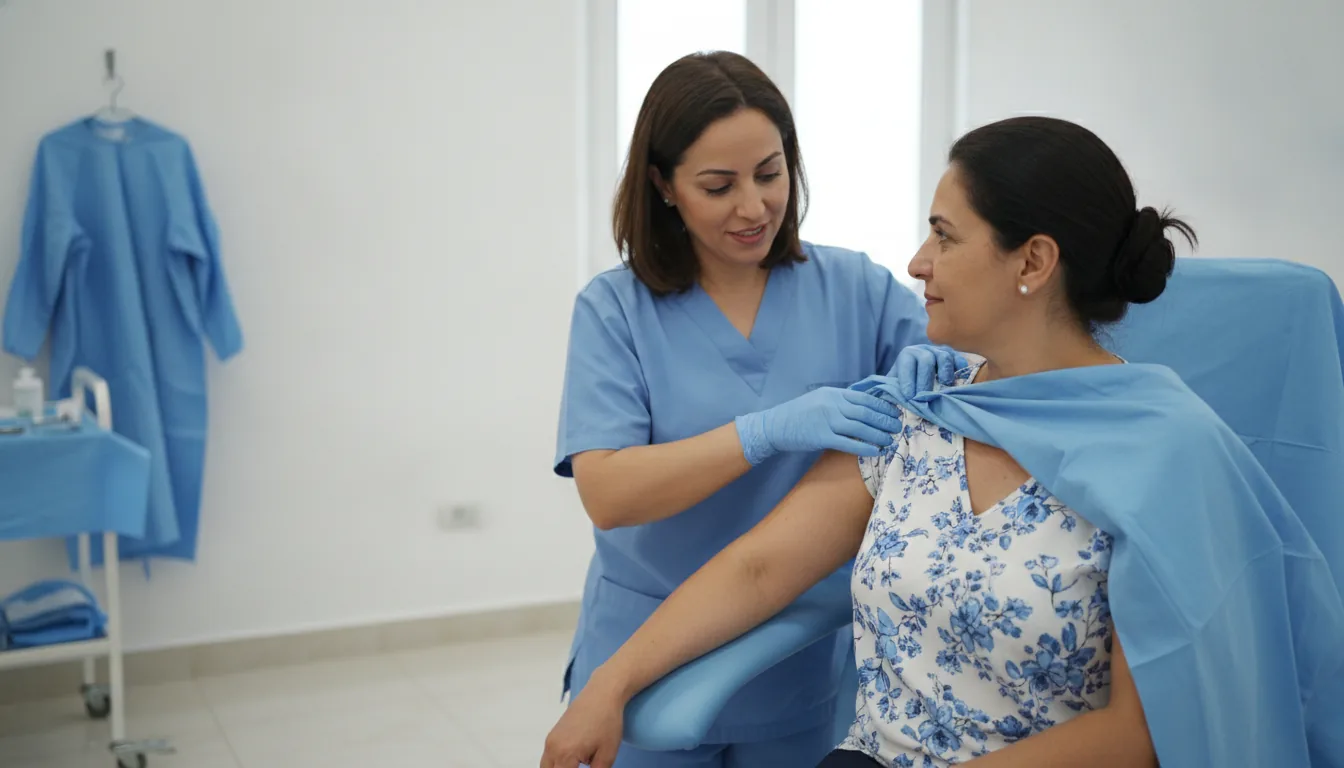
Sagging skin on the arms: what are we talking about?
Over time, or after significant weight loss, the skin of the inner arm, between the armpit and the elbow, can lose its elasticity and start to hang. This sagging is common and nothing abnormal, but it can become a real nuisance: choice of clothing, chafing, irritation, or simply wanting to stop hiding your arms.
Sport and physical activity are good for your health and muscle tone, but they cannot tighten stretched skin. When the excess skin is marked, only surgery can correct it: this is brachioplasty, or arm lift.
This article follows the journey in order: choosing the technique, the scar, preparation, the procedure, then recovery. The site's "Arm lift (brachioplasty)" page, suggested at the bottom of this article, sets out the essentials. The information remains general: only your surgeon can adapt it to your situation.
Liposuction alone or an arm lift?
Not all heavy or sagging arms call for the same procedure. During the consultation, the plastic surgeon assesses what is in excess: fat, skin, or both, as well as the quality of the skin.
The main situations are as follows:
- excess that is mainly fat with good-quality skin: liposuction alone may be enough, with small scars;
- stretched, hanging skin: it has to be removed, which is the arm lift itself;
- excess skin and fat: brachioplasty is often combined with liposuction to slim the arm;
- sagging that also affects other areas after major weight loss: the arm lift can be part of a body contouring programme, for example with a body lift, planned in several stages.
The scar: the trade-off to understand clearly
Removing skin always leaves a scar. For an arm lift, it is long and lies on the inner arm, sometimes up to the armpit. It is placed to be as inconspicuous as possible with the arm by the side, but it remains visible with the arm raised.
At first, the scar is red. It then gradually fades over a period of about a year. Its final appearance varies from one person to another, depending on skin quality and individual healing.
This is the most important point of the decision: you exchange hanging skin for a scar. This trade-off must be clearly understood before going ahead. It is explained in consultation, and time to think is given before confirming the procedure. Feel free to come back with your questions.
Preparation: consultations and instructions
A weight that has been stable for several months is preferable before the procedure. After obesity surgery, this means waiting until weight loss is complete: the surgeon can then assess more accurately the excess skin to be removed.
Stopping smoking is essential: smoking slows healing and increases the risk of the wound opening. Also plan the first days at home, arrange for someone to take you home when you leave, and keep loose clothes with wide sleeves within reach.
Preparation generally includes the following steps, specified by the team according to your situation:
- a consultation with examination of the arms and an explanation of the scar;
- time to think before confirming the procedure;
- an anaesthesia consultation and blood tests;
- stopping smoking, following the surgeon's instructions;
- buying the prescribed compression sleeves, to bring with you on the day of the procedure.
The day of the procedure, step by step
Brachioplasty is performed under general anaesthesia, in the operating theatre, and generally takes about one and a half to two and a half hours. Here are the main steps:
- precise marking, before the procedure, of the skin to be removed;
- liposuction of the arm if necessary;
- removal of the excess skin and fat from the inner arm;
- careful closure in several layers;
- dressings and fitting of the compression sleeves.
Recovery: sleeves, movements to avoid and the scar
Discharge is on the same day or the next day. In the first days, swelling, bruising and a feeling of tightness in the arms are usual; the team explains how to relieve pain and how to look after the dressings.
The compression sleeves are worn for about a month. For a few weeks, you should avoid carrying heavy loads and forcefully raising your arms, so as not to pull on the scar. Simple everyday movements remain possible, gently. Return to work and sport is set by the surgeon according to your activity and how healing progresses.
Follow-up continues with regular checks of healing. Protecting the scar from the sun in the first months and keeping a stable weight help maintain the result.
Possible risks, coming from abroad and warning signs
Like any surgery, an arm lift carries risks, explained in consultation: a long scar, visible with the arm raised, which fades over time; delayed healing or small wound breakdown, especially in smokers; temporary swelling of the forearm or hand; altered sensation of the skin of the arm.
If you are coming from abroad, you can describe your situation in the quote request form: your file is reviewed by the relevant specialist, then the team helps you plan the consultation and the procedure. Communication is in French, English or Arabic. Plan to stay long enough for the first check-ups.
After the procedure, certain signs should prompt you to contact your surgeon quickly, without waiting for the next appointment:
- fever, or unusual or increasing pain;
- marked or rapid swelling of one arm;
- bleeding, discharge, redness or opening of the scar;
- pain or swelling in the calf, or shortness of breath: in that case, call without delay.
Frequently asked questions
Can exercise firm up the skin of the arms?
Exercise maintains muscles and health, but it cannot tighten stretched skin. When the skin clearly hangs under the arm, only skin removal can correct the sagging. The surgeon assesses in consultation what is involved: fat, skin or both.
Is arm liposuction enough?
It may be enough when the excess is mainly fat and the skin is of good quality. If the skin is stretched, liposuction alone may make it worse: an arm lift is then needed, often combined with liposuction. The choice is made after examining the arms.
Is the scar visible?
The scar is long and lies on the inner arm. It is placed to be as inconspicuous as possible with the arm by the side, but it remains visible with the arm raised. Red at first, it gradually fades over about a year. This trade-off is explained in consultation.
Do I need to stay in hospital?
Discharge is on the same day or the day after the procedure. It is advisable to have someone take you home, as driving after anaesthesia is not recommended. The compression sleeves are then worn for about a month.
Can I have an arm lift after a sleeve or a bypass?
Yes, an arm lift is often part of body contouring after obesity surgery. It is considered once weight has been stable for several months. It can be done on its own or planned with other procedures, in several stages, according to the priorities agreed with the surgeon.
This article is for general information only. It does not replace the advice of your doctor, who alone can adapt instructions to your situation.
Learn more
A question? A quote?
Our team answers your questions and supports you throughout your care journey.