
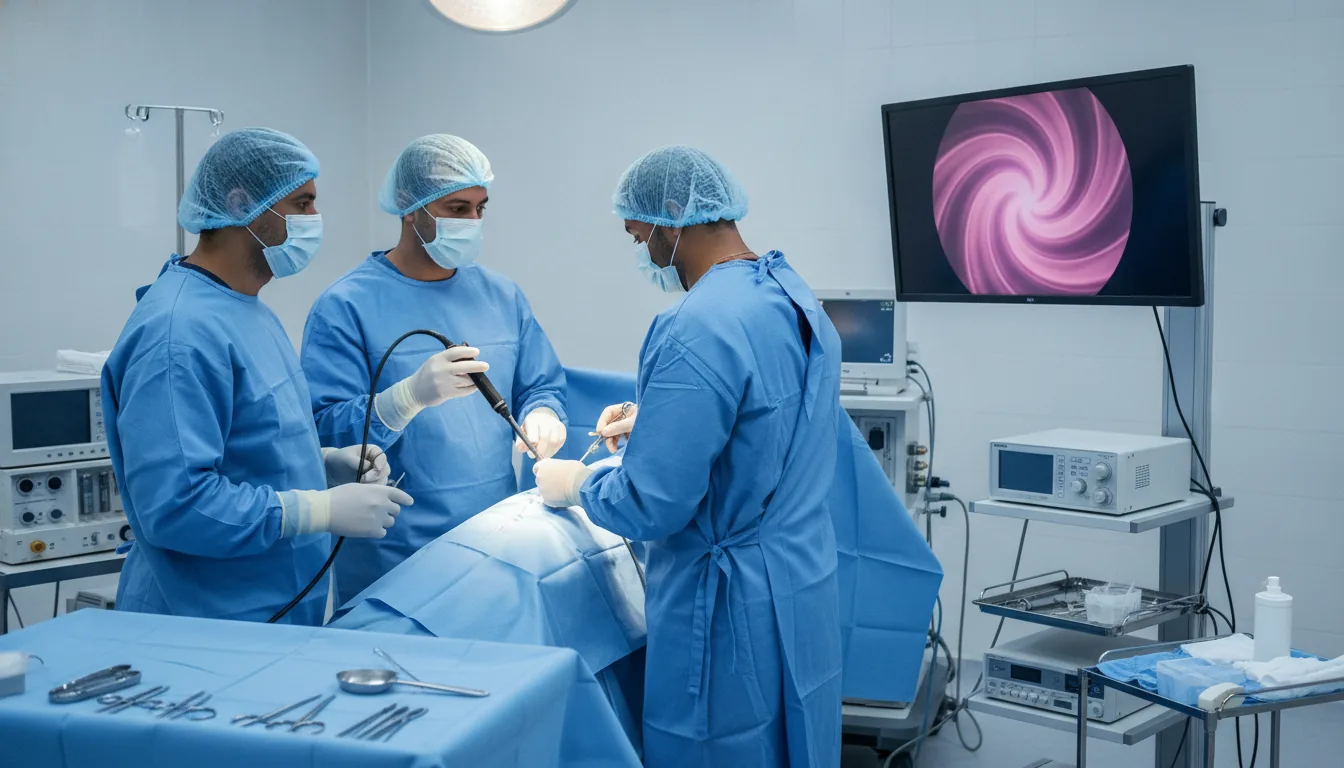
Internal urethrotomy (urethral stricture)
Surgeries/Urological/Internal urethrotomy

Internal urethrotomy (urethral stricture)

Internal urethrotomy in Tunis, Tunisia · Centre Urbain Nord

Endoscopic opening of a narrowing of the urethra, through the natural passages, to restore a normal urine stream.

What is it?

A urethral stricture is a narrowing of the channel that carries urine from the bladder to the outside. It is caused by scar tissue after an infection, an injury, a urinary catheter or an endoscopic procedure, and sometimes no cause is found. It mainly affects men. Internal urethrotomy opens the narrowing from the inside. The urologist passes an endoscope fitted with a small blade (or a laser) through the urethra and cuts the narrowed area under direct vision. A urinary catheter is left in place for a few days so that the channel heals in an open position. The procedure is best suited to short, single strictures, particularly as a first treatment. For long, multiple or recurrent strictures, reconstructive surgery of the urethra (urethroplasty) may be more appropriate; the urologist discusses this with the patient. At Clinique Pasteur Tunis, the work-up includes uroflowmetry, urethrography or cystoscopy to measure the stricture. The procedure is performed in the operating theatre with a short hospital stay and regular follow-up.
Internal urethrotomy (urethral stricture)

When is it indicated?

Weak or thin urine stream

A stream that gradually weakens, especially in a young man, may indicate a narrowing of the channel.

Difficulty or straining to pass urine

Having to push to urinate or taking a long time to empty the bladder tires it out over time.

Recurrent urinary infections

A poorly emptied bladder encourages infections. Opening the narrowing helps prevent them.

Urinary retention

When urine cannot pass at all, the obstruction must be relieved to ease the bladder and protect the kidneys.

Preparation

1Uroflowmetry, urethrography and/or cystoscopy to measure the stricture
2Urine test: the urine must be sterile
3Anaesthesia consultation
4Adjustment of anticoagulants as advised by the doctor
5Fasting for 6 hours before the procedure

Procedure

1

General or spinal anaesthesia

2

Endoscope passed into the urethra up to the stricture

3

Passing a guidewire through the narrowed area

4

Cutting the stricture with a blade or laser under direct vision

5

Inspection of the bladder

6

Placement of a urinary catheter for a few days

Duration

20 to 45 minutes

Aftercare & Recovery

Discharge is the same day or the next day, sometimes with the catheter, which is then removed in a consultation a few days later. The stream improves as soon as the catheter is removed. Regular checks (uroflowmetry) are needed because a stricture can form again; in that case, another technique is discussed.

Risks and side effects

Mild blood in the urine after the procedure
Burning when passing urine after catheter removal
Urinary infection
Recurrence of the stricture, hence regular follow-up

These risks remain rare. Your surgeon will inform you in detail before the procedure.

Request a Quote

Contact us to schedule a consultation or receive a personalized quote.

Request a Quote +216 36 402 000

At a glance

Duration: 20 to 45 minutes
Preparation: Required
Dedicated specialist team

Related searches

  • Internal urethrotomy Tunis
  • Internal urethrotomy Tunisia
  • Internal urethrotomy in Tunisia
Request a quote