
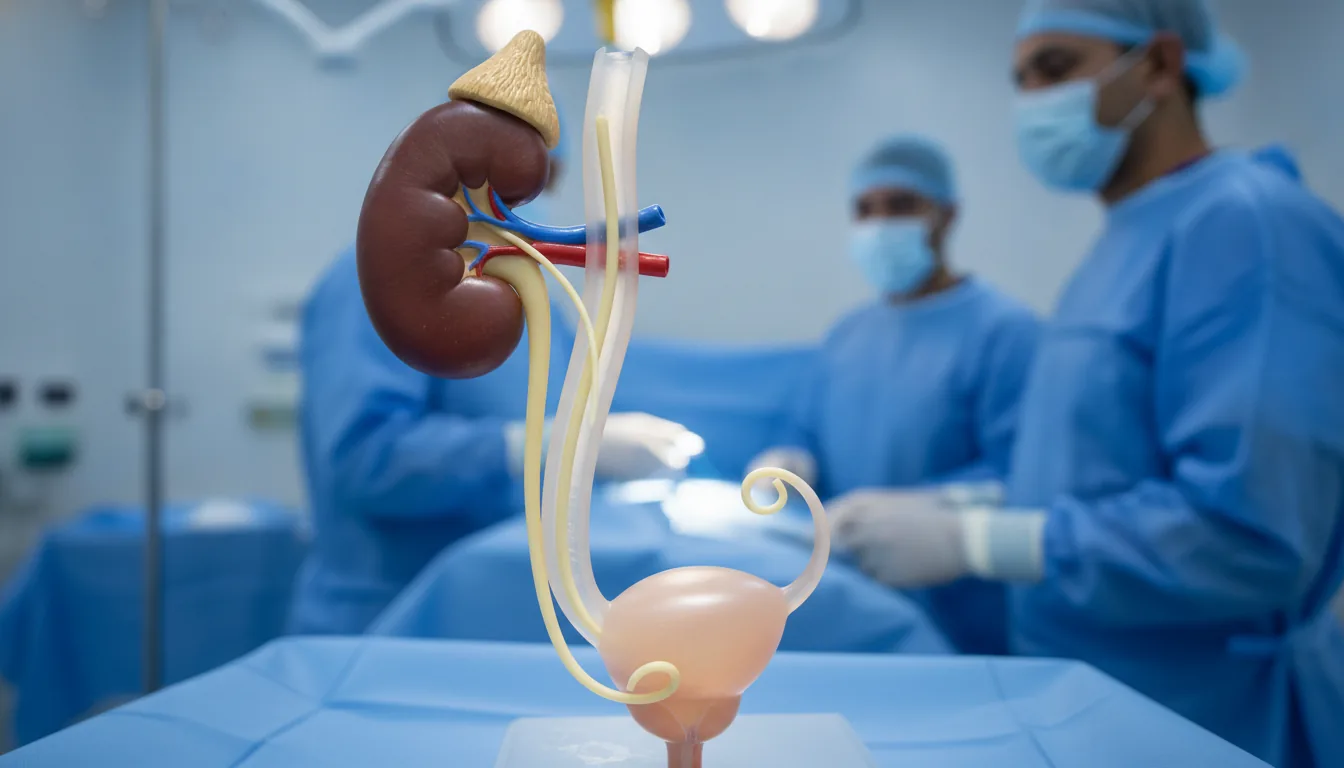
Double-J stent placement (ureteral stent)
Double-J stent in Tunis, Tunisia · Centre Urbain Nord
Placement of a thin flexible tube between the kidney and the bladder to keep urine flowing when the ureter is blocked.
What is it?
When is it indicated?
A blocked and infected kidney is an emergency. The stent restores the flow of urine and allows antibiotics to work.
The stent relieves pain and protects the kidney until the stone is definitively treated.
It helps the ureter heal and prevents temporary swelling from blocking urine flow.
When the ureter is compressed from outside or narrowed, the stent keeps it open to protect kidney function.
Relieving the obstruction often allows the kidney to recover its function.
Preparation
Procedure
General or spinal anaesthesia, or sometimes local anaesthesia
Endoscope passed into the bladder through the urethra
Locating the opening of the ureter
Passing a guidewire and then the stent up to the kidney under X-ray guidance
Checking that both curls are correctly positioned
Monitoring in the recovery room
Duration
15 to 30 minutes
Aftercare & Recovery
Discharge is the same day or after 24 to 48 hours, depending on the reason for placement (an infection requires longer monitoring). The stent may cause frequent urges to urinate, flank discomfort when passing urine or a little blood in the urine: this is common and disappears once it is removed. Removal takes a few minutes by cystoscopy. The planned removal or replacement date must never be forgotten.
Risks and side effects
These risks remain rare. Your surgeon will inform you in detail before the procedure.
Request a Quote
Contact us to schedule a consultation or receive a personalized quote.
Request a Quote +216 36 402 000At a glance
Related searches
- Double-J stent Tunis
- Double-J stent Tunisia
- Double-J stent in Tunisia