
Transurethral resection of bladder tumour (TURBT)
Surgeries/Urological/TURBT (bladder tumour)

Transurethral resection of bladder tumour (TURBT)

TURBT (bladder tumour) in Tunis, Tunisia · Centre Urbain Nord

Removal of a bladder tumour through the natural passages, with no incision, so that it can be removed and examined under the microscope.

What is it?

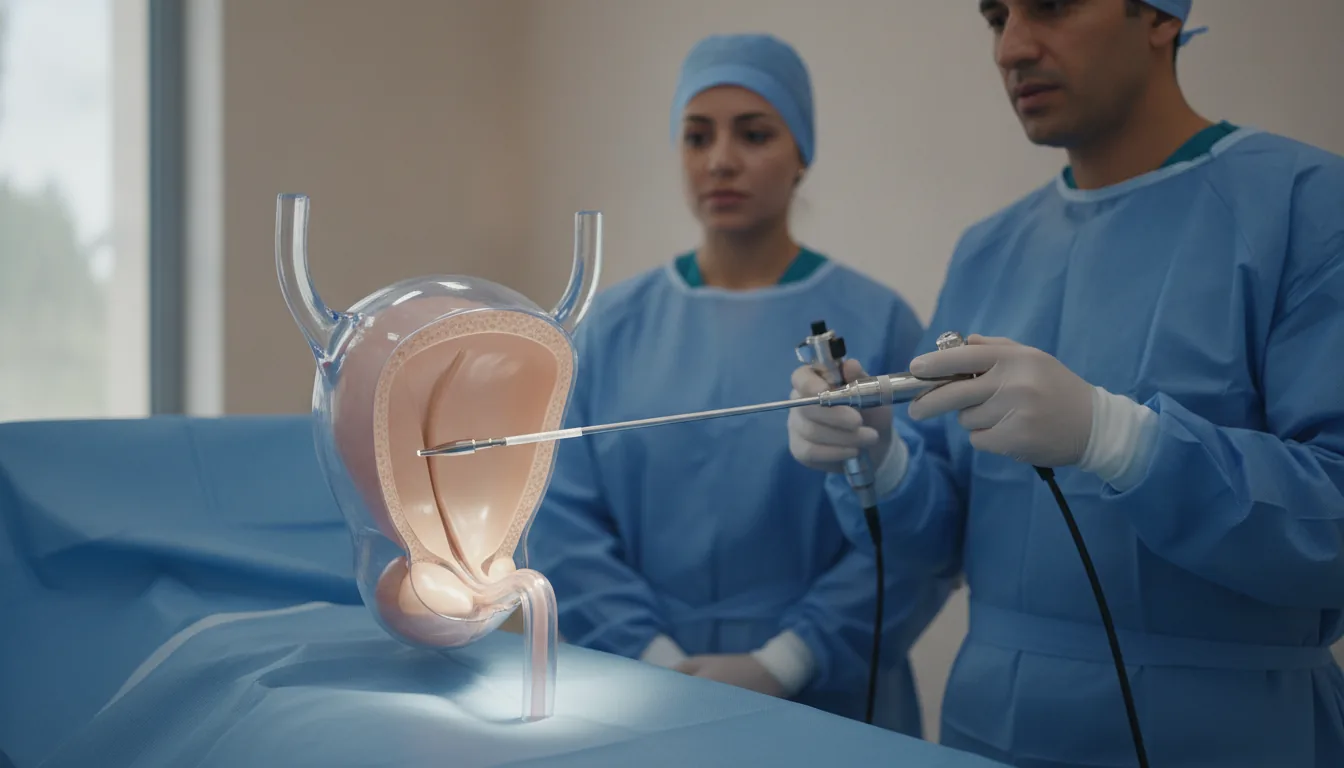
Transurethral resection of bladder tumour (TURBT) removes a tumour that has developed on the inner lining of the bladder. It is performed through the natural passages: an endoscope fitted with a small electric loop is passed through the urethra, with no skin incision. The surgeon removes the whole tumour together with part of the wall it sits on. Microscopic examination determines its type and depth, which is essential for deciding on the next steps. In some cases, a medication is instilled into the bladder just after the procedure to reduce the risk of recurrence. TURBT is both a diagnostic test and the first treatment of bladder tumours. For superficial tumours it is often sufficient, combined with regular bladder instillations and cystoscopy follow-up. For deeper tumours, other treatments are discussed in a multidisciplinary team meeting. At Clinique Pasteur Tunis, TURBT is performed in the operating theatre with a short hospital stay. The urologist sees the patient again to explain the results and organise follow-up.
Transurethral resection of bladder tumour (TURBT)

When is it indicated?

Bladder tumour seen on ultrasound, CT scan or cystoscopy

When a lesion is found in the bladder, it must be removed and analysed to know exactly what it is.

Blood in the urine with a bladder lesion

Visible blood in the urine should never be ignored. If a bladder lesion is the cause, resection treats it and identifies it.

Recurrence of a previously treated tumour

Bladder tumours can come back. A new resection removes them as soon as they are detected during follow-up.

Second-look resection

In some cases, a second resection a few weeks after the first confirms that no tumour tissue remains.

Preparation

1Urine test: the urine must be sterile
2Imaging of the urinary tract (ultrasound or CT scan) as appropriate
3Anaesthesia consultation
4Adjustment of anticoagulant treatment as advised by the doctor
5Fasting for 6 hours before the procedure

Procedure

1

General or spinal anaesthesia

2

Resectoscope passed through the urethra, with no incision

3

Complete inspection of the inside of the bladder

4

Removal of the tumour and its base in thin slices

5

Sealing of small blood vessels to limit bleeding

6

Possible instillation of a medication into the bladder

7

Placement of a temporary urinary catheter

Duration

30 minutes to 1 hour

Aftercare & Recovery

The hospital stay is usually 1 to 2 days, until the urine is clear and the catheter has been removed. Patients are advised to drink plenty of fluids and avoid strenuous effort for a few weeks. The results of the analysis are explained in a consultation, along with the follow-up schedule of cystoscopies and, if needed, instillations.

Risks and side effects

Blood in the urine for a few days, sometimes again around the tenth day
Temporary burning when passing urine and frequent urges
Urinary infection, prevented by checking the urine beforehand
Perforation of the bladder wall, uncommon, usually managed by keeping the catheter a few days longer

These risks remain rare. Your surgeon will inform you in detail before the procedure.

Request a Quote

Contact us to schedule a consultation or receive a personalized quote.

Request a Quote +216 36 402 000

At a glance

Duration: 30 minutes to 1 hour
Preparation: Required
Dedicated specialist team

Related searches

  • TURBT (bladder tumour) Tunis
  • TURBT (bladder tumour) Tunisia
  • TURBT (bladder tumour) in Tunisia
Request a quote