
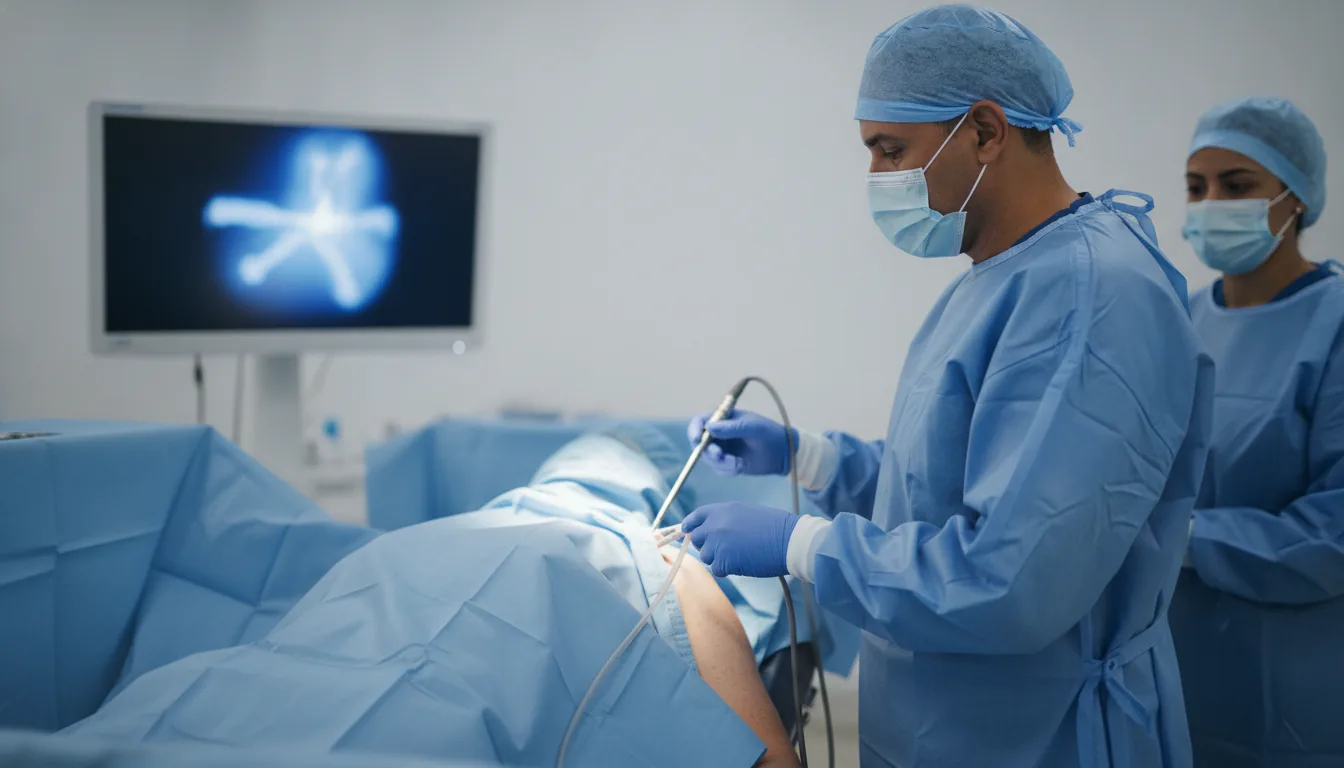
Arthroscopic shoulder stabilisation
Surgeries/Orthopedic/Shoulder instability

Arthroscopic shoulder stabilisation

Shoulder instability in Tunis, Tunisia · Centre Urbain Nord

Surgery to stabilise a shoulder that dislocates repeatedly, usually performed by arthroscopy.

What is it?

The shoulder is the most mobile joint in the body, but also the least stable. After a first dislocation (the shoulder "comes out" of its socket), the structures that hold it in place, such as the labrum and the capsule, may remain damaged. The shoulder then becomes unstable: it dislocates again, sometimes with simple movements, or gives a feeling of apprehension. Stabilisation surgery repairs these structures. Arthroscopically, the surgeon reattaches the labrum and tightens the capsule onto the bone using small anchors. When the bone of the socket (glenoid) is worn, or after a failed first operation, a bone block procedure may be recommended: a small piece of bone is fixed to the front of the socket to act as a barrier. This can be done through an open incision or arthroscopically. Surgery is mainly discussed for young, active people, athletes, or after several dislocations. The choice of technique depends on age, the sport played and the damage seen on CT or MRI. At Clinique Pasteur Tunis, the operation is performed by an orthopaedic surgeon in the operating theatre, with a short hospital stay. Rehabilitation is arranged from discharge and followed until you return to your activities.
Arthroscopic shoulder stabilisation

When is it indicated?

Recurrent shoulder dislocations

The shoulder has dislocated several times. Each new episode damages the joint a little more.

Feeling that the shoulder "slips out"

Apprehension or pain during certain movements, such as raising the arm or throwing, without a full dislocation.

First dislocation in a young athlete

The risk of recurrence is high in this case; stabilisation may be discussed after the first episode.

Bone damage to the socket

When the rim of the socket is worn or fractured, a bone block procedure is often preferred.

Limitation at work or in sport

An unstable shoulder makes it unsafe to return to some activities.

Preparation

1Consultation with the surgeon, X-rays and a CT scan or MRI of the shoulder
2Anaesthetic consultation
3Tell the team about your medication, especially blood thinners
4Nothing to eat for 6 hours before surgery
5Bring loose clothing that fastens at the front

Procedure

1

General anaesthesia, often combined with a nerve block of the arm to limit pain

2

Positioning half-sitting or lying on your side

3

Inspection of the shoulder with the camera

4

Reattachment of the labrum and capsule to the bone with small anchors

5

Or a bone block procedure, depending on the damage

6

Closure and fitting of a sling

Duration

About 1 to 2 hours

Aftercare & Recovery

The hospital stay is usually one to two days. The arm is kept in a sling for about three to four weeks. Physiotherapy starts early, gently at first and then progressively. Office work can resume after a few weeks; contact and throwing sports only after several months, according to the surgeon's advice.

Risks and side effects

Shoulder stiffness, usually improved by rehabilitation
Recurrence of instability, which remains possible despite surgery
Infection or haematoma, which are rare
Injury to a nerve of the arm, which is exceptional

These risks remain rare. Your surgeon will inform you in detail before the procedure.

Request a Quote

Contact us to schedule a consultation or receive a personalized quote.

Request a Quote +216 36 402 000

At a glance

Duration: About 1 to 2 hours
Preparation: Required
Dedicated specialist team

Related searches

  • Shoulder instability Tunis
  • Shoulder instability Tunisia
  • Shoulder instability in Tunisia
Request a quote