
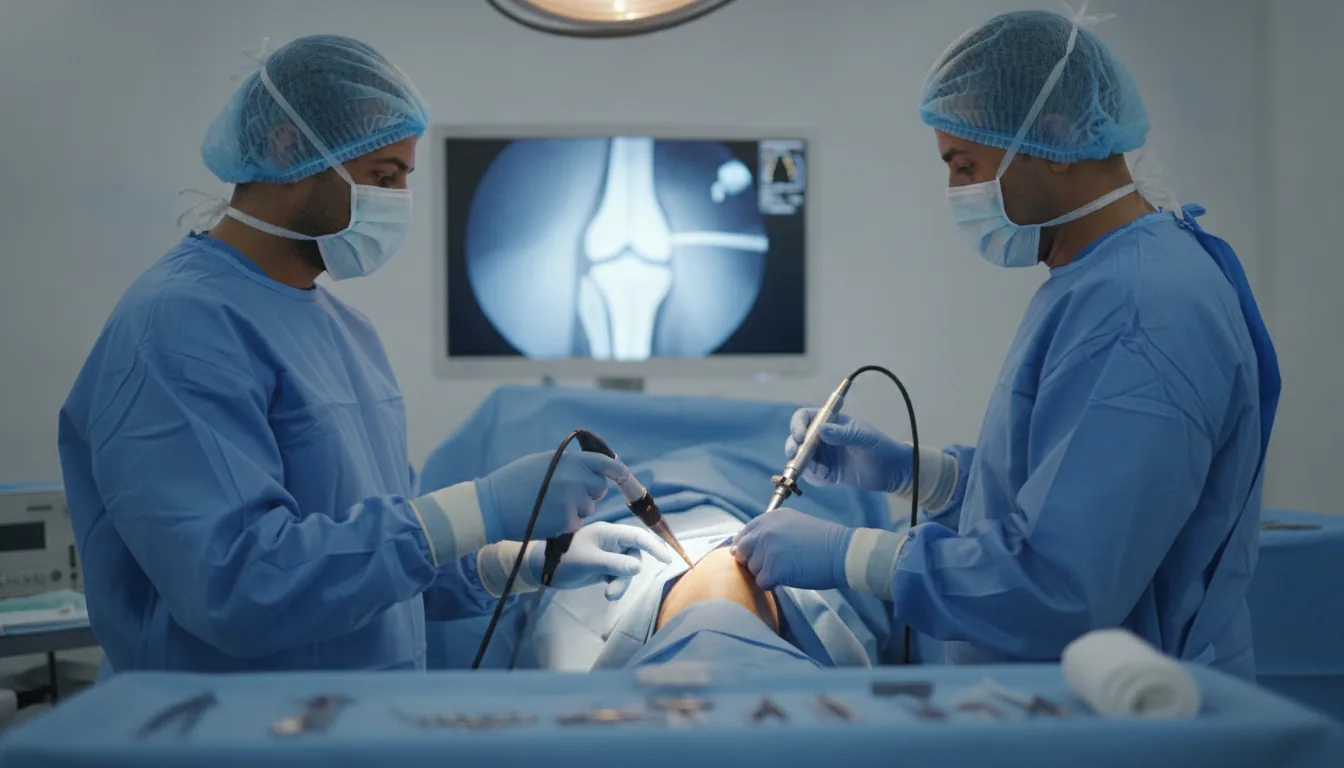
Arthroscopic meniscectomy
Surgeries/Orthopedic/Meniscectomy

Arthroscopic meniscectomy

Meniscectomy in Tunis, Tunisia · Centre Urbain Nord

Removal of the damaged part of a knee meniscus by arthroscopy, through two small incisions, to relieve pain and locking.

What is it?

The menisci are two small cartilage cushions between the thigh bone (femur) and the shin bone (tibia). They absorb shocks and help stabilise the knee. A twisting injury, a sporting effort or simple wear with age can tear them. The torn fragment then causes pain, swelling and sometimes locking of the knee. A meniscectomy removes only the torn part of the meniscus, preserving as much healthy tissue as possible. It is performed by arthroscopy: a small camera and fine instruments are inserted into the knee through two incisions a few millimetres long. When the tear is suitable, particularly in younger patients, the surgeon may choose to repair (suture) the meniscus rather than remove part of it. Surgery is offered when pain persists despite rest, medication and physiotherapy, or straight away if the knee is locked. In older people whose meniscus is worn by arthritis, surgery is not automatic: medical treatment is usually tried first. At Clinique Pasteur Tunis, meniscectomy is performed in the operating theatre with an arthroscopy unit, most often as a day case. Your orthopaedic surgeon explains beforehand what will be done and plans your rehabilitation with you.
Arthroscopic meniscectomy

When is it indicated?

Painful meniscal tear

A tear seen on MRI that causes pain on the side of the knee and gets in the way of walking or sport.

Locked knee

A fragment of meniscus can get caught in the joint and stop the leg from straightening fully. Surgery is then needed fairly quickly.

Failure of medical treatment

When pain persists for several weeks despite rest, anti-inflammatory medication and physiotherapy.

Recurrent swelling

A knee that often swells after exercise may be irritated by a meniscal tear.

Tear associated with a cruciate ligament rupture

The meniscus is then treated during the same operation as the ligament reconstruction.

Preparation

1Consultation with the surgeon and an MRI of the knee
2Anaesthetic consultation a few days beforehand
3Tell the team about your medication, especially blood thinners
4Nothing to eat for 6 hours before surgery
5Bring a pair of crutches and arrange for someone to take you home

Procedure

1

Admission to the day surgery unit

2

General anaesthesia or spinal anaesthesia (numbing the lower body)

3

Two small incisions on either side of the knee

4

Inspection of the joint with the camera

5

Removal of the torn part of the meniscus, or repair when possible

6

Closure with a few stitches and a dressing

7

Monitoring in the recovery room, then discharge the same day or the next morning

Duration

About 30 to 45 minutes

Aftercare & Recovery

Most patients go home the same day. Weight-bearing is usually allowed quickly, with crutches for the first few days. A few physiotherapy sessions help restore movement and strength. Office work can usually resume within one to two weeks, and sport after a few weeks depending on the surgeon's advice. After a meniscal repair, recovery is longer (limited weight-bearing and bending for several weeks).

Risks and side effects

Knee swelling during the first weeks, which settles gradually
Blood clot in the leg, prevented with anticoagulant injections when needed
Joint infection, which is rare
Stiffness or persistent pain, especially if the cartilage is already worn

These risks remain rare. Your surgeon will inform you in detail before the procedure.

Request a Quote

Contact us to schedule a consultation or receive a personalized quote.

Request a Quote +216 36 402 000

At a glance

Duration: About 30 to 45 minutes
Preparation: Required
Dedicated specialist team

Related searches

  • Meniscectomy Tunis
  • Meniscectomy Tunisia
  • Meniscectomy in Tunisia
Request a quote